
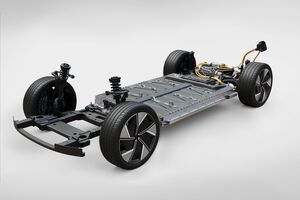
For most of driving history, the sound of excitement has been orchestrated by the internal combustion engine (ICE).
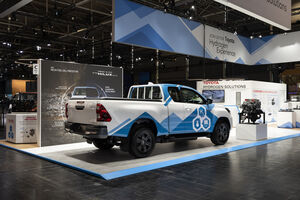
Toyota is sharpening its focus on hydrogen as a practical route to cleaner heavy-duty transport, using IAA Transportation 2026 to showcase new fuel cell technology and partnerships with leading commercial vehicle manufacturers.
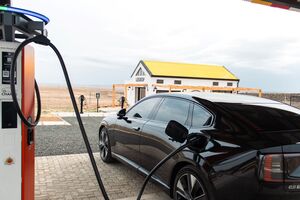
To mark World EV Day, Zero Carbon Charge (CHARGE) has launched the N3 EV Real-World Test. The initiative will turn everyday electric vehicle journeys between Johannesburg and Durban into a growing source of real-world data for South African motorists and fleet operators considering the switch to electric.
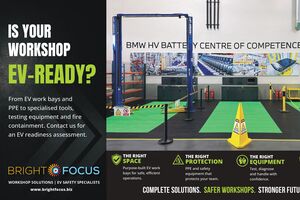
Electric and hybrid vehicles are changing more than what South Africans drive. They are changing what happens behind the workshop doors, too.
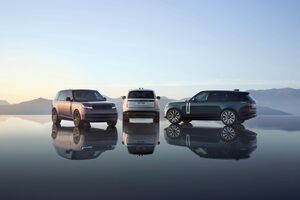
Range Rover, long regarded as the original luxury SUV, has introduced its first electric model. The vehicle is built at the Solihull plant in the UK, where Range Rover production has taken place since 1970.
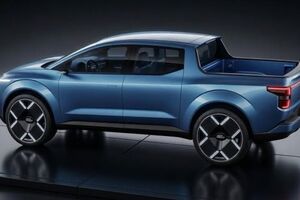
Ford’s next big electric vehicle push is less about a dramatic new badge and more about what happens behind factory doors.
BAIC South Africa used the Festival of Motoring 2026 at Kyalami Grand Prix Circuit to highlight both its established range and new energy vehicle ambitions. The event marked the first public appearance of ARCFOX in South Africa, alongside the unveiling of BAIC’s X55 Plug‑in Hybrid Electric Vehicle.
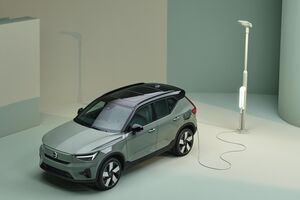
When Volvo introduced the XC40 Recharge Pure Electric to South Africa in late 2021, the timing raised eyebrows. The country was enduring a severe power crisis, with loadshedding recorded on 200 days that year.
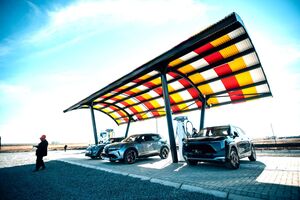
Three months after launching its off-grid, solar-powered electric vehicle (EV) charging network on the N3 corridor, Zero Carbon Charge (CHARGE) has confirmed plans to double charging capacity at both Charge hubs.
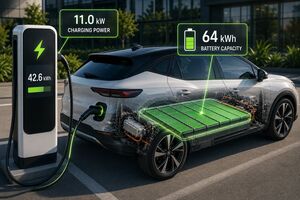
Electric vehicles (EVs) have introduced a whole new vocabulary into motoring. Instead of simply talking about litres of fuel, cylinders and kilometres per tank, motorists are now confronted with kW, kWh, AC, DC, WLTP, regenerative braking and a host of other terms.
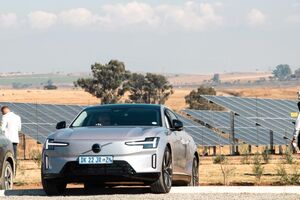
Zero Carbon Charge (CHARGE), which is building a national network of off grid, ultra-fast EV charging stations powered by renewable energy, has welcomed the latest new energy vehicle (NEV) sales figures, saying they confirm a trend it has tracked for several years.
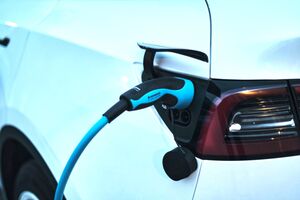
South Africa's transition towards electrified mobility continued to gain momentum during June 2026, with 3 045 new energy vehicles (NEVs) sold, representing a 104.2% increase compared to the 1 491 units recorded during the corresponding period in 2025.
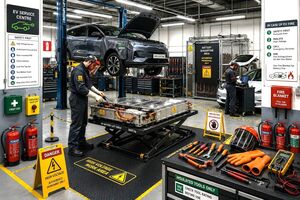
The rapid shift towards electric mobility is reshaping the automotive landscape, and workshops dedicated to electric vehicles are at the forefront of this transformation.
 Advertisement
Advertisement
Advertisement
I have bad reflexes. I was once run over by a car being pushed by two guys
Woody Allen