The South African Electric Mobility Association (SAEMA) has officially launched as the country’s collective body for electric mobility, marking South Africa’s entry into a global movement of nations with dedicated representation.
Share with friends
In a pivoting move at its launch, a Memorandum of Understanding (MoU) was established with the Norwegian Electric Vehicle (EV) Association, the world’s largest and most influential EV membership organisation, representing the country that leads the world in electric vehicle adoption.
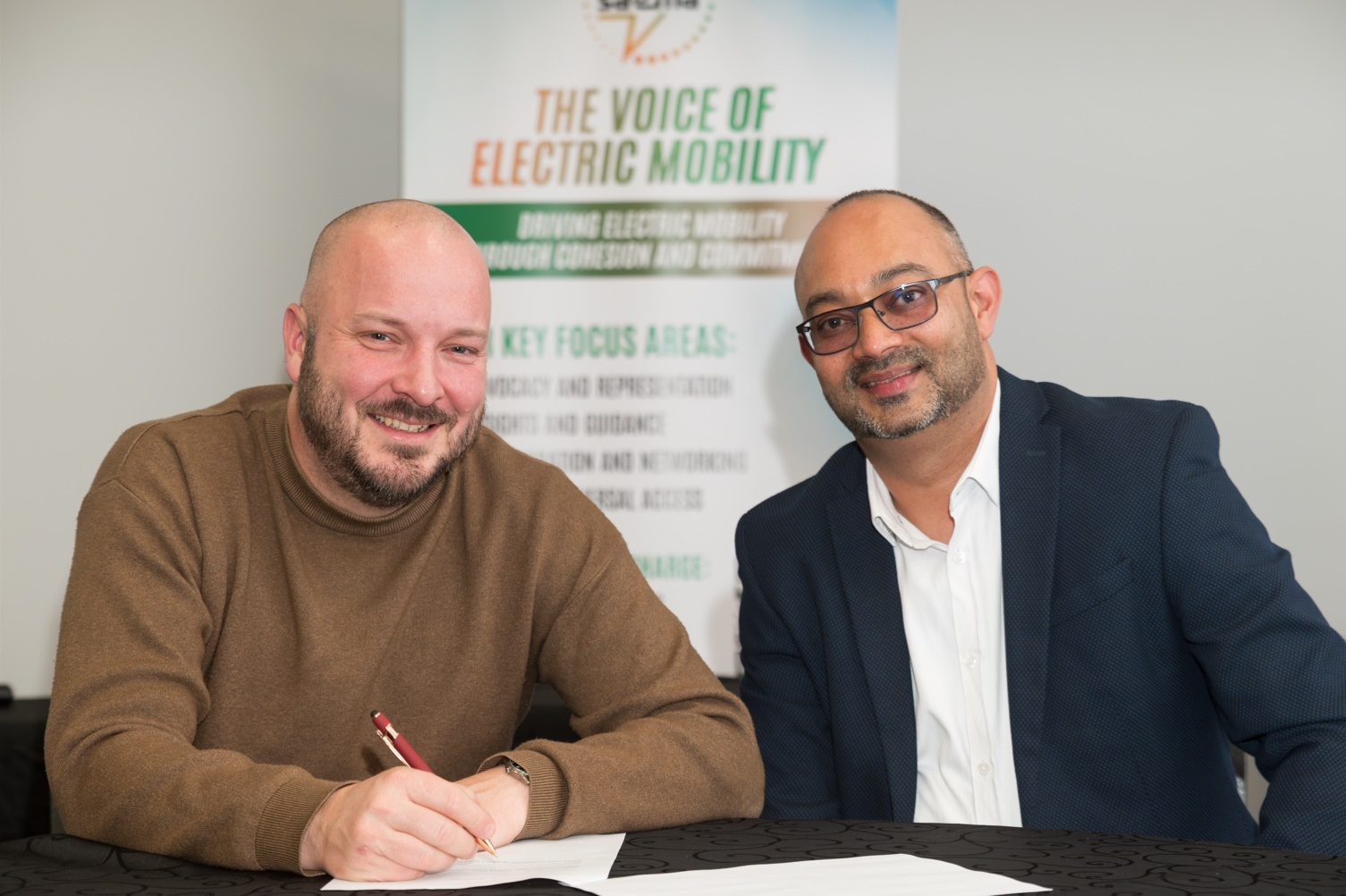
The agreement was signed by Markus Rotevatn, Head of International Projects and Partnerships, on behalf of the Norwegian EV Association, and Hiten Parmar, Co-founder of SAEMA. With this launch, South Africa follows in the footsteps of Norway and other nations that have established their own national EV associations, giving the local industry a unified voice for the first time. South Africa now joins a worldwide community of national EV bodies.
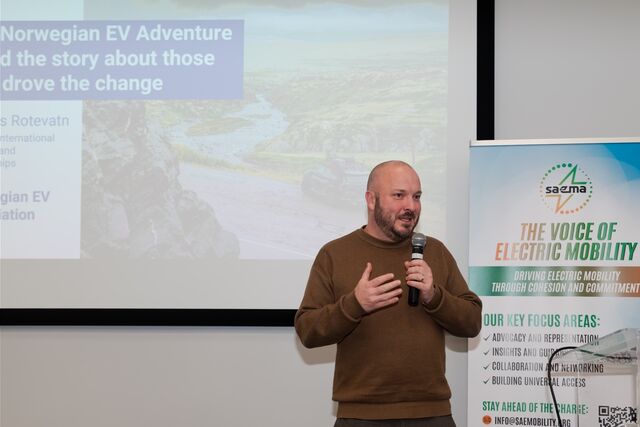
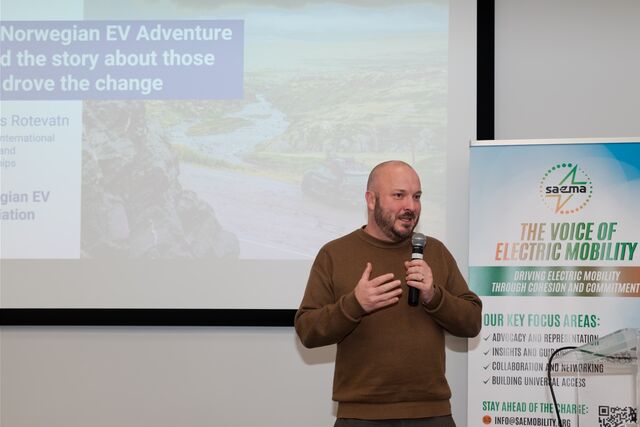
For the South African launch, Rotevatn presented the experience and findings of the Norwegian EV Association, and how the adoption of electric mobility has grown, along with the challenges and solutions which have helped to catapult the country to the position of a global leader in EV adoption, reporting 98% of new car sales as battery electric vehicles.
Markus Rotevatn (Head of International Projects and Partnerships Norwegian EV Association), and Hiten Parmar (Co-Founder of SAEMA), at the signing of the Memorandum of Understanding between the two organisations.
SAEMA represents the breadth of the electric mobility ecosystem in South Africa, from consumers, retailers, charging providers, and infrastructure stakeholders, as well as related investors and industries which will act as supporting pillars through the EV transition. SAEMA will act as the sector's collective voice in engaging stakeholders on the local experience, policies, regulations, and standards, and the reforms needed to accelerate South Africa’s transition to electric mobility.
“South Africa is now part of a global community of nations with a dedicated voice for electric mobility,” says Hiten. “This Memorandum of Understanding with the Norwegian EV Association, which represents the world’s most advanced EV market, is a powerful signal of our commitment. It gives us a partner to learn from as we build an industry that serves all stakeholders of electric mobility, as we represent their needs to government.”
Africa does not lack automotive ambition. Across the continent, governments increasingly recognise the automotive industry as a catalyst for industrialisation, job creation, skills development, technology transfer and greater intra-African trade.
Tata Motors has expanded its local SUV portfolio with the launch of the all-new Punch. Available in three derivatives, the compact SUV introduces refreshed styling, upgraded technology and six airbags as standard across the range, while also becoming the first Punch sold locally with a turbocharged engine option.
Ford South Africa employees and dealer partners contributed more than 8 000 volunteer hours to 29 community projects during its 2026 Global Caring Month programme.
Charging time remains a worry for many South Africans considering an electric vehicle, who still see it as a disruption rather than a quick stop at a filling station. That view is starting to shift.
South Africa has taken important steps to position itself within the global electric vehicle (EV) industry, but industry stakeholders argue that further policy adjustments are needed if the country is to accelerate adoption and support long-term investment in clean transport infrastructure.