
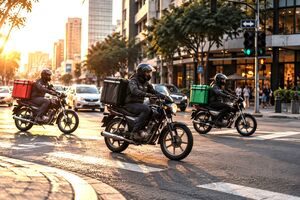
TVS powers South Africa’s growing delivery economy
South Africa’s rapidly expanding delivery sector is driving strong demand for affordable, dependable motorcycles that can withstand the demands of daily commercial use.
- Product News
- 20 November 2026
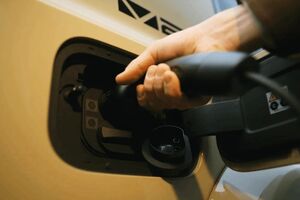
One of the main results of the 2026 Global EV Driver Survey, released by the Global EV Alliance (GEVA) this week, show that South African battery electric vehicle (EV) drivers are among the most satisfied in the world.
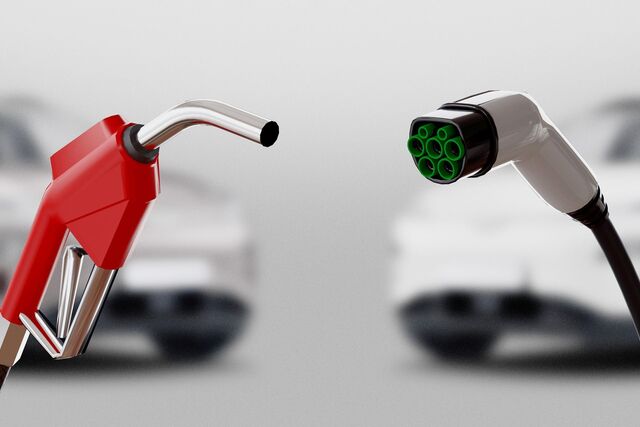
The 2026 survey captured respondents from 34 countries across all continents, with in-depth analyses of Australia, Colombia, Indonesia, the Netherlands, South Africa, and the United States (US) due to higher respondent numbers.
“The South African Electric Mobility Association (SAEMA) welcomes the results”. “They give a clear view of how South African drivers use their EVs, and how their experience compares with more mature markets.”
About 91 percent of SA respondents say they are “very satisfied” with EV ownership, compared with the global figure of about 88 percent. This puts South Africa in line with Australia, the Netherlands, and the US on this measure. Almost 9 in 10 South African drivers (88 percent) say their next car will also be an EV.
“The message from South African drivers is clear. When people drive electric, they do not want to go back to petrol or diesel,” says SAEMA in reaction to the finding. “The technology is not the problem. More emphasis is required on technical regulations for vehicles, specifically fuel efficiency standards, and charging infrastructure.”
South African drivers buy EVs for practical reasons. About 82 percent name lower energy costs as a main reason to buy an EV, the highest figure of all six countries in the data deep dive. The global figure is 48 percent. Only eight percent of South African driver name climate benefits as a main reason, against 35 percent globally. Lower maintenance costs (32 percent) are also more important in South Africa than in the global benchmark (24 percent).
Fuel prices have a strong effect with about 94 percent of South African respondents agreeing that higher fuel prices made the shift to EVs faster. About 70 percent agree strongly compared with the global figures of 76 percent and 28 percent.
Two in three South African EV drivers (67 percent) have solar panels at home, against 48 percent globally.
“South Africans buy EVs because the numbers make sense,” says SAEMA. “Fuel is expensive, and an EV costs less to run and to maintain. First movers also charge with solar energy as available. This gives them more control over their energy cost.”
The results also show where South Africa is behind. About 71 percent of South African respondents say that additional charging sites along the highways are one of the barriers to EV adoption while the global figure is 23 percent. Almost half of South African drivers (46 percent) say the coverage of fast chargers on highways needs improvement, against 14 percent globally. One in four (25 percent) say fast chargers are often out of order.
These problems change how people drive. About 29 percent of South African drivers often have range anxiety, against 11 percent globally. Only 13 percent of South African drivers say that EV ownership has no disadvantages. The global figure is 46 percent.
Most South African EV households also keep a petrol or diesel car, and only 17 percent of South African respondents have only EVs at home, against 57 percent globally.
“Our EV drivers charge at home with no difficulty. When they leave the city, the experience varies,” according to SAEMA. “Reliable highway charging is the fastest way to make the EV the only car in the household.”
Myths about EVs are a smaller barrier in South Africa (49 percent) than in the global benchmark (74 percent), but 78 percent still name the myth that EV batteries do not last. South African drivers also name the limited choice of EV models as a barrier (20 percent). This is the highest figure of all six countries, and more than double the global figure of nine percent.
The market is also young, and around 84 percent of South African respondents bought their EV new, against 59 percent globally. Few bought used or leased.
South African drivers want government to act, and about 80 percent agree that policy measures are necessary to increase EV sales, in line with the global figure. About 72 percent agree that government must require vehicle manufacturers to sell a larger share of EVs in South Africa, against 66 percent globally.
“South African drivers are ready. The automotive policy and regulatory framework must catch up,” SAEMA states. “We need more EV models across all brands, manufactured locally, a pre-owned EV market that people can trust, and expanded charging along our national routes. SAEMA will showcase these results across engagement with government, industry and civil society.”
Image provided: AlessandroPhoto.
South Africa’s rapidly expanding delivery sector is driving strong demand for affordable, dependable motorcycles that can withstand the demands of daily commercial use.
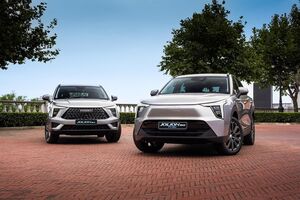
GWM South Africa has broadened its popular Jolion range with the introduction of the all-new Haval Jolion Max. Designed with modern families in mind, the newcomer combines increased interior space, new technology and a wider choice of powertrains, including petrol, hybrid and plug-in hybrid options.

Isuzu Motors South Africa (IMSAf) has achieved a 38% reduction in Scope 1 and Scope 2 CO₂ emissions compared with its 2013 baseline while increasing vehicle production by 21% during the 2025/26 financial year at its Gqeberha manufacturing facility.
 Advertisement
 Advertisement
Have you ever noticed that anybody driving slower than you is an idiot, and anyone going faster than you is a maniac?
George Carlin
Energy security, electrification, grid infrastructure and sustainable transport take centre stage at COP31 in Antalya, Türkiye, as the climate conference devotes a full day to energy and transport. Africa enters that conversation with a plan of its own: the African Union’s (AU) Continental Framework on Electric Mobility (eMobility).
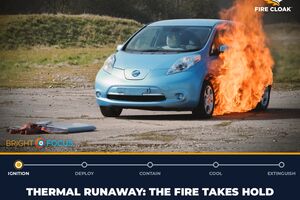
As electric and plug-in hybrid vehicles become more common in South Africa, dealerships and workshops face new safety challenges. In this article, sponsored by Bright Focus, we look at complete scenario surrounding the damaged high-voltage battery packs can present and the solution.
iCAUR is adding a large all-wheel drive SUV to its local range in the fourth quarter, with 335 kW and a claimed combined range of up to 1 000 km.