

New Mitsubishi Pajero is ready to reclaim its flagship status
The Mitsubishi Pajero is preparing for a new chapter, with an all-new generation set to return as the brand's flagship SUV.
- Product News
- 22 November 2026
Charging time remains a worry for many South Africans considering an electric vehicle, who still see it as a disruption rather than a quick stop at a filling station. That view is starting to shift.
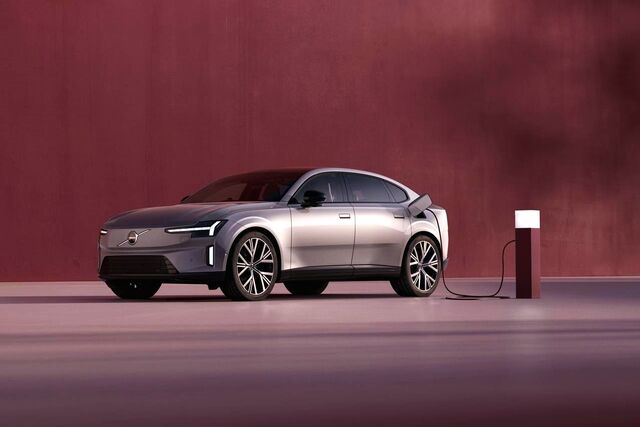
In August, Zero Carbon Charge announced that it would double the capacity at its two N3 hubs, taking each from 360kW to as much as 720kW. The hubs had been open for three months, and the upgrade was brought forward because more drivers were using them than the company had planned for.
A typical stop at a fast public charger runs to roughly half an hour, depending on the car. That is long enough for a grocery shop, a coffee with a friend or a school pickup.
Grant Locke, Managing Director of Volvo Car South Africa, puts it this way. “When you think about it, half an hour is not a long time. On a long journey, it passes while you’re still in the queue buying chips and waiting for everyone to come back from their bathroom break,” he says. “On shorter ones, you can still take up that time running to the ATM and making a quick call. The point being that charging your vehicle is no longer an inconvenience, it’s a quick pit stop while you go on with your day.”
The exact time depends on the car and the charger. Volvo’s ES90, built on an 800 volt system, is quoted at 10 to 80% in around 22 minutes, though that assumes a 350kW charger. The EX30 takes closer to 26 minutes on a 175kW unit, while most cars will need half an hour or more on the 75kW chargers common at shopping malls.
More charging stations are also appearing where people already spend time, such as shopping centres, office parks and restaurants. In Johannesburg, Cape Town and Durban, a driver can generally find one within about 20 kilometres.
Most charging happens at home overnight, at the lowest tariff drivers will pay, so the public network serves for topping up while motorists are already out. For that reason, where chargers sit matters more than how fast they run.
Electric ownership is still not frictionless. Charger availability varies, and long trips need more planning than a tank of petrol does. However, with petrol prices rising, the idea that every charge means thirty lost minutes assumes those minutes were otherwise free, when most were already taken by an errand, a coffee or a pickup. The infrastructure is catching up faster than the perception.
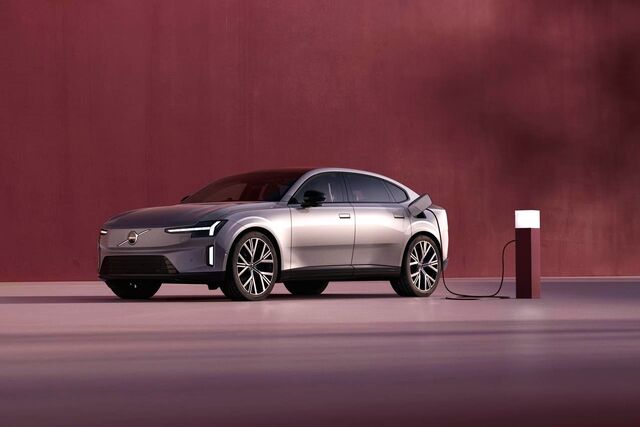
The Mitsubishi Pajero is preparing for a new chapter, with an all-new generation set to return as the brand's flagship SUV.
Behind every vehicle that rolls off a production line is a workforce whose skill, commitment and determination make it possible.
For many South Africans, the idea of owning an electric vehicle (EV) is appealing, but questions about charging, electricity costs, range and the practicalities of everyday use can make the decision difficult.
 Advertisement
 Advertisement
You can't buy happiness but you can buy cars and that's kind of the same thing.
Unknown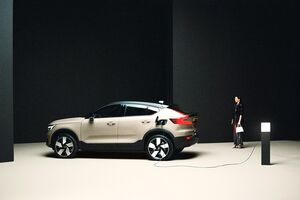
South Africa’s petrol price remains a concern for motorists, with inland 95-octane petrol staying above R30 a litre after the Department of Mineral and Petroleum Resources’ November adjustment.
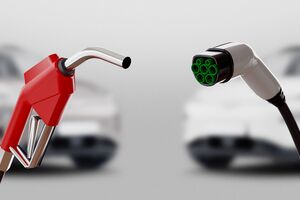
One of the main results of the 2026 Global EV Driver Survey, released by the Global EV Alliance (GEVA) this week, show that South African battery electric vehicle (EV) drivers are among the most satisfied in the world.
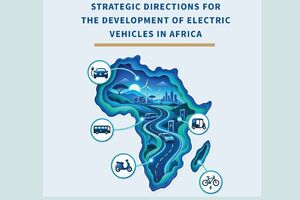
Energy security, electrification, grid infrastructure and sustainable transport take centre stage at COP31 in Antalya, Türkiye, as the climate conference devotes a full day to energy and transport. Africa enters that conversation with a plan of its own: the African Union’s (AU) Continental Framework on Electric Mobility (eMobility).