Drawing parallels with India, South Africa remains one of the more energy-intensive economies globally, where energy efficiency offers one of the fastest and most cost-effective means to lower input costs across the economy without constraining growth.
During South Africa's G20 Presidency in 2025, the B20 Industrial Transformation and Innovation Task Force presented market developments in India as a guideline for emerging economies, at a time when electric vehicle sales in India had passed 1,5 million units in the 2023-24 financial year.
The Task Force, chaired by Toyota South Africa CEO Andrew Kirby, found India did not get this growth from subsidies alone. Demand and supply incentives, such as the FAME II programme, increased the adoption of electric vehicles and built local supply chains. Investment in charging and industrial infrastructure made the new technology practical. Technical standards set fleet-wide performance targets, with each manufacturer responding with its product solutions.
“South Africa’s largest market supplier of vehicles now has a fixed path along technical standards for the supply of passenger vehicles,” says Executive Director of The Electric Mission, Hiten Parmar. “Manufacturers in India will build more efficient vehicles to meet these requirements.”
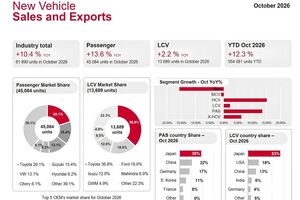
Standards also decide access to export markets. In 2025, South Africa exported 414 268 vehicles, and more than 80 percent of them went to the European Union (EU) and the United Kingdom. The EU single market integrates customs, regulations and standards into a framework that drives regional industrial scale.
If South Africa aligns its vehicle standards with international standards as also applicable in the EU, it aligns with these markets and opens high-value markets for new energy vehicles built locally. As a demand-side measure, South Africa taxes CO2 emissions from new vehicles at the point of sale but sets no fleet standard for manufacturers as a supply-side measure.
At the Fuels Industry Imbizo in June 2026, The Electric Mission also called for fuel efficiency standards to incorporated in the Cleaner Fuels 2 policy, which is expected to take effect in mid-2027, as South Africa still operates on the Euro 2 standard introduced in 1997.
"South Africa requires national policy coherence," Hiten says. "Our automotive industry already competes in export markets that are moving to zero emission vehicles, battery electric and hydrogen. Technical standards and production incentives for zero emission vehicles must work together, so that the local market and local factories move in the same direction."