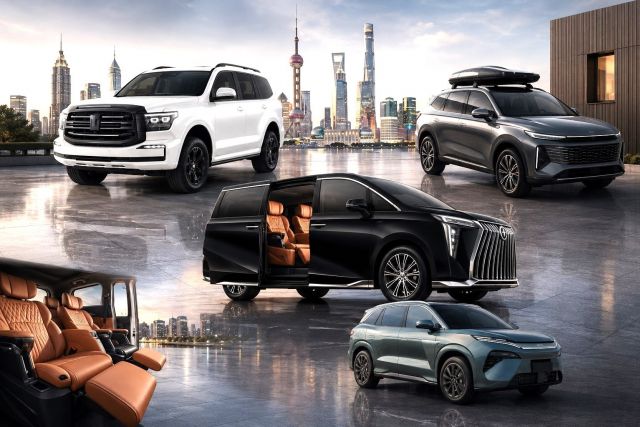
Denying the dramatic change in the automotive landscape in favour of Chinese-made cars is as pointless as digging to China. South African customers are increasingly voting with their wallets in favour of Chinese cars, mostly at the expense of legacy brands.
The perception that it is simply because Chinese cars are cheap does not tell the full story. It is more a case of value for money that traditional brands struggle to match. This is combined with all the bells and whistles even at entry level, modern fit and finish, funky styling, and the latest technology presented on an array of digital screens.
But not all Chinese cars can be considered cheap or affordable. At the last count, there were at least seven Chinese vehicles priced at R1 million and above. These are not just the typically expensive electric vehicles (EVs), but a combination of EVs, plug-in hybrids (PHEVs), hybrids (H), and range-extending electric vehicles (REEVs).
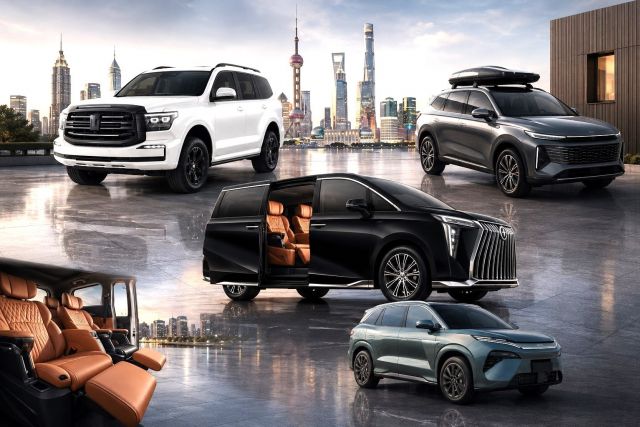
The “One Million Chinese Car Club” includes BYD’s Seal Premium and Performance (EV), Sealion 7 Premium and Performance (EV), Atto 8 Premium and Performance (PHEV). GWM brings the Tank 500 Ultra Luxury (PHEV) to the party, MG the Cyberster (EV), and GAC the M8 MPV (PHEV).
Sales for April among these models were in the region of 40 to 50 units. As the saying goes, not too shabby. It is also worth noting that while some range-topping models might be a million or more, other versions may be considerably less depending on powertrain and specification level.
If you lower the bar to just under a million, say between R900 000 and R1 million, the picture is just as impressive, with a number of vehicles knocking on the “One Million Chinese Car Club’s” door. Some already have a foot in the door being only R100 short of R1 million.
Let us start with the bakkies. BYD’s Shark 6 (PHEV), Chery Tiggo 9 Vanguard AWD (PHEV), Changan Deepsal S07 L (EV), Dongfeng 007 E2 540 AWD (EV), GWM P500 Ultra Luxury (PHEV), Tank 300 Ultra Luxury (PHEV), and the Omoda C9 Explore (PHEV) to call them by name. It is more difficult to put a number on monthly sales, but suffice it to say that between them, the total is probably a few hundred units.
Most of the Chinese manufacturers operating in South Africa have ranges that cover nearly all segments across the passenger and commercial vehicle spectrum.
Looking at the sales volumes and the prices, it is clearly not about “cheapies” anymore but about competing with the established brands on merit, some would argue.
Image: AI Generated.