

TVS powers South Africa’s growing delivery economy
South Africa’s rapidly expanding delivery sector is driving strong demand for affordable, dependable motorcycles that can withstand the demands of daily commercial use.
- Product News
- 20 November 2026
No, the Chinese are not coming to take over – they are already busy accomplishing it.

If you ever doubted that a new dawn has arrived for the South African automotive landscape, just look at the statistics. Consumers are increasingly spending their money on Chinese brands rather than the traditional legacy names. Well, at least most of them.
The Chery Group, with Chery, Omoda, Jaecoo, Jetour, iCaur and Lepas under its umbrella, achieved total sales of 6 649 units in April, placing it second behind Toyota’s 10 188 vehicles. Chery also outpaced Suzuki in third place with 5 363 units sold, and Volkswagen Group Africa with 4 814 units.
Two new entrants, iCaur and Lepas, also part of the Chery Group, have not yet registered their sales. Once they do, they will undoubtedly give Chery’s local volume drive an even stronger push and a another ultra luxury brand form Chery under consideration for our local market.
Chery has also acquired Nissan’s manufacturing plant in Rosslyn, outside Pretoria, where production of Jetour’s T-series (T1 and T2) will soon begin. While the different brands operate separately in South Africa, they share most of their mechanicals and parts, strengthening efficiency and scale.
Adding other Chinese manufacturers to the mix, such as GWM with monthly sales of 2 485 units, along with Geely, MG, Changan, DFSK, BYD, Foton and BAIC – the picture becomes clear: underestimating Chinese brands would be a costly mistake.
At the recent Beijing Auto Show, held under the theme Driving the Era, Smart Future, the event spanned 380 000 square metres across 17 halls. A total of 1 451 vehicles were displayed, including 181 global debuts and 71 concept cars, underscoring the scale and ambition of China’s automotive industry.

South Africa’s rapidly expanding delivery sector is driving strong demand for affordable, dependable motorcycles that can withstand the demands of daily commercial use.
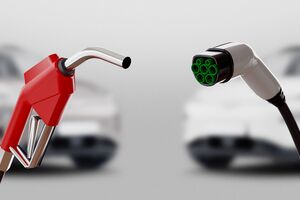
One of the main results of the 2026 Global EV Driver Survey, released by the Global EV Alliance (GEVA) this week, show that South African battery electric vehicle (EV) drivers are among the most satisfied in the world.
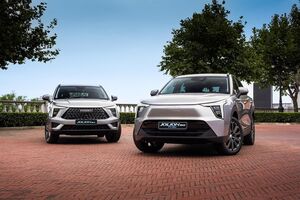
GWM South Africa has broadened its popular Jolion range with the introduction of the all-new Haval Jolion Max. Designed with modern families in mind, the newcomer combines increased interior space, new technology and a wider choice of powertrains, including petrol, hybrid and plug-in hybrid options.
 Advertisement
 Advertisement
Have you ever noticed that anybody driving slower than you is an idiot, and anyone going faster than you is a maniac?
George Carlin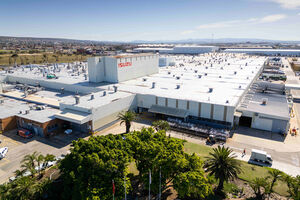
Isuzu Motors South Africa (IMSAf) has achieved a 38% reduction in Scope 1 and Scope 2 CO₂ emissions compared with its 2013 baseline while increasing vehicle production by 21% during the 2025/26 financial year at its Gqeberha manufacturing facility.

Diversifying oil supplies, investing in pipelines and rail infrastructure, improving port operations and expanding inland storage facilities are among the measures needed to reduce South Africa's vulnerability to international fuel supply disruptions.
Combined Motor Holdings (CMH) has appointed Charles Webber as the new Group CEO.