Electric vehicles (EVs) have introduced a whole new vocabulary into motoring. Instead of simply talking about litres of fuel, cylinders and kilometres per tank, motorists are now confronted with kW, kWh, AC, DC, WLTP, regenerative braking and a host of other terms.
Share with friends
It can sound complicated, but most of the terminology is quite simple once it is explained.
kW and kWh: What is the difference?
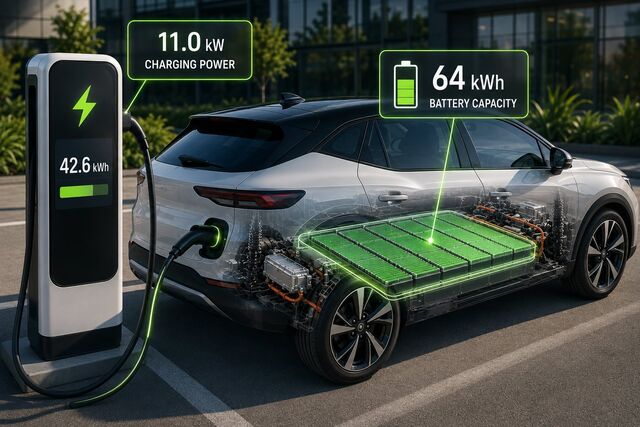
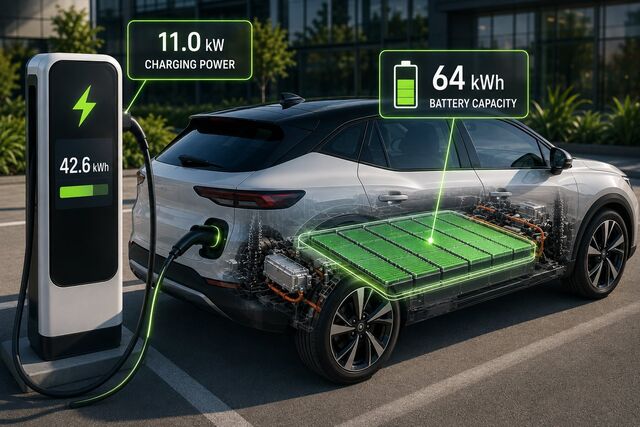
A kilowatt, or kW, is a measurement of power. In simple terms, it tells you how quickly electricity is being delivered. A 150-kW charger can therefore deliver electricity much faster than a 7-kW home charger.
A kilowatt hour, or kWh, is a measurement of energy and is generally used to describe the size of an EV's battery.
An easy way to understand the difference is to think about filling a fuel tank. The kW is the power speed at which you fill it, while the kWh is the size of the tank.
A 60-kWh battery can store 60 kWh of energy. How far the car can travel on that energy depends on how efficiently it uses it.
AC and DC charging:
AC stands for alternating current, which is the type of electricity supplied to homes. When an EV is charged using AC, the vehicle converts the electricity into the DC power needed by its battery.
AC charging is generally slower and is therefore well suited to charging at home or at work while the car is parked for several hours.
DC means direct current. With DC charging, the conversion takes place in the charging equipment, allowing electricity to be delivered directly to the battery at much higher power levels.
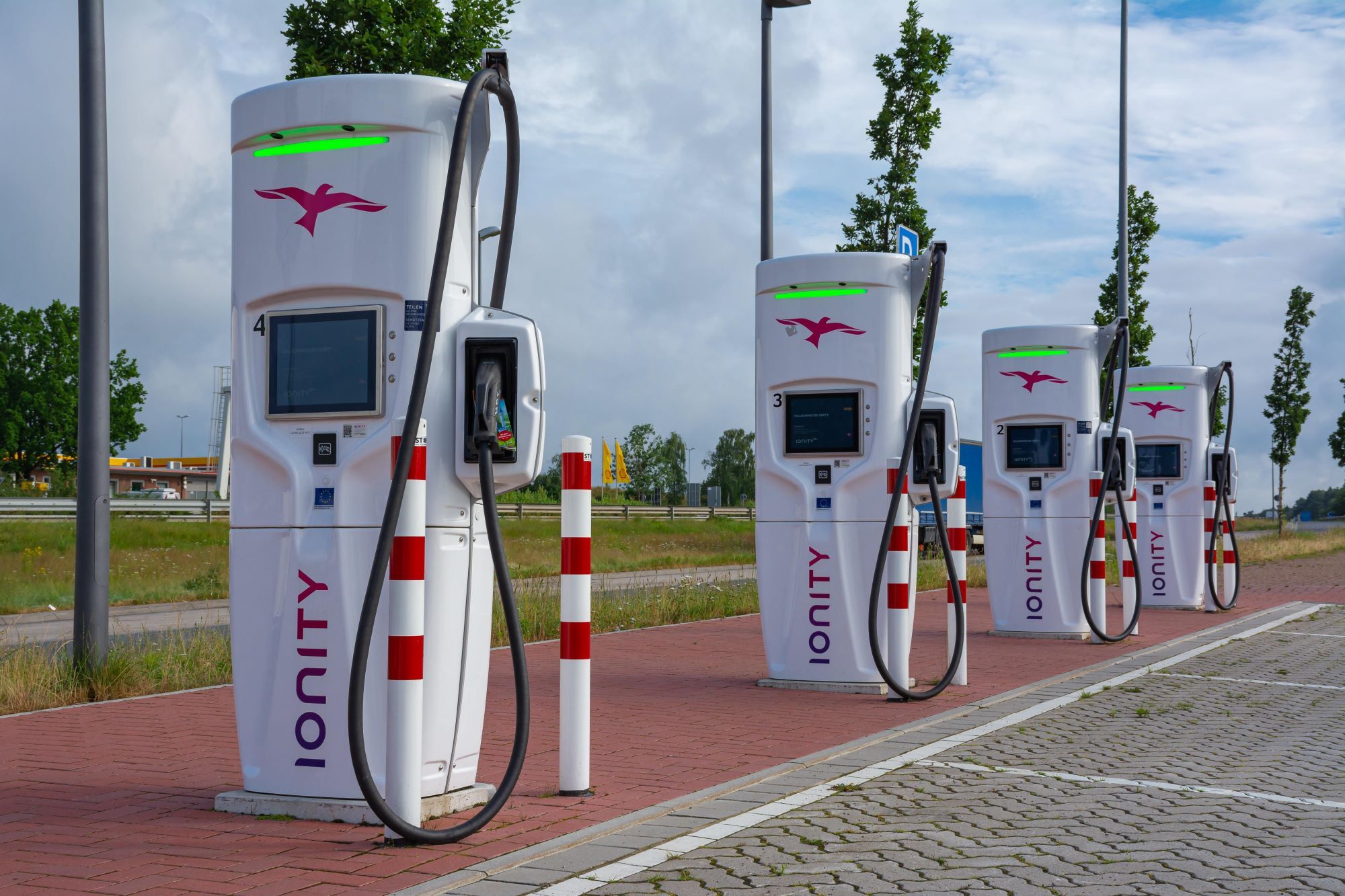
The International Energy Agency (IEA) classifies chargers up to 22 kW as slow, those above 22 kW and up to 150 kW as fast, and those of 150 kW and above as ultra-fast.
Why doesn't a 350 kW charger charge every car at 350 kW?
The number on the charger is not necessarily the speed at which your particular vehicle will charge.
If the charger can provide 350 kW but the car can accept only 150 kW, the vehicle will take a maximum of 150 kW. The battery, electrical system, software and cooling system all determine how much power an EV can accept.
What is a charging curve?
An EV does not normally charge at its maximum rate from almost empty to 100%.
The battery can accept more power when it has a low state of charge, but the charging rate normally falls as the battery becomes fuller. This is known as the charging curve.
It is one reason manufacturers commonly quote charging times from 10% to 80%, rather than from empty to full.
What do BEV, HEV and PHEV mean?
A BEV, or Battery Electric Vehicle, is fully electric and has no petrol or diesel engine also referred to as an EV in general terms (electric vehicle).
A HEV, or Hybrid Electric Vehicle, has an internal combustion engine and an electric motor. Its battery is generally charged by the engine and regenerative braking rather than by plugging it in.
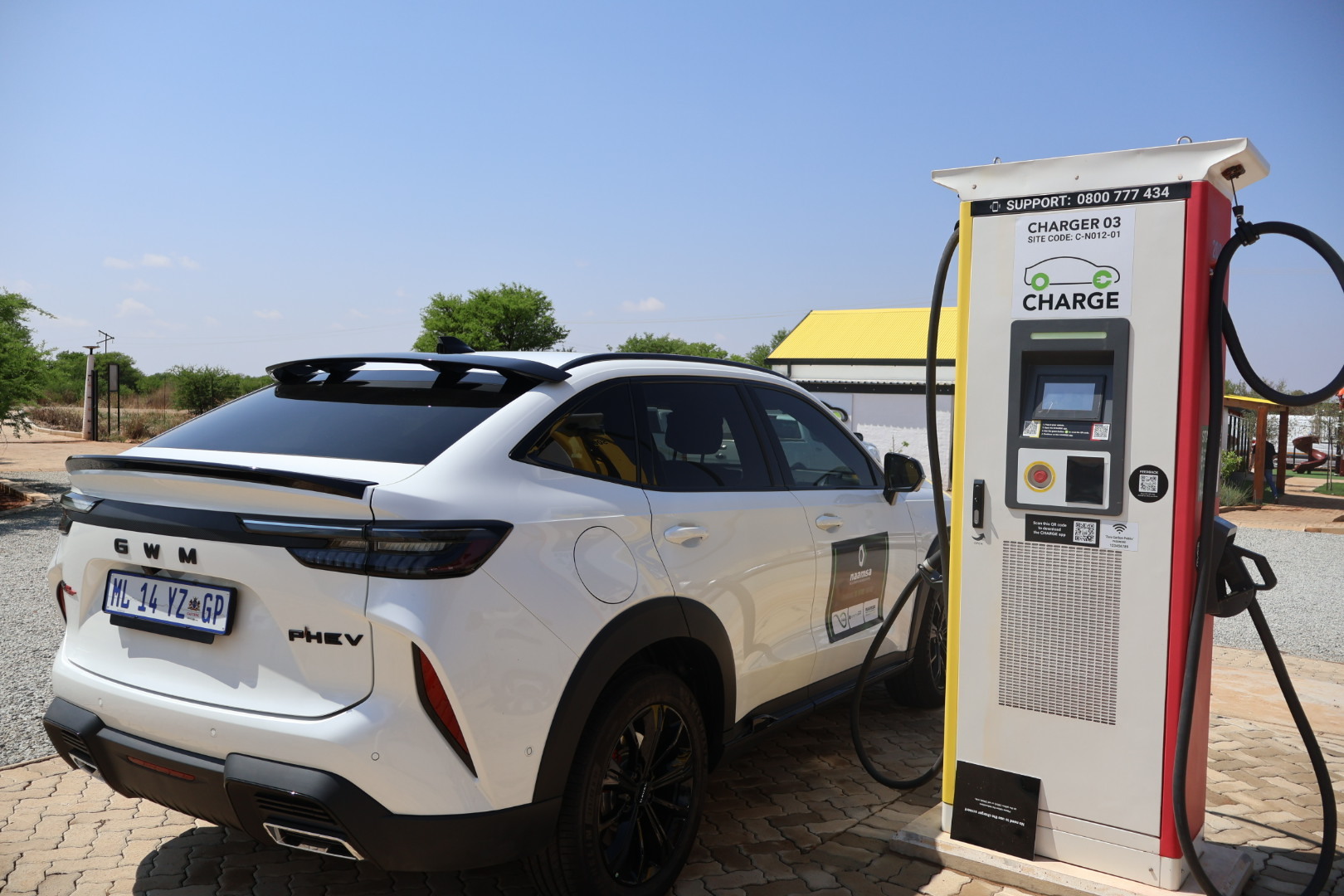
A PHEV, or Plug-in Hybrid Electric Vehicle, also has an engine and electric motor, but its larger battery can be charged from an external electricity supply.
All of the above are commonly referred to as new energy vehicles (NEVs).
WLTP, EPA and CLTC: Why are there different range figures?
Range figures are normally produced using standardised tests, but different regions use different testing procedures.
WLTP, or Worldwide Harmonised Light Vehicles Test Procedure, is widely used in Europe. EPA testing is used in the United States and CLTC, or China Light-Duty Vehicle Test Cycle, is used in China.
NEDC, or New European Driving Cycle, is an older European system that has largely been replaced by WLTP.
The important point is that these figures are not necessarily directly comparable because the vehicles are being tested under different procedures.
And the official figure is not a guarantee of real-world range. Speed, temperature, wind, hills, passengers, luggage and the use of heating or air conditioning can all affect consumption.
What does EV efficiency mean?
It is usually expressed as kWh per 100 km, or sometimes as kilometres per kWh. It is broadly the electric equivalent of the litres per 100 km figure motorists already understand from petrol and diesel cars.
For example, if an EV uses 18 kWh per 100 km, it needs 18 units of electricity to travel 100 km. An ICE vehicle using 7 litres per 100 km needs seven litres of petrol or diesel to cover the same distance.
The two figures cannot be directly compared as though a litre of fuel were the same as a kWh of electricity, because they are different units of energy. What they do have in common is that the lower the consumption figure, the more efficiently the vehicle is using its energy.
The IEA's recent analysis uses EV consumption figures in the region of 0.15 to 0.20 kWh per kilometre, which is equivalent to about 15 to 20 kWh per 100 km, while the ICE vehicles in its comparison ranged from 4.8 to 8.6 litres per 100 km.
So, for an everyday example, imagine an EV that uses 18 kWh/100 km and a petrol car that uses 7 litres/100 km. If both travel 1 000 km, the EV will use about 180 kWh of electricity, while the petrol car would use about 70 litres of fuel.
This is also why a bigger EV battery does not automatically mean a more efficient car. A 60-kWh battery in an efficient car could provide considerably more range than the same size battery in a larger, heavier vehicle that consumes more electricity.
The IEA says battery electric vehicles are generally two to four times more energy efficient than internal combustion engine vehicles, although the exact difference varies between vehicles and driving conditions.
BYD and the move towards 1.5 MW charging
Charging technology is now moving into territory that would have seemed extraordinary only a few years ago.
BYD's new FLASH charging technology can deliver up to 1 500 kW, or 1.5 MW. The company has claimed charging from 10% to 70% in five minutes for compatible vehicles.
The IEA identifies BYD's 1.5 MW FLASH chargers as one of the major developments in ultra-fast charging in 2026. However, only a small proportion of electric cars can currently make use of charging speeds above 250 kW.
The important thing is that 1 500 kW is the charger's potential maximum, not necessarily the power a car will receive throughout the entire charging session.
What does this mean for the electricity grid?
A charging station with several very powerful chargers operating simultaneously can create substantial local electricity demand. The issue is therefore not only whether there is enough electricity being generated, but whether the local grid has the transformers, substations, cables and other infrastructure needed to deliver it.
The IEA warns that grid capacity constraints could become more pronounced as EV numbers and charging speeds increase. At the same time, it points to smart charging and vehicle-to-grid technology as ways of managing demand.
Smart charging essentially means controlling when vehicles charge, helping avoid unnecessary peaks in electricity demand.
V2G, or vehicle-to-grid, goes a step further. With suitable vehicles and equipment, electricity can flow back from an EV battery into the grid when required.
So, the future of EV charging is not simply about building the biggest and fastest charger possible. It is also about managing electricity intelligently.
For motorists, the message is fairly simple. kW tells you how quickly you can charge, kWh tells you how much energy the battery stores, and efficiency tells you how far you can travel with that energy.
Sources:
International Energy Agency: Global EV Outlook 2026, including EV charging speeds, ultra-fast and megawatt charging and grid implications. IEA Global EV Outlook 2026
International Energy Agency: Electric vehicle charging, including charger classifications and BYD's 1.5 MW FLASH charging. IEA Electric Vehicle Charging
BYD: Blade Battery 2.0 and FLASH Charging technology.
US Environmental Protection Agency: EV range testing methodology.
Few can claim a bond with Mazda as deep as the Plitt family's. For more than 60 years, Mazda has been part of the family's story through Mazda Vereeniging, the oldest Mazda dealership in South Africa and a longstanding standalone representative of the brand.
Peugeot has expanded its Landtrek line-up with the addition of a new turbodiesel-powered model aimed at buyers looking for increased performance, greater towing capability and updated technology. The latest derivatives join the range from October 2026 and introduce a significant powertrain upgrade for the bakkie.
SMSA Africa Logistics Group has added five Hino 300 diesel electric hybrid trucks with van bodies to its fleet, following a two-year trial of three such trucks in its delivery operation.
South Africa's new energy vehicle market is becoming increasingly diverse, with plug in hybrid electric vehicles (PHEVs) and fully electric vehicles gaining ground while traditional hybrids remain the largest category.
As South Africans celebrate their rich heritage, it is also worth reflecting on a lesser-known chapter of the country's history: its long connection with electric vehicles (EVs).