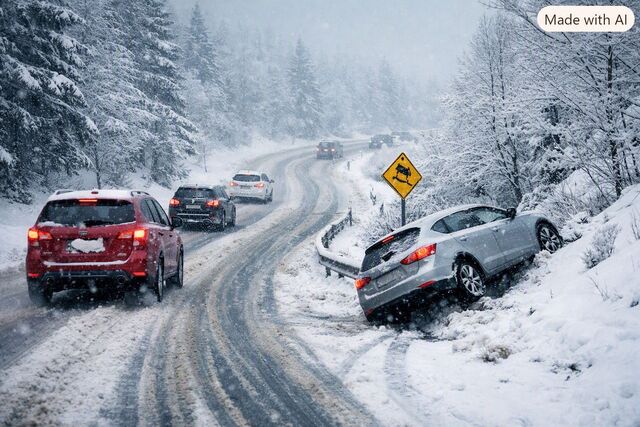
Eugene Herbert, CEO of MasterDrive, notes that snow and ice remain rare in South Africa, meaning few drivers have real experience handling them. Heavy rain catches just as many drivers off guard, especially in the Highveld, which seldom experiences winter rainfall. That means the fundamentals matter every time conditions change, whether it is rain, ice or snow.
Driving in snow and icy conditions:
Always practise defensive driving. Check that your tyres are properly inflated, as under‑inflated tyres reduce traction further. Gently test your brakes to gauge how slippery the road is. Avoid cruise control and sport mode. Accelerate and decelerate slowly to maintain traction and prevent skidding. Reduce your speed. Triple your normal following distance in snow, or leave eight to ten seconds on icy roads.
Switch your headlights to dim and avoid fog lights, as they can make it difficult for oncoming traffic to see you. If your wheels start to spin, ease off the accelerator and avoid harsh braking. Steer in the direction of the spin until you regain control, then straighten gently.
Driving in the rain:
Most of the advice for driving in snow also applies to driving in rain: slow down and increase following distances. Check that your tyre tread and pressure are in good condition, as worn or under‑inflated tyres are far more prone to aquaplaning.
If you start to aquaplane, ease off the accelerator, keep the steering straight, and avoid sudden braking until you feel the tyres regain grip. Switch on your headlights, even during the day, to improve visibility to other drivers. Avoid driving through standing water where possible, as it is difficult to judge its depth and hidden hazards may lie beneath. Make sure your wipers and demisters are in good working order before you set off.
Watch out for black ice:
Sleet and rain can freeze on contact with the road to form black ice, a thin, transparent layer that is far harder to spot than snow and just as dangerous. It is most likely to form on bridges and shaded stretches of road, and tends to look like a glossy, slightly wet patch.
Stay alert on bridges and shaded sections, where ice forms first. Keep your steering straight and avoid braking. Ease off the accelerator and let the car slow naturally. Steer gently into corners to avoid over‑steering and losing control.
Keep to these basics on any drive where rain, ice or snow is a possibility, regardless of how the last one went or what the forecast says.
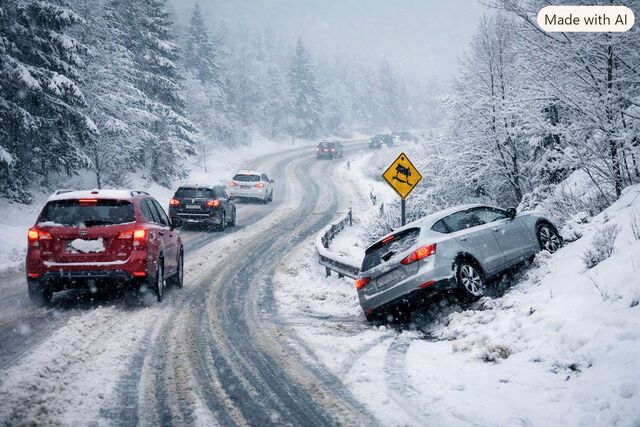
(Image: AI Generated)