Diversifying oil supplies, investing in pipelines and rail infrastructure, improving port operations and expanding inland storage facilities are among the measures needed to reduce South Africa's vulnerability to international fuel supply disruptions.
Share with friends
Ongoing instability in the Middle East has squeezed oil and fuel flows through the Strait of Hormuz and the Bab el-Mandeb Strait, two of the world's most important shipping routes. For South Africa, the timing has created a perfect storm.
Motorists are feeling the effects at the pumps, while rising road freight costs are adding further pressure to prices on shop shelves.
The situation has also exposed weaknesses in South Africa's energy security. The country holds limited oil reserves, estimated at roughly 30 days' supply, while logistical problems have made managing and distributing those reserves less effective than they should be.
Dealerfloor
spoke to Prof Diana Viljoen, Associate Professor, Programme Leader and Chairperson of the Economic and Management Sciences Research Ethics Committee (EMS-REC) at North-West University (NWU), and Karen Visser, Lecturer and Programme Leader for Transport Economics and Logistics Management in the Faculty of Economic and Management Sciences at NWU.
"The high fuel price is not only the result of the bottle neck with oil and fuel supply from the sources in the Middle East. Problems inside South Africa, regarding our infrastructure, strategic management and a clear plan is at the heart of high energy prices," says Diana.
Diversifying our energy supply:
South Africa's dependence on international oil markets leaves it vulnerable to developments over which it has little control. While the Middle East remains an important source of energy, the country needs to consider a broader range of suppliers and alternative markets.
“South Africa's dependence on international oil markets makes it vulnerable to developments over which it has little control. While the Middle East remains an important source of energy, the country should be looking more broadly at potential suppliers and alternative markets,” Diana explains.
“Nigeria and Angola, for example, are African oil-producing countries that deserve consideration as part of a wider supplier strategy. South Africa should also explore other international markets rather than concentrating its supply arrangements around a limited number of sources.
“Diversification is not simply about finding another country from which to buy oil. It requires reliable commercial relationships, suitable shipping arrangements and the infrastructure to receive, store and distribute the products,” she says.
Domestic production remains insufficient to remove the country's exposure to international supply chains.
"We really do not have enough domestic supply, apart from synthetic fuel, so we have to try and reduce vulnerability," according to her.
Karen agrees that South Africa needs to become more independent and reduce its reliance on imported energy. “A broader supplier base, supported by adequate reserves and infrastructure, would give South Africa more flexibility when international markets experience disruptions.”
The Durban–Gauteng pipeline and the rail alternative
South Africa's pipeline infrastructure, particularly the Durban–Gauteng corridor, is central to moving petroleum products from the coast to major inland consumption centres.
However, dependence on a limited number of routes creates vulnerabilities. Pipeline capacity, maintenance and alternative transportation routes all need attention, Diana tells Dealerfloor.
The discussion also highlighted the need for additional pipeline capacity and better connections between major centres, including Durban, Johannesburg and Cape Town. Rail should play a considerably bigger role in transporting fuel and other bulk commodities.
South Africa's declining rail capacity has resulted in more freight being moved by road, placing additional pressure on an already struggling road network. This is particularly concerning given the volumes of coal, agricultural products, chemicals and petroleum products that need to be transported, Karen says.
Harbours and the coastal bottleneck
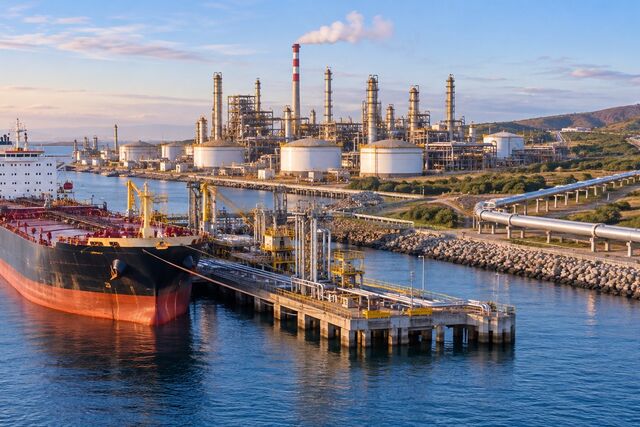
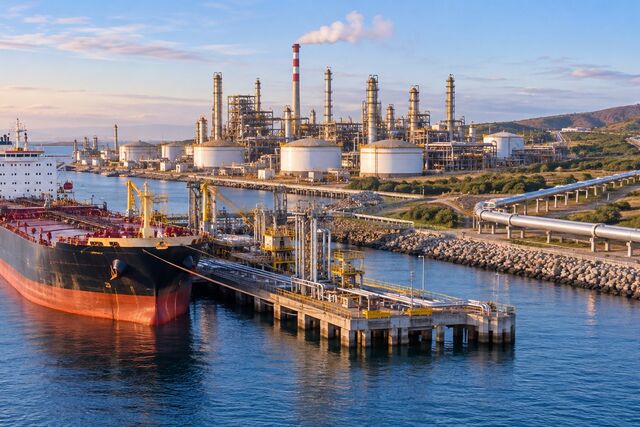
Ports are another critical link in the fuel supply chain. Imported crude oil and refined petroleum products must be received, handled and transferred into storage and distribution networks before reaching consumers.
The concentration of important infrastructure around Durban makes the efficiency and reliability of its port operations particularly important. Concerns were also raised about the vulnerability of coastal infrastructure, including the proximity of refineries to port and pipeline networks.
South Africa's port challenges extend beyond the fuel industry, with implications for its competitiveness as a regional logistics hub.
Neighbouring countries such as Namibia, with its Port of Walvis Bay, and Mozambique, with the Port of Beira, appear to be functioning more effectively in certain respects. These ports provide alternative routes for cargo owners and shipping operators, potentially attracting business that might otherwise move through South African ports.
If South Africa cannot offer competitive turnaround times, reliable infrastructure and efficient cargo handling, it risks losing valuable business to its neighbours, affecting port revenue as well as associated logistics, transport and economic activity.
As Karen explains: “Improving port operations must therefore go hand in hand with investment in supporting infrastructure. Receiving tankers is only one part of the process. The ability to unload, store and move products inland is equally important. South Africa needs to consider its ports as part of an integrated national energy network, rather than treating them as separate facilities.”
More storage inland:
Another issue raised was the need to increase strategic petroleum storage capacity inland rather than concentrating it around coastal facilities.
Larger storage facilities closer to major consumption centres, particularly in Gauteng, could provide greater flexibility when coastal infrastructure or transportation routes experience disruptions.
Karen suggested bringing oil inland and storing it until refinery capacity becomes available or the products can be moved through the pipeline network. She specifically referred to the potential of facilities around Olifantsfontein in Gauteng.
“The underlying principle is that South Africa should have sufficient strategically positioned reserves to manage disruptions without immediately placing additional pressure on an already stretched supply chain,” she tells us.
Refining capacity and the road infrastructure problem:
South Africa's domestic refining capacity has declined dramatically, leaving the country increasingly dependent on imported refined petroleum products.
Importing crude oil is only the beginning of the process. It must be transported to a refinery, processed and distributed. Where domestic refining capacity is insufficient, finished products have to be imported instead.
“Operating and maintaining refineries requires substantial capital investment, making decisions about upgrading and restarting facilities complicated and expensive. Nevertheless, the loss of domestic refining capacity increases the country's exposure to international supply and transportation disruptions,” Diana tells Dealerfloor.
The decline in rail capacity also affects road infrastructure. When bulk freight cannot be moved efficiently by rail, trucks become the alternative, adding pressure to roads already suffering from inadequate maintenance.
"The political will and long term planning are obstacles in successfully looking and implementing remedial plans,” Karen says. She also emphasised the importance of accountability to secure good governance.
“Restoring the balance between road, rail and pipeline transportation is therefore not simply a fuel industry requirement. It is essential to the efficiency of the entire South African economy,” she says.
Better coordination and competent management:
Ultimately, the challenges point towards the need for a more coordinated approach to national energy management. South Africa's fuel supply chain involves government departments, Transnet, port operators, pipeline managers, refineries, fuel companies and logistics providers.
Without proper coordination and reliable information, investment decisions and operational planning become fragmented.
A centralised system providing a clearer picture of national fuel supplies, storage capacity, transportation infrastructure and future demand could improve planning and help identify weaknesses before they become serious problems.
Diana stresses that reducing the country's vulnerability requires a longer-term approach. "We need to diversify supply and increase our domestic reserves," she says.
Karen argues that qualified people should be appointed to manage critical infrastructure and that political responsibility must go hand in hand with accountability. “The issue is not necessarily the absence of expertise in South Africa, but whether that expertise is being used effectively.”
A problem beyond the price at the pump:
South Africa cannot control international oil prices, geopolitical conflicts or disruptions to major shipping routes. It can, however, address many of the weaknesses within its own supply chain.
“Diversifying suppliers, expanding pipelines, improving port operations, increasing inland storage, reconsidering domestic refining capacity and restoring rail freight are interconnected parts of the same challenge,” Diana concludes.
GWM South Africa has broadened its popular Jolion range with the introduction of the all-new Haval Jolion Max. Designed with modern families in mind, the newcomer combines increased interior space, new technology and a wider choice of powertrains, including petrol, hybrid and plug-in hybrid options.
Isuzu Motors South Africa (IMSAf) has achieved a 38% reduction in Scope 1 and Scope 2 CO₂ emissions compared with its 2013 baseline while increasing vehicle production by 21% during the 2025/26 financial year at its Gqeberha manufacturing facility.
Isuzu Motors South Africa (IMSAf) has achieved a 38% reduction in Scope 1 and Scope 2 CO₂ emissions compared with its 2013 baseline while increasing vehicle production by 21% during the 2025/26 financial year at its Gqeberha manufacturing facility.
Cheap labour and state subsidies are the usual explanations for Chinese car prices. Research from think tanks and universities suggest the answer is far more complicated.