
Your next car deal could come with an AI upgrade you’ll appreciate
Artificial Intelligence (AI) can play a vital role for customers to make the right choice when hunting for a pre-owned vehicle.
- Industry News
- 5 November 2026
Tesla’s official arrival in Morocco marks a pivotal chapter in the company’s global expansion, introducing the Model 3 and Model Y to African consumers for the first time.

The launch event, held at Casablanca’s AnfaPlace Mall on 6 February 2026, establishes Morocco as Tesla’s inaugural retail presence on the continent.
Morocco’s emergence as Tesla’s chosen entry point is rooted in strategic geography and policy alignment. Located just 14 kilometres from Spain, the country acts as a natural extension of the European electrical vehicle (EV) network, already frequented by European Tesla drivers who rely on Morocco’s early Supercharger sites built years before official sales began.
At the same time, Morocco’s ambitious renewable‑energy agenda, supported by major solar investments and national decarbonisation goals, creates fertile ground for EV transition, mirroring Tesla’s mission.
Market dynamics further strengthen the business case. Morocco recorded roughly 235,000 new‑car sales in 2025, representing 33% year‑on‑year growth and signalling strong consumer momentum. Although internal combustion vehicles still dominate, EV uptake is accelerating rapidly: electric‑vehicle sales surged 176.5% in the first half of 2025, with the national EV fleet reaching about 11 000 vehicles supported by nearly 1 000 public charging points. By entering a market already showing swift electrification, Tesla positions itself at the crest of Morocco’s mobility transition.
Tesla’s Moroccan debut also highlights a contrast with South Africa, the continent’s largest automotive market. Despite nearly 600,000 new‑vehicle sales in 2025, South Africa’s lack of EV incentives and high import duties have constrained Tesla’s ability to launch there, pushing the company to prioritise Morocco’s more favourable regulatory landscape.
Importantly, Tesla enters Morocco with an established foundation. The company has been operating Supercharger stations since 2021, now expanded to six sites across the country, ensuring robust infrastructure for early adopters. The new pop‑up store offers hands‑on customer engagement, after‑sales support, and access to Tesla’s broader energy ecosystem, key elements for fostering long‑term consumer confidence.
Tesla’s expansion into Morocco is more than a regional milestone; it is a strategic bet on Africa’s growing electrification potential. As Morocco strengthens its role as a renewable‑energy and automotive‑manufacturing hub, Tesla’s arrival may well accelerate the continent’s shift toward sustainable mobility.

Artificial Intelligence (AI) can play a vital role for customers to make the right choice when hunting for a pre-owned vehicle.
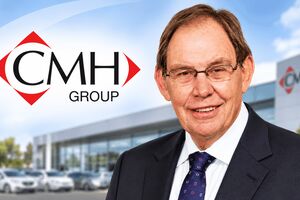
The South African motor industry has lost one of its longstanding business figures following the passing of Jebb McIntosh, the group chief executive of Combined Motor Holdings (CMH), on Monday, 2 November 2026.

“South Africa’s automotive industry has been AGOA’s largest user, but for the sector the preference has already been largely overridden by the 25% Section 232 tariffs applied on vehicles and components. Losing AGOA adds a further cost to an industry that has already absorbed a significant shock.”
 Advertisement
 Advertisement
Cars are the ultimate symbol of freedom, independence and individualism. They offer the freedom to ‘go anywhere,’ whenever it suits and with whom one chooses.
Sarah Redshaw
India, the largest source of passenger vehicle imports for South Africa, has finalised its fuel efficiency standards for passenger vehicles.
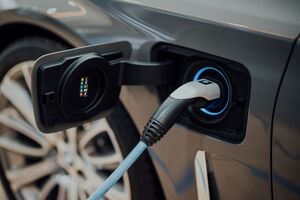
South Africa’s new energy vehicle (NEV) market continued to expand during 2026, with sales for the first nine months of the year already exceeding the total recorded during the whole of 2025.
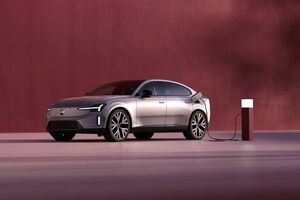
Charging time remains a worry for many South Africans considering an electric vehicle, who still see it as a disruption rather than a quick stop at a filling station. That view is starting to shift.