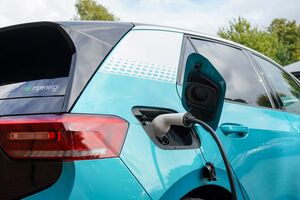
The study, carried out by Arval, assessed 24 000 State of Health (SoH) certificates from a broad mix of EVs and plug‑in hybrids (PHEVs). The findings highlight a level of durability that challenges long‑standing public concerns about early battery decline.
Arval has issued more than 30 000 certificates since beginning its battery assessment initiative, positioning the company as a leader in the evaluation and remarketing of used electric vehicles. The latest dataset, three times larger than the company’s early 2025 study, provides a more refined picture of how batteries perform in real driving conditions.
According to the updated analysis, the average EV battery retains 93 percent of its original capacity after 70 000 kilometres. Even vehicles with 160 000 kilometres on the clock, or six years of use, generally maintain over 90 percent of their initial capacity. Newer EV models show even stronger results, outperforming earlier generations by two to three percentage points.
The study also identifies a consistent pattern of gradual battery ageing. After a small initial dip, capacity tends to fall by roughly one percent for every additional 25 000 kilometres driven. These results help counter the widespread belief that EV batteries deteriorate quickly or unpredictably.
Despite the solid evidence, misconceptions about rapid battery decline remain common across European markets. Arval hopes that a clearer presentation of independently verified data will encourage more confidence among buyers in the second‑hand EV market. Pascal Seeger, Arval’s Global Remarketing Director, has reiterated that the findings simply reinforce the strong performance already identified in previous years.
Technological advances, including progress in cooling systems, energy management and general battery design, are also improving longevity in newer electric vehicles. These enhancements support expectations that battery durability will continue to improve over time.
Looking ahead, new European regulations will soon introduce standardised reporting of battery health. The current SoH metric will evolve into the State of Certified Energy, and by 2027 drivers will be able to view battery health directly on their vehicle dashboards. Each battery will also be accompanied by a digital Battery Passport that records its history.
Arval remains a pioneer in this field as the first leasing company to provide official battery health certificates during vehicle resale. Working with certified partners Moba and Aviloo, the company offers a consistent and impartial assessment process that benefits both sellers and buyers.