From advanced battery systems to cutting‑edge charging infrastructure, these sessions provide a practical look at the technologies, challenges, and opportunities defining the next era of transport.
What are the needs for electric vehicles (EVs), plug-in-hybrid electric vehicles (PHEVs) and the original internal combustion engine (ICE) when it comes to modern day workshops?
For franchised dealers and independent workshops alike, the question is no longer simply how these powertrains differ, but what it actually costs to equip a workshop to service them safely and efficiently.
According to the National Automobile Dealers' Association (NADA) and the Retail Motor Industry Organisation (RMI), workshops servicing electric vehicles require dedicated high voltage safety equipment, specialised diagnostic tools and technicians who have completed manufacturer approved training.
At first glance, it is easy to assume that an EV workshop is dramatically more expensive than a conventional one. The reality is more nuanced. Most franchised dealerships already own the majority of the equipment required to service ICE vehicles. Becoming EV ready is therefore an incremental investment rather than replacing an entire workshop, putting the additional costs into proper perspective.
Let’s start with the traditional workshop and then the new kids on the block.
The cost of an ICE workshop:
A modern ICE workshop is centred on mechanical systems. Engines, transmissions, exhaust systems and fuel components require significant tooling and infrastructure, including professional tool sets, engine hoists, transmission jacks, oil storage and disposal systems, exhaust extraction equipment, emissions testing systems, diagnostic computers, vehicle lifts and compressed air systems.
A well-equipped franchised dealership workshop will typically have between R1.5 million and R4 million invested in workshop equipment, diagnostic computers and supporting infrastructure before servicing its first vehicle. Diagnostic computers alone can cost between R30 000 and R120 000 each, often with annual software subscriptions. Emissions testing equipment can exceed R100 000, while oil management systems, engine hoists and other heavy duty equipment add substantially to the overall investment.
In other words, a modern ICE workshop is already a multi-million rand operation before a single customer vehicle enters the service bay.
The cost of an EV ready workshop:
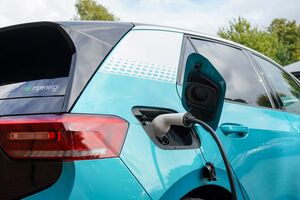
Electric vehicles eliminate many of the mechanical systems associated with conventional vehicles. There are no oil changes, exhaust systems or spark plugs. Instead, workshops must invest in equipment capable of safely working on high voltage electrical systems.
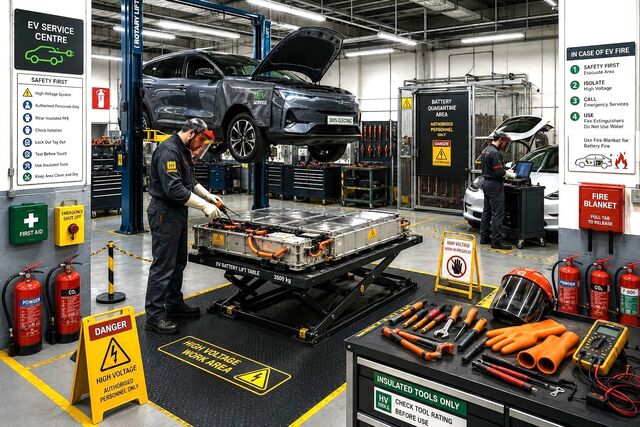
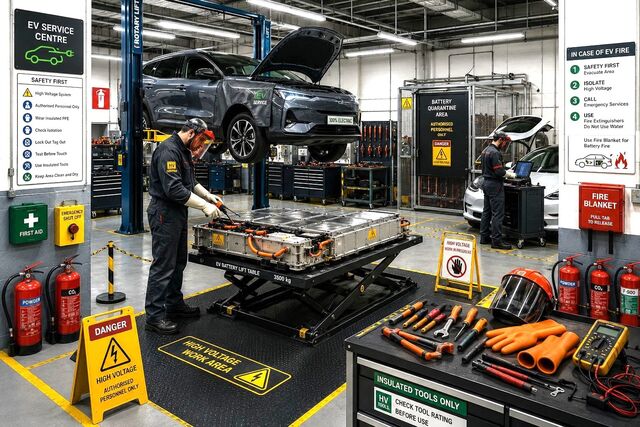
According to guidance from NADA, the RMI and the Tyre Equipment Parts Association (TEPA), an existing dealership workshop typically requires insulated one thousand volt tool sets, high voltage protective gloves, insulation testers, specialised multi-meters, battery lifting equipment, thermal imaging devices, EV compatible diagnostic systems and on site charging infrastructure before it can safely service electric vehicles.
Industry estimates suggest that upgrading an existing dealership workshop to basic EV readiness generally costs between R400 000 and R1 million, while a fully equipped EV certified facility with multiple trained technicians can require an investment of between R1 million and R3 million. High voltage insulated tool sets alone may cost between R30 000 and R100 000, while battery lift tables range from R80 000 to R200 000, depending on specification.
Unlike ICE workshops, however, EV facilities do not require oil disposal systems or exhaust extraction equipment. The investment shifts away from mechanical infrastructure towards electrical safety, battery handling and advanced software diagnostics.
The cost of a PHEV workshop:
Plug-in-hybrids combine both technologies, retaining a conventional combustion engine while adding a high voltage battery and electric drive system.
For workshops, this effectively means supporting two powertrains under one roof. A PHEV capable facility requires all the tooling and infrastructure associated with ICE vehicles, together with the high voltage safety equipment, specialised diagnostics and technician training needed for EVs.
As a result, a fully equipped PHEV dealership workshop generally represents the highest investment level. If an ICE workshop requires between R1.5 million and R4 million in equipment, and EV capability adds a further R400 000 to R1 million or more, a fully equipped PHEV workshop will typically have between R2 million and R5 million invested in tooling and infrastructure.
More evolution than revolution:
The difference between ICE and EV workshops is often less dramatic than many people expect. Traditional workshops already require substantial capital investment in mechanical equipment, diagnostic technology and emissions compliance. EV capability builds on that existing foundation rather than replacing it.
The real change lies in where the money is spent. ICE workshops invest heavily in mechanical hardware and fluid management systems. EV workshops direct more of their investment towards electrical safety equipment, battery handling technology and sophisticated software diagnostics.
For dealers, the decision is therefore strategic rather than purely financial. Becoming EV ready requires additional investment, but not a completely new workshop.
As South Africa's vehicle parc continues to diversify, dealership workshops will continue evolving alongside it. The tools may increasingly shift from engine hoists and exhaust extractors to battery lifts and insulation testers, but one reality remains unchanged: professional vehicle servicing has always required significant capital investment, regardless of what powers the vehicle.
- Sources: National Automobile Dealers' Association (NADA); Retail Motor Industry Organisation (RMI); Tyre Equipment Parts Association (TEPA); Toyota South Africa Motors; BMW Group South Africa; Mercedes-Benz South Africa; Volvo Car South Africa.