

Terms and conditions - Win a Vezopay Ring
The terms and conditions for the competition for a Vezopay Ring, naamsa Autoweek 2026.
- Industry News
- 13 October 2026
Ahead of the Budget Speech on Wednesday, Zero Carbon Charge (CHARGE) calls on Finance Minister Enoch Godongwana to align import duties on electric vehicles (EVs) with those applied to internal combustion engine (ICE) vehicles.
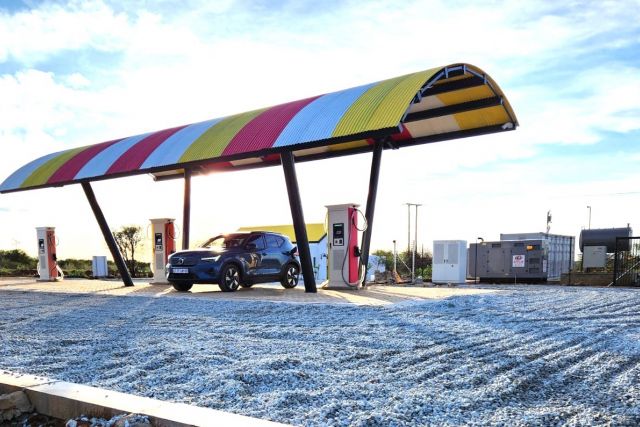
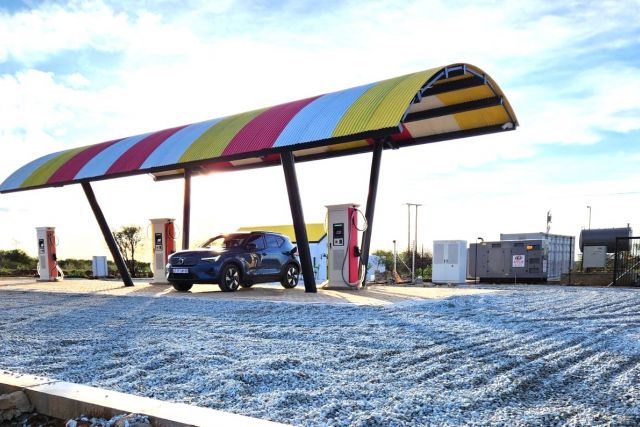
It also calls for the scrapping of ad valorem tax on EVs and allocation of dedicated funding to roll out off-grid, solar-powered EV charging infrastructure nationwide.
South Africa cannot tax clean mobility as a luxury while claiming to prioritise decarbonisation and industrial growth, nor can it expect EV adoption to accelerate without funding the infrastructure that makes ownership practical, CHARGE claims.
While CHARGE welcomes the 150% manufacturing tax incentive for electric and hydrogen-powered vehicles from 1 March 2026, this will not unlock scale if EVs continue to face high import duties and additional ad valorem (luxury) tax.
“You cannot incentivise EV production on one hand and penalise EV adoption on the other,” says Joubert Roux, Co-Founder and Chair of CHARGE. “Without urgent tax reform and infrastructure funding, South Africa risks constraining domestic EV demand at precisely the moment it is trying to attract EV investment.”
According to the Automotive Business Council | naamsa, hybrid and electric passenger vehicle sales rose 8.1% year-on-year in the first ten months of 2025, reaching 13 358 units, after a 105% surge in 2024. Market share now stands at 3.8%, excluding one major EV manufacturer that does not report to naamsa.
“Demand is growing,” Joubert says. “But it will stall if drivers don’t see charging stations where they need them. Without a visible, reliable network, especially along major highways and freight corridors, consumers will lack the confidence to buy EVs.”
National Treasury must now move beyond policy intent and fund charging infrastructure, as envisaged in the 2023 EV White Paper. The policy recognises charging infrastructure as a foundational pillar of South Africa’s EV transition, committing government to enable large-scale rollout, remove regulatory bottlenecks and crowd in private investment. It also acknowledges that off-grid charging solutions can support EV adoption without adding pressure to an already constrained electricity system.
CHARGE is calling on Treasury to fast-track implementation by recognising off-grid charging stations as both energy and transport infrastructure and supporting their rollout accordingly.
The EV charging network will largely be built by the private sector but only if the financial framework makes it viable. The 2026 Budget must therefore provide:
“Charging infrastructure requires significant upfront capital and long payback periods,” Joubert says. “Government doesn’t need to build the network, but it must create the conditions for the private sector to scale it.”
The terms and conditions for the competition for a Vezopay Ring, naamsa Autoweek 2026.
Nearly a decade after entering the South African market, JAC Motors South Africa is preparing for its next phase of growth through a substantial investment in new facilities at the Lanseria Smart City development.
A recent Constitutional Court judgment has delivered significant legal certainty for South Africa's motor industry, reinforcing the protection of employee retirement benefits and strengthening the integrity of industry collective agreements.
 Advertisement
 Advertisement
Cars are the ultimate symbol of freedom, independence and individualism. They offer the freedom to ‘go anywhere,’ whenever it suits and with whom one chooses.
Sarah Redshaw
The South African Electric Mobility Association (SAEMA) has officially launched as the country’s collective body for electric mobility, marking South Africa’s entry into a global movement of nations with dedicated representation.

Range anxiety remains one of the main concerns for motorists considering a switch to electrified vehicles, particularly in markets where charging infrastructure is still developing. iCAUR believes its new V27 SUV offers an alternative by combining electric driving capability with extended driving range through a range-extender powertrain.
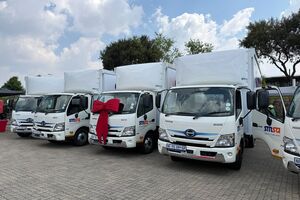
SMSA Africa Logistics Group has added five Hino 300 diesel electric hybrid trucks with van bodies to its fleet, following a two-year trial of three such trucks in its delivery operation.