

TVS powers South Africa’s growing delivery economy
South Africa’s rapidly expanding delivery sector is driving strong demand for affordable, dependable motorcycles that can withstand the demands of daily commercial use.
- Product News
- 20 November 2026
South Africa has been urged to move quickly to protect and strengthen its automotive manufacturing sector as uncertainty around Volkswagen’s global operations highlights the growing pressure facing carmakers worldwide.

The call follows reports that Volkswagen is examining major restructuring options that could affect tens of thousands of jobs across its international business. Although no formal announcement has been made regarding Volkswagen South Africa, Sonja Boshoff, Chairperson of Parliament’s Select Committee on Economic Development and Trade, says the situation should not be ignored.
Sonja says the developments show that South Africa can no longer assume that long-standing automotive investment will remain secure without a stronger competitive offering. Global manufacturers are reviewing production locations, future model allocations and investment plans as they respond to rising costs, slower demand in some markets, tighter margins on electric vehicles and intensifying competition.
Volkswagen’s challenges are being felt most sharply in Germany, where political leaders, unions and the company are under pressure to find ways of protecting jobs and keeping factories busy. Olaf Lies, the premier of Lower Saxony, has reportedly suggested that Volkswagen should consider building in Germany some models that are currently linked to China, arguing that this could help safeguard employment and support local innovation.
The wider industry is also being reshaped by the rapid rise of Chinese manufacturers. Companies including BYD, Geely, Chery and SAIC have expanded their influence in both China and Europe, forcing established vehicle groups to rethink pricing, production costs and long-term investment decisions.
For South Africa, she says the message is that automotive investment must be actively retained and expanded. The sector plays a major role in the economy, supporting jobs not only in vehicle assembly but also in components, logistics, retail, services and small businesses connected to the motor industry.
Sonja says South Africa needs faster and more practical reforms to improve confidence among investors. These include a more reliable electricity supply, efficient ports and rail networks, clearer policy direction, reduced regulatory obstacles and quicker implementation of programmes designed to support industrial growth.

South Africa’s rapidly expanding delivery sector is driving strong demand for affordable, dependable motorcycles that can withstand the demands of daily commercial use.
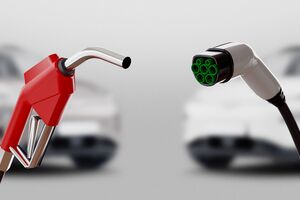
One of the main results of the 2026 Global EV Driver Survey, released by the Global EV Alliance (GEVA) this week, show that South African battery electric vehicle (EV) drivers are among the most satisfied in the world.
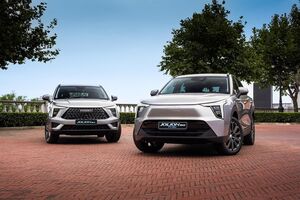
GWM South Africa has broadened its popular Jolion range with the introduction of the all-new Haval Jolion Max. Designed with modern families in mind, the newcomer combines increased interior space, new technology and a wider choice of powertrains, including petrol, hybrid and plug-in hybrid options.
 Advertisement
 Advertisement
You can't buy happiness but you can buy cars and that's kind of the same thing.
Unknown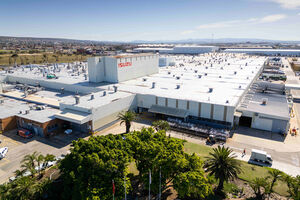
Isuzu Motors South Africa (IMSAf) has achieved a 38% reduction in Scope 1 and Scope 2 CO₂ emissions compared with its 2013 baseline while increasing vehicle production by 21% during the 2025/26 financial year at its Gqeberha manufacturing facility.

Diversifying oil supplies, investing in pipelines and rail infrastructure, improving port operations and expanding inland storage facilities are among the measures needed to reduce South Africa's vulnerability to international fuel supply disruptions.
Combined Motor Holdings (CMH) has appointed Charles Webber as the new Group CEO.