Volvo’s Hydrogen Truck fuel-efficient and powerful
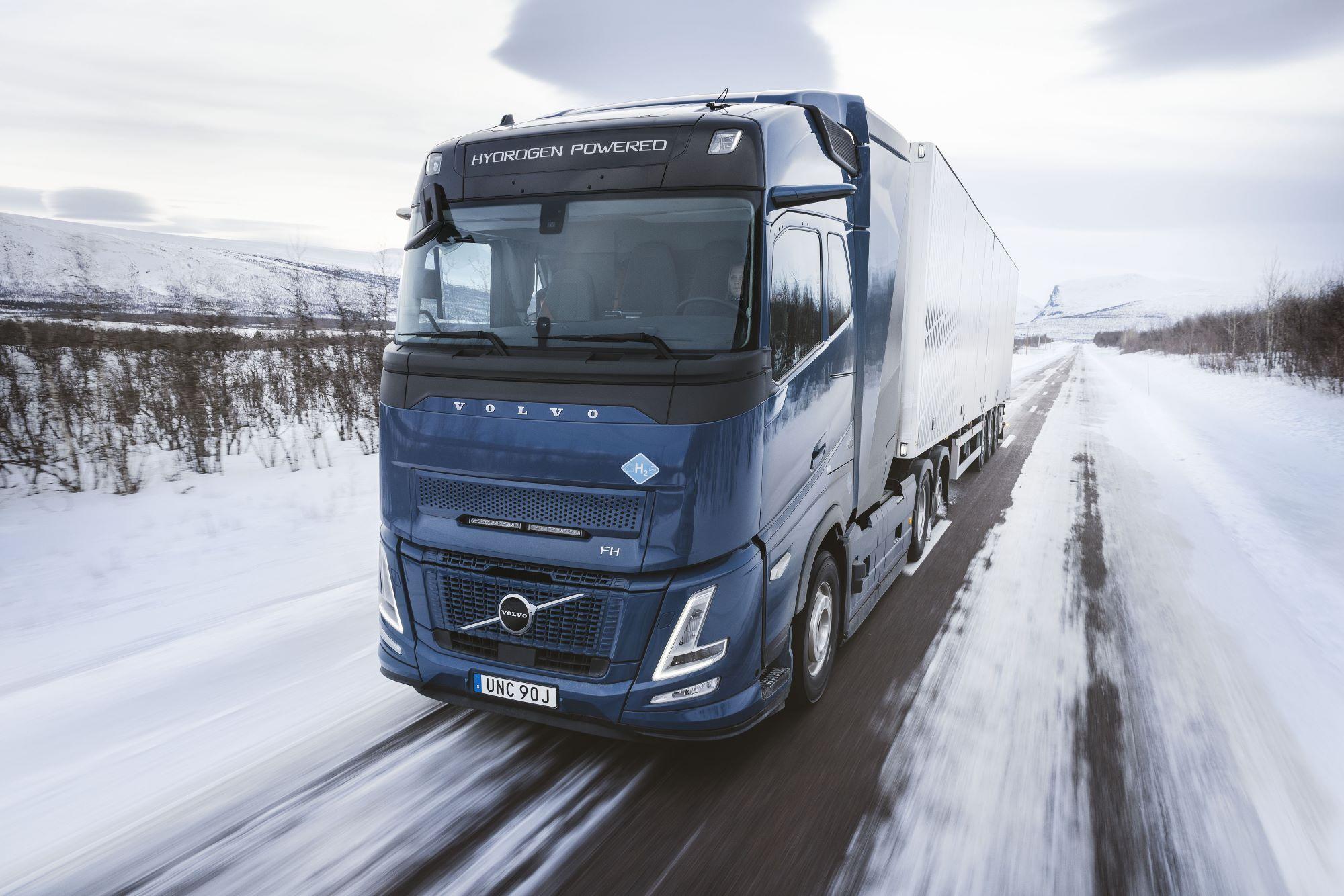
Volvo has commenced on-road testing of heavy trucks powered by hydrogen combustion engines. This pioneering solution places Volvo at the forefront of the industry, with commercial launch planned before 2030.
Share with friends
Volvo’s hydrogen-powered trucks promise industry-leading performance, combining higher energy efficiency, reduced fuel consumption and enhanced engine power compared with conventional hydrogen combustion technology.
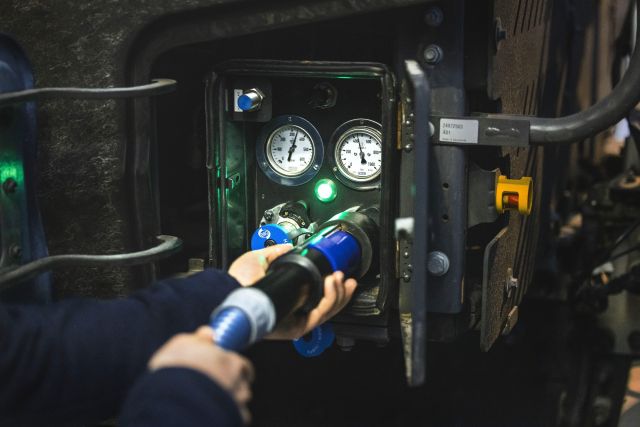
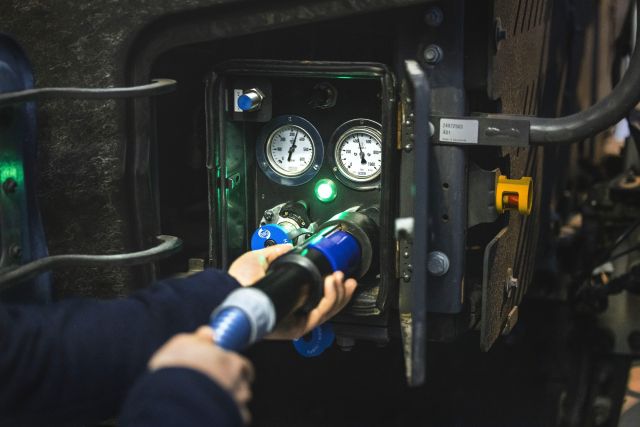
The breakthrough lies in High Pressure Direct Injection (HPDI), a system in which a small amount of ignition fuel is injected at high pressure to enable compression ignition before hydrogen is added. Volvo already employs this technology in its gas-powered trucks, with more than 10 000 units sold worldwide.
Jan Hjelmgren, Head of Product Management at Volvo Trucks, explains: “On-road testing is an important milestone for our hydrogen combustion engine trucks. I am confident they will set the industry benchmark in fuel efficiency, power, torque and drivability. Customers will be able to operate them just like diesel trucks. Our proven experience with HPDI technology in over 10 000 gas-powered trucks is strong evidence of its performance.”
Hydrogen combustion engine trucks are particularly suited to long-distance operations and regions where charging infrastructure is limited or turnaround times for battery-electric trucks are impractical.
When powered by green hydrogen and renewable HVO as ignition fuel, Volvo’s hydrogen combustion trucks have the potential to deliver net zero CO₂ emissions on a well-to-wheel basis. Under EU CO₂ emission standards, they are classified as “Zero Emission Vehicles” (ZEV).
Derived from Volvo’s advanced diesel powertrain, the hydrogen engine delivers diesel-like performance while substantially reducing CO₂ emissions. These trucks will complement Volvo’s portfolio of battery-electric vehicles, fuel cell electric trucks and models running on renewable fuels such as biogas and HVO.
Jan Hjelmgren adds: “We see great potential for hydrogen combustion engine trucks, and they will play a vital role in the transition to zero tailpipe emission transport. Several technologies will be required to achieve decarbonisation. As a global truck manufacturer, we provide a range of solutions and help our customers select the best option based on transport needs, infrastructure and energy prices.”
Key Facts: Volvo Hydrogen Combustion Trucks:
Volvo Trucks’ hydrogen-powered models will use the fuel-efficient HPDI technology from Cespira (www.cespira.com).
Operational range will exceed the daily driving distance of many customers.
Thanks to low CO₂ emissions, these trucks are categorised as “Zero Emission Vehicles” under EU standards.
Hydrogen can also power fuel cell electric trucks, which produce electricity on board and emit only water vapour. Volvo plans to introduce fuel cell electric trucks in limited volumes before 2030.
Volvo’s three-path strategy to net zero comprises battery-electric, fuel cell electric and combustion engines using renewable fuels.
South Africa’s fast evolving automotive industry faces an urgent challenge in ensuring technical aftersales skills keep pace with increasingly advanced vehicle technology.
South Africa’s electric vehicle (EV) market is at a pivotal moment. Progress has been made in manufacturing, registrations, and charging infrastructure, but the pace and scale of adoption will depend on decisive policy choices and coordinated industry action.
TruckStore, the used-vehicle division of Daimler Truck Southern Africa, has opened a new facility on the West Rand, strengthening its presence in one of Gauteng’s busiest used-truck corridors.
South Africa’s electric vehicle (EV) market is at a pivotal moment. Progress has been made in manufacturing, registrations, and charging infrastructure, but the pace and scale of adoption will depend on decisive policy choices and coordinated industry action.
Stellantis’s reported plan to invest more than €1 billion in its Mulhouse factory from 2029 could become one of the most significant industrial bets in France’s electric vehicle transition.
When engineers want to understand how a product is built, they carry out a teardown. This involves dismantling the item piece by piece to study its design, materials and performance.