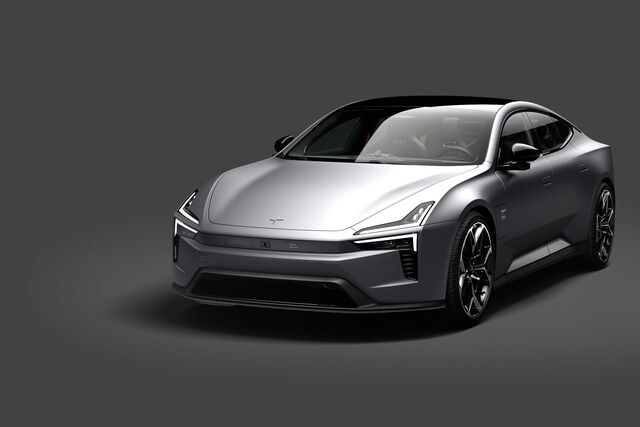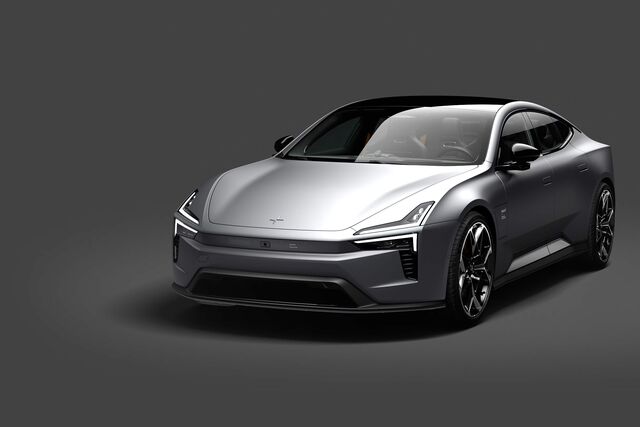
The company confirmed the decision after the US Commerce Department refused to grant authorisation under the Connected Vehicles Rule, which restricts imports of cars with technology linked to China.
Polestar was founded in 2017 as a joint venture between Volvo Cars and Geely Holding. Headquartered in Gothenburg, Sweden, it specialises in premium electric vehicles and has positioned itself as a competitor to Tesla and other high‑end electric vehicle (EV) makers. Its current line‑up includes the Polestar 2 sedan, the Polestar 3 SUV and the Polestar 4 coupe‑SUV. The company has struggled to turn a profit and has relied on repeated capital injections from Geely and its chairman Li Shufu.
The Connected Vehicles Rule, adopted in January 2025 under US President Joe Biden and maintained by President Donald Trump, covers Bluetooth, Wi‑Fi, cellular connectivity and some satellite communications. Washington argues that such technologies could allow vehicles to collect sensitive data on American owners.
Polestar said it would not appeal the denial. “The automotive industry is entering a new phase, based on regional dynamics. Our strategy reflects that, with Europe being our largest growth engine and our plan to manufacture Polestar 7 in Europe,” Chief Executive Michael Lohscheller told Reuters.
Only six percent of Polestar’s first‑quarter sales came from the United States, compared with 78 percent from Europe. Shares fell 6.3 percent on Nasdaq following the announcement.
The decision raises questions about the future of the Polestar 3, its only US‑manufactured model. Volvo Cars, which co‑founded Polestar, said in March it would consolidate production of the Polestar 3 at its South Carolina plant rather than also building it in Chengdu, China. A Volvo spokesperson told Reuters that production in China has not yet been halted, and it was too early to say whether Thursday’s development would alter those plans.
Polestar will continue to sell existing Polestar 3 and Polestar 4 vehicles in the US and provide access to its service network. It expects deliveries of a new Polestar 4 variant later this year and a revamped Polestar 2 in 2027. Its next fully new model, the compact Polestar 7 SUV, is slated for production at Volvo’s planned factory in Slovakia.
The move is part of Washington’s broader crackdown on Chinese vehicles. Imports of Chinese EVs already face heavy tariffs, and lawmakers have proposed tightening restrictions further. Other automakers, including Ford, are scrambling to obtain US government authorisation to continue selling models that have long been in American showrooms.
Volvo Cars confirmed in May that it had received authorisation but must still meet the rule’s specifications across its US line‑up.
Polestar’s pivot to Europe reflects the shifting dynamics of the global automotive industry. With US sales sluggish and regulatory barriers rising, the company is betting on European growth to secure