

From Wuhu to Rosslyn: how the Omoda X and C4 share a design direction
In Wuhu, China, Omoda gave the Omoda X its global debut at Omoda X Night, held as part of the 2026 Omoda & Jaecoo International User Summit.
- Industry News
- 25 October 2026
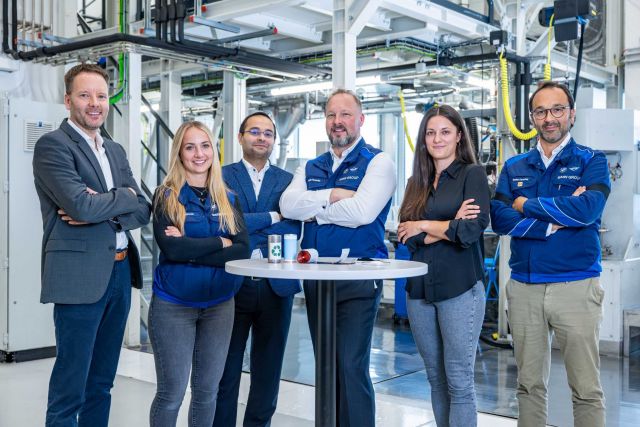
BMW Group’s Cell Recycling Competence Centre in Salching is rapidly becoming a cornerstone of Europe’s transition toward a resilient circular battery economy.
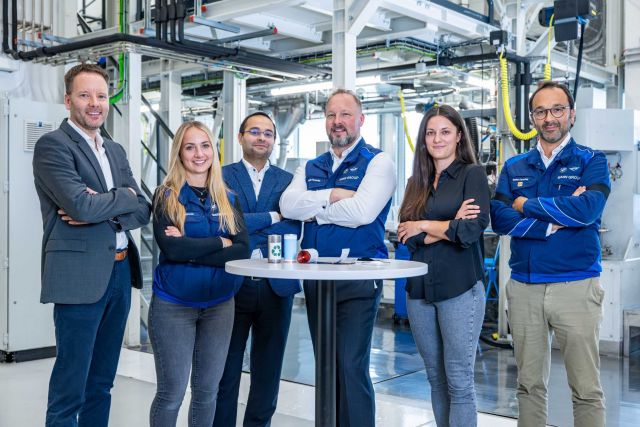
Developed with Encory GmbH, the facility adopts a mechanical “direct recycling” technique that avoids the heat‑intensive or chemical‑based processes traditionally used to break down battery cells. Instead, unused or surplus cells are dismantled so that their cathode and anode materials can be reused with minimal reprocessing. This method preserves more of the material structure, reducing energy demand and emissions while enabling the recovered substances to re‑enter BMW’s production cycle far more quickly.
Operating inside a converted industrial hall of about 2,100 square metres equipped with rooftop photovoltaic systems, the centre is designed to scale to the mid double‑digit‑tonne range of recycled material annually, with various estimates placing this between 50 and 90 tonnes once the process is fully optimised. These recovered materials are redirected to BMW’s Cell Manufacturing Competence Centre in Parsdorf, allowing the company to maintain an exceptionally short recycling loop within Bavaria’s expanding battery‑technology network.
Encory, established by BMW and Interzero, operates the Salching facility, while BMW retains intellectual ownership of the recycling technology. Around 20 staff members manage disassembly, logistics and material recovery.
As demand for electric‑vehicle batteries accelerates, securing reliable access to raw materials has become a strategic priority across Europe. By demonstrating that high‑value battery components can be recovered efficiently without intensive chemical conversion, BMW and Encory provide a blueprint for reducing waste and strengthening supply‑chain resilience. Their work in Salching underscores the potential for regional circular‑economy systems to support both industrial growth and environmental responsibility at a pivotal moment for the automotive sector.
In Wuhu, China, Omoda gave the Omoda X its global debut at Omoda X Night, held as part of the 2026 Omoda & Jaecoo International User Summit.

Charging time remains a worry for many South Africans considering an electric vehicle, who still see it as a disruption rather than a quick stop at a filling station. That view is starting to shift.
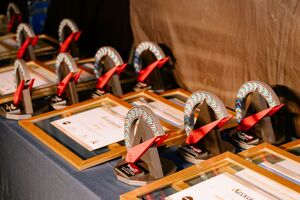
The winners of the 2026 Automotive Business Council | naamsa Accelerator Awards were announced at the recently held Auto Week 2026, which took place in eThekwini, KZN.
 Advertisement
 Advertisement
You can't buy happiness but you can buy cars and that's kind of the same thing.
Unknown
Charging time remains a worry for many South Africans considering an electric vehicle, who still see it as a disruption rather than a quick stop at a filling station. That view is starting to shift.
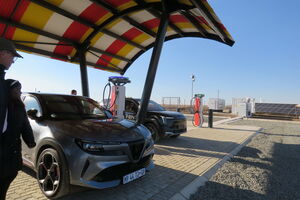
South Africa has taken important steps to position itself within the global electric vehicle (EV) industry, but industry stakeholders argue that further policy adjustments are needed if the country is to accelerate adoption and support long-term investment in clean transport infrastructure.
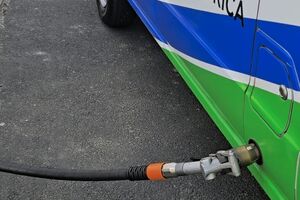
As fuel prices and operating expenses continue to challenge South African businesses, alternative energy solutions are receiving greater attention.