The solid-state battery race accelerates towards 2027
The global race to commercialise solid-state batteries (SSBs) is intensifying, with major vehicle manufacturers and start-ups announcing significant milestones as they edge closer to bringing the technology into production vehicles.
Share with friends
Automotive News reports the competition is shaping up to be an “arms race” in the words of Gartner Vice President of Research Pedro Pacheco, who cautions that while speed matters, scale and cost reduction will ultimately determine success. Gartner is a global research and advisory firm.
On 4 February, Volkswagen Group-backed QuantumScape inaugurated its Eagle Line pilot production facility in San Jose, California in the United States (US). The highly automated plant is designed to accelerate the company’s push towards commercial readiness. Just a day later, Karma Automotive revealed an agreement with US start-up Factorial Energy to launch the first solid-state battery production programme for passenger vehicles in the US. The technology will debut in the fully electric Karma Kaveya super coupe, scheduled for release in late 2027.
Factorial has built an impressive roster of partners, including Mercedes-Benz, Stellantis and Hyundai/Kia, alongside its deal with Karma. Mercedes, which has invested “high double-digit millions” in Factorial, announced last September that a modified EQS test vehicle equipped with lithium metal solid-state batteries had completed a 1 205km journey from Stuttgart to Malmö, Sweden, on a single charge. Factorial’s CEO Siyu Huang has stated that the company aims to begin mass production of its battery cells by 2029.
Stellantis is also moving quickly, with plans to launch a demonstration fleet of Dodge Charger Daytonas powered by Factorial’s solid-state batteries in 2026. Other automakers are aligning their timelines around the late 2020s.
Toyota intends to introduce its first EVs with solid-state batteries between 2027 and 2028, while Nissan is building a pilot production plant in Yokohama for a 2028 launch. BYD has announced serial production for premium models in 2027, with broader availability by 2030. Honda is focusing on a dedicated demonstration line, and BMW is targeting the early 2030s after conducting real-world road tests with 17 prototypes.
Chinese automakers such as SAIC Motor and Nio are taking a more cautious approach, deploying semi-solid or “quasi-solid” batteries first as a bridge to full solid-state technology. Chery Automobile, meanwhile, plans to begin pilot testing and vehicle verification this year.
Mercedes has emphasised the advantages of solid-state packs, noting that they are thinner, lighter and offer superior energy density, which translates into longer driving ranges. “This means you can have a battery in a small city car with high energy density or in a bigger vehicle with major driving range,” Pedro Pacheco explains. Analysts expect some battery electric vehicles (BEVs) to reach or even surpass 1 000km under WLTP test standards.
Yet challenges remain. High production costs mean that initial volumes will be limited, around 50 000 vehicles per large automaker before 2030, according to industry analysts. This positions early solid-state batteries firmly in the premium and luxury segments.
Durability, charging cycles and the search for stable solid electrolyte materials also present hurdles. Ceramics and perovskite materials are currently seen as the most promising candidates for mass production, according to Robert Fisher, senior consulting manager at SBD Automotive.
Looking ahead, silicon anodes may provide a less expensive alternative to lithium iron phosphate, potentially offering a lower-cost and more sustainable solution for non-premium vehicles. Robert predicts: “In the future, silicon anode SSBs may play the same role that LFP does today.”
Pedro envisages a tiered market structure, with solid-state batteries dominating the upper end, lithium-ion batteries serving the mid-range, and sodium-ion technology taking the lower end. He adds: “In five years, we will already be seeing something which is very different from where we are today.”
As production lines expand and supply chains mature, costs are expected to fall, paving the way for broader adoption. Robert anticipates that “after 2030, I would expect to see much more mature SSB technology and more appetite from automakers to start integrating SSBs into their high-end lineups. Closer to 2035, I’d expect to see real competition between the ‘wet’ and ‘dry’ cells as traditional cells will no longer be competitive from a range and weight perspective.”
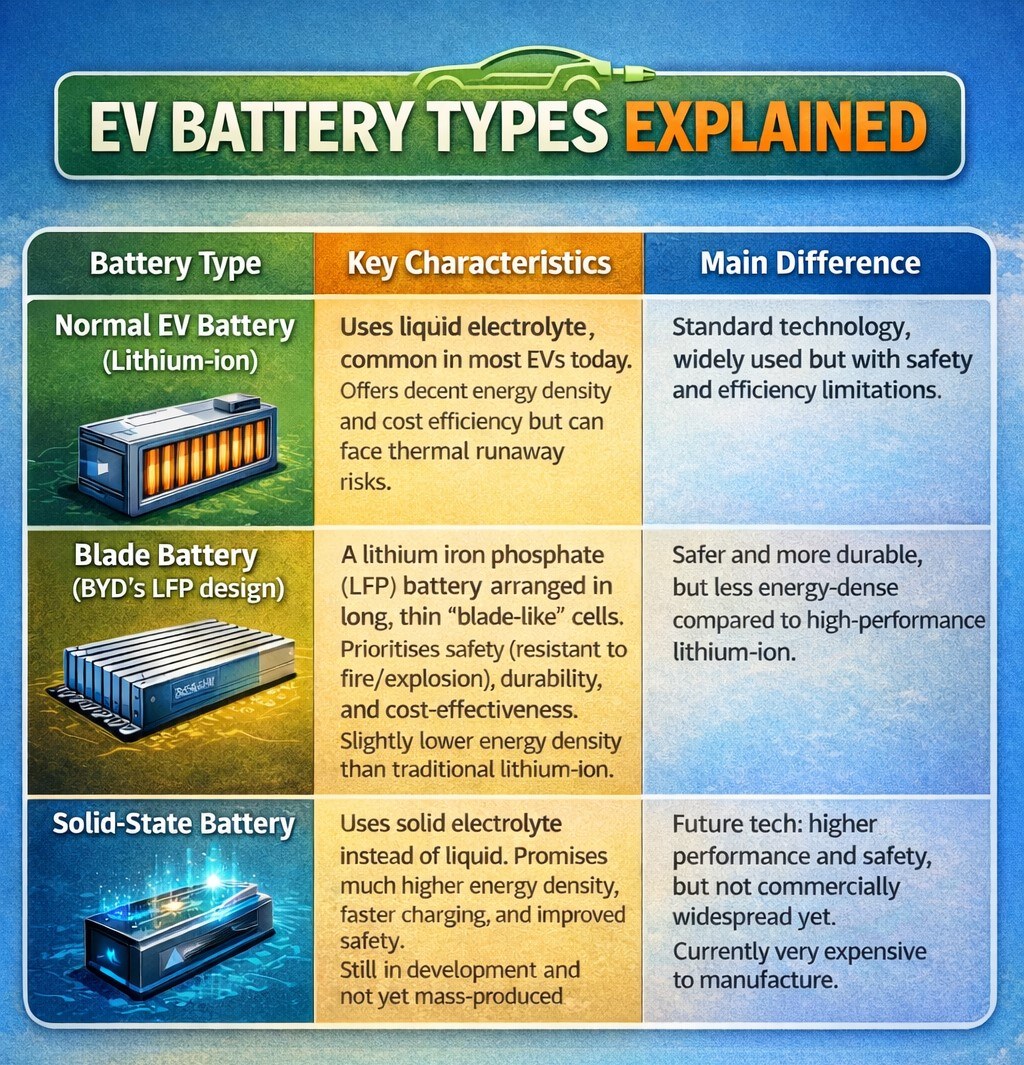
Battery Type
Average Price Range
Notes
Standard EV Lithium-ion Battery
R180 000 – R250 000
Prices remain higher than global averages due to import costs and currency volatility. Local mineral reserves (lithium, manganese, platinum) could reduce costs if domestic production scales up.
BYD Blade Battery (LFP chemistry)
R160 000 – R220 000
Known for safety and durability. BYD’s vertical integration helps keep costs competitive. Blade batteries are slightly cheaper than standard lithium-ion packs, with strong thermal stability and longer lifecycle.
Solid-State EV Battery (Projected)
R400 000 – R600 000 (estimated)
Not yet commercially available in South Africa. Global forecasts suggest solid-state batteries will initially cost two to three time more than current lithium-ion packs, with prices expected to fall after 2030 as production scales.
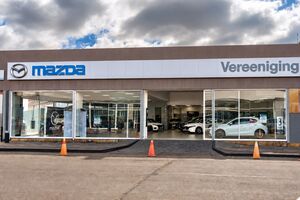
Few can claim a bond with Mazda as deep as the Plitt family's. For more than 60 years, Mazda has been part of the family's story through Mazda Vereeniging, the oldest Mazda dealership in South Africa and a longstanding standalone representative of the brand.
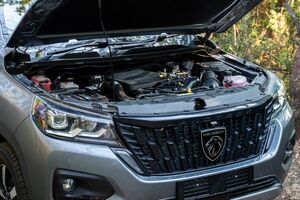
Peugeot has expanded its Landtrek line-up with the addition of a new turbodiesel-powered model aimed at buyers looking for increased performance, greater towing capability and updated technology. The latest derivatives join the range from October 2026 and introduce a significant powertrain upgrade for the bakkie.
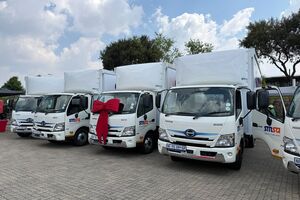
SMSA Africa Logistics Group has added five Hino 300 diesel electric hybrid trucks with van bodies to its fleet, following a two-year trial of three such trucks in its delivery operation.
South Africa's new energy vehicle market is becoming increasingly diverse, with plug in hybrid electric vehicles (PHEVs) and fully electric vehicles gaining ground while traditional hybrids remain the largest category.
As South Africans celebrate their rich heritage, it is also worth reflecting on a lesser-known chapter of the country's history: its long connection with electric vehicles (EVs).