
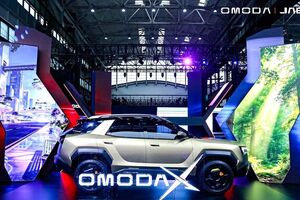
From Wuhu to Rosslyn: how the Omoda X and C4 share a design direction
In Wuhu, China, Omoda gave the Omoda X its global debut at Omoda X Night, held as part of the 2026 Omoda & Jaecoo International User Summit.
- Industry News
- 25 October 2026
South African car buyers are increasingly considering the full cost of ownership rather than focusing solely on the showroom price or monthly instalment.

Brandon Cohen, Chairperson of the National Automobile Dealers’ Association (NADA), told the Automechanika CEO Breakfast at the Festival of Motoring that dealerships can no longer rely on price alone to attract customers.
He explained that while price remains the starting point for most households under financial strain, the cheapest option at purchase is not always the most affordable over time. The market has shown resilience, with more than 600 000 new vehicles expected to be sold this year, supported by the arrival of new brands offering competitive specifications. Yet Brandon stressed that affordability is now judged across the full lifecycle of a vehicle.
Consumers are asking what a car will cost to finance, fuel, insure, service and maintain, and what support will be available during ownership. They also want to know what the vehicle will be worth when traded in. Fuel efficiency has become a priority following steep increases at the pumps, while insurance premiums, tracking requirements and extended finance terms all weigh heavily on budgets.
Brandon pointed out that South Africans are keeping their vehicles for longer, which makes servicing costs, parts availability, maintenance plans and warranty extensions more relevant. “A manageable monthly instalment does not necessarily mean that a vehicle is affordable. Fuel, insurance, maintenance and other expenses should also be considered before a customer commits to the purchase,” he said.
The way buyers research vehicles is also evolving. Beyond conventional online searches, many are now using artificial intelligence tools to compare models, specifications and likely ownership costs. Brandon believes this makes the advisory role of dealerships more important, not less.
“Technology can provide information, but it cannot replace the experience of sitting in a vehicle, driving it, asking detailed questions and discussing your individual circumstances with someone who understands the product and the realities of ownership,” he explained.
He added that people ultimately buy from people, and that dealerships remain central to the ownership journey. The relationship built at the point of sale becomes critical when customers need servicing, maintenance, warranty assistance or advice.
“Dealers don’t compete on price alone. In a market with more brands, products and technologies than ever before, the quality of the physical dealership experience, supported by transparency, expertise and trusted human advice, will be a critical differentiator,” Brandon said.

In Wuhu, China, Omoda gave the Omoda X its global debut at Omoda X Night, held as part of the 2026 Omoda & Jaecoo International User Summit.
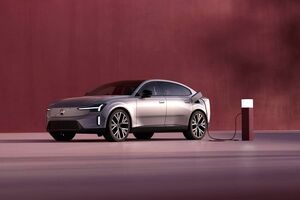
Charging time remains a worry for many South Africans considering an electric vehicle, who still see it as a disruption rather than a quick stop at a filling station. That view is starting to shift.
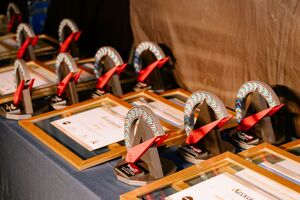
The winners of the 2026 Automotive Business Council | naamsa Accelerator Awards were announced at the recently held Auto Week 2026, which took place in eThekwini, KZN.
 Advertisement
 Advertisement
You can't buy happiness but you can buy cars and that's kind of the same thing.
Unknown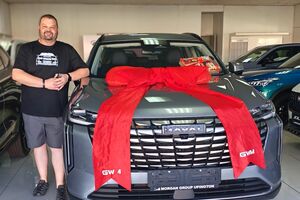
When Cobus Coetzee (photo) accepted the opportunity to join the Morgan Group in Upington, he had to weigh up more than a new position. The move meant exchanging the West Coast’s cooler climate and seaside lifestyle for the Northern Cape’s desert heat, while taking responsibility for a multi-franchise operation spread across several premises.
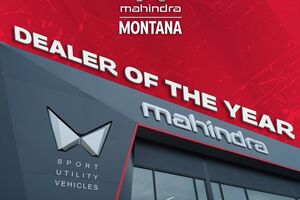
Dealer excellence was recognised at the Mahindra South Africa Dealer Conference Awards Evening, where dealerships were acknowledged for their performance across retail sales, commercial vehicles, customer satisfaction, aftersales and other areas of the business.
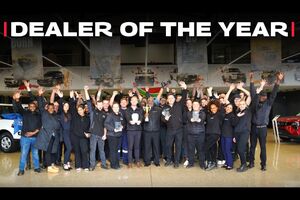
To turn the fortunes of a dealership around from one not firing on all its cylinders, so to speak, to one of the top five dealerships in the country and now the top Dealer of the Year, is testimony to what can be achieved with dedicated leadership.