

TVS powers South Africa’s growing delivery economy
South Africa’s rapidly expanding delivery sector is driving strong demand for affordable, dependable motorcycles that can withstand the demands of daily commercial use.
- Product News
- 20 November 2026
Euro NCAP has changed the way it tests cars. The 2026 protocols, the biggest revision in three years, restructure the assessment around four stages: safe driving, crash avoidance, crash protection and post-crash care.
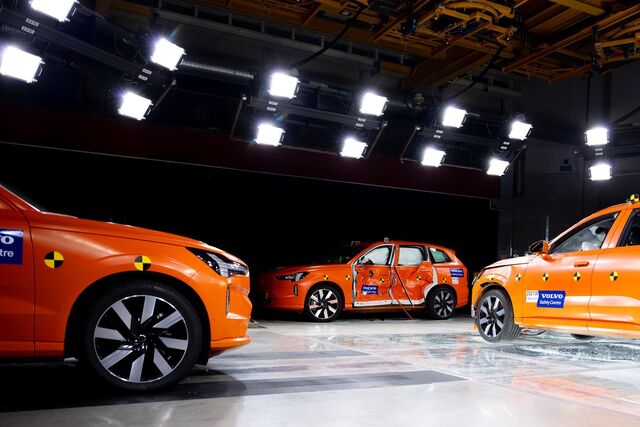
Frontal impact testing now accounts for a wider range of body types, including older occupants and children, rather than assuming a single standard adult. The shift moves the standard closer to something Volvo’s engineers have worked from for years, which is that the useful question is not how a car performs in a controlled impact but how it behaves in the situations people drive into.
Volvo has kept its own internal benchmark, the Volvo Cars Safety Standard, which sets requirements above what official testing asks for. It is built on crash research covering more than 50 000 real accidents involving over 80 000 people, gathered over more than five decades. When a Volvo is designed around a particular seat position, occupant size or type of collision, that decision usually traces back to a file in that database rather than to a regulation.
“A test protocol has to be repeatable, which means it has to be simplified,” says Vusi Machie, Product and Pricing Manager at Volvo Car South Africa. “Real roads are not simplified. Our research exists to fill the gap between the two.”
That gap shows up in ordinary ways. Occupants come in different sizes and sit in different positions. Collisions happen at intersections and in car parks as often as they happen head on.
Much of what protects people now works before impact, through braking, steering support and sensors that read the road, and none of that is visible in a star rating. Independent testing matters, and the 2026 protocols make it matter more, but the point is what a manufacturer does in the space the test cannot reach.
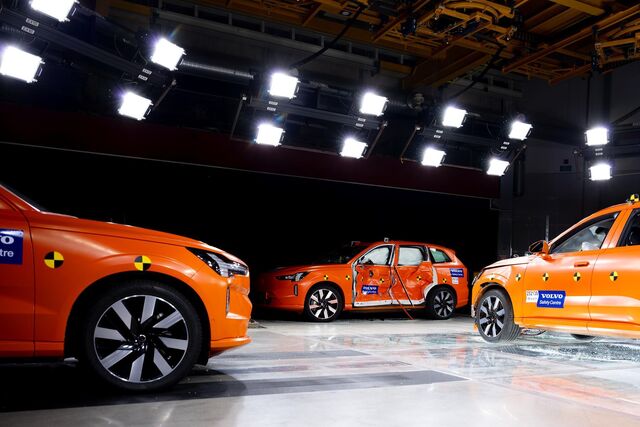
South Africa’s rapidly expanding delivery sector is driving strong demand for affordable, dependable motorcycles that can withstand the demands of daily commercial use.
One of the main results of the 2026 Global EV Driver Survey, released by the Global EV Alliance (GEVA) this week, show that South African battery electric vehicle (EV) drivers are among the most satisfied in the world.
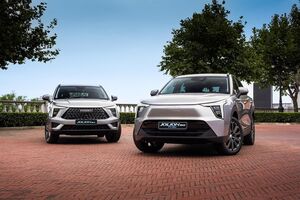
GWM South Africa has broadened its popular Jolion range with the introduction of the all-new Haval Jolion Max. Designed with modern families in mind, the newcomer combines increased interior space, new technology and a wider choice of powertrains, including petrol, hybrid and plug-in hybrid options.
 Advertisement
 Advertisement
You can't buy happiness but you can buy cars and that's kind of the same thing.
Unknown
Isuzu Motors South Africa (IMSAf) has achieved a 38% reduction in Scope 1 and Scope 2 CO₂ emissions compared with its 2013 baseline while increasing vehicle production by 21% during the 2025/26 financial year at its Gqeberha manufacturing facility.

Diversifying oil supplies, investing in pipelines and rail infrastructure, improving port operations and expanding inland storage facilities are among the measures needed to reduce South Africa's vulnerability to international fuel supply disruptions.

Combined Motor Holdings (CMH) has appointed Charles Webber as the new Group CEO.