

TVS powers South Africa’s growing delivery economy
South Africa’s rapidly expanding delivery sector is driving strong demand for affordable, dependable motorcycles that can withstand the demands of daily commercial use.
- Product News
- 20 November 2026
Mazda’s identity has shifted over more than a century, each change reflecting the company’s evolution from its origins in Hiroshima to its present global standing.
Founded in 1920 as Toyo Cork Kogyo, the firm’s earliest mark combined the letters T and C within a shape inspired by a cork crusher, a nod to its beginnings in cork manufacturing. By 1928, following its transition to Toyo Kogyo, a circular emblem featuring the Japanese character for manufacturing was introduced.
The Mazda name first appeared in 1931 on the Mazda‑GO Type‑DA three‑wheeled truck. Its emblem combined the Mazda wordmark with Mitsubishi Corporation’s three‑diamond symbol, acknowledging the distributor of Mazda vehicles at the time. In 1936, the company adopted the “emblem of wings”, a design that merged three letter Ms with Hiroshima City’s flowing‑river emblem, symbolising speed and agility.
As Mazda entered the passenger‑car era, its identity became more modern. A stylised lowercase “m” was adopted in 1959, followed by the blue Mazda wordmark in 1975, which represented enterprise and quality. In 1991, Mazda introduced an emblem inspired by Ahura Mazda, the origin of the company’s name. Its wings, sun and halo expressed ambition and the desire to enrich lives through its vehicles.
The foundation of the emblem recognised today arrived in 1997. Its winged “M” symbolised continuous growth and the freedom to soar. In 2018, the emblem and wordmark were aligned through a shared metallic finish, creating a consistent global identity.
The latest evolution, introduced in 2025, simplified the form for clarity across digital platforms while retaining the wings and “M” that have long represented movement and possibility. Together with the modernised wordmark, the new identity reflects Mazda’s enduring spirit of reinvention.
More than a badge, the Mazda logo carries over a century of courage, creativity and progress. Born in Hiroshima and driven by an unwavering belief in what is possible, it continues to inspire every journey and every road still waiting to be explored.
South Africa’s rapidly expanding delivery sector is driving strong demand for affordable, dependable motorcycles that can withstand the demands of daily commercial use.
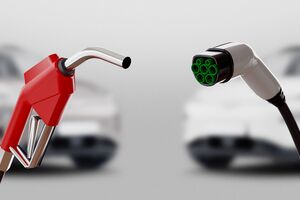
One of the main results of the 2026 Global EV Driver Survey, released by the Global EV Alliance (GEVA) this week, show that South African battery electric vehicle (EV) drivers are among the most satisfied in the world.
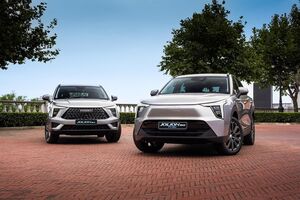
GWM South Africa has broadened its popular Jolion range with the introduction of the all-new Haval Jolion Max. Designed with modern families in mind, the newcomer combines increased interior space, new technology and a wider choice of powertrains, including petrol, hybrid and plug-in hybrid options.
 Advertisement
 Advertisement
Cars are the ultimate symbol of freedom, independence and individualism. They offer the freedom to ‘go anywhere,’ whenever it suits and with whom one chooses.
Sarah Redshaw
Isuzu Motors South Africa (IMSAf) has achieved a 38% reduction in Scope 1 and Scope 2 CO₂ emissions compared with its 2013 baseline while increasing vehicle production by 21% during the 2025/26 financial year at its Gqeberha manufacturing facility.

Diversifying oil supplies, investing in pipelines and rail infrastructure, improving port operations and expanding inland storage facilities are among the measures needed to reduce South Africa's vulnerability to international fuel supply disruptions.
Combined Motor Holdings (CMH) has appointed Charles Webber as the new Group CEO.