

TVS powers South Africa’s growing delivery economy
South Africa’s rapidly expanding delivery sector is driving strong demand for affordable, dependable motorcycles that can withstand the demands of daily commercial use.
- Product News
- 20 November 2026
Suzuki Auto South Africa broke virtually every single sales record in one month with huge sales success in January.

naamsa, the automotive industry business council, reported on Monday that Suzuki Auto South Africa was the third best-selling vehicle manufacturer in January, behind Toyota and Volkswagen.
This is on a par with the highest rank ever achieved by Suzuki and the highest overall sales – 3 232 vehicles – for the company. Equally impressive, notes the naamsa statistics, is that the dealer network sold 2 551 of these units, their highest sales figure ever.
“A couple of new dealers joined the Suzuki family in January. This grew our network to 78 dealers,” says Henno Havenga, Manager of Auto Dealer Sales at Suzuki Auto South Africa.
“And what a fitting welcome to our new dealers to see their peers outperform all previous sales records. In fact, our top five dealers sold a combined 530 new Suzuki models in January and 20 dealers, from Klerksdorp to Gqeberha, each sold more than 50 units in the month.”
While Suzuki’s dealer network deserves a lot of the credit for helping to push the brand’s sales into previously unheard-of territory, the corporate and fleet sales team also outperformed all expectations. In January, this division sold 681 vehicles to corporate, fleet and government customers.
In its review of the national sales figures, naamsa notes that the industry is gradually recovering from its COVID-19-related slump and that domestic sales grew by 19.5% compared to January 2021. In contrast, Suzuki jumped by more than 73% when compared to January 2021.
A total of 1 069 Suzuki Swift and Swift Sport models were sold in January, while six other models, including the S-Presso, Jimny, Super Carry, Dzire and Baleno, recorded triple digit sales.

South Africa’s rapidly expanding delivery sector is driving strong demand for affordable, dependable motorcycles that can withstand the demands of daily commercial use.
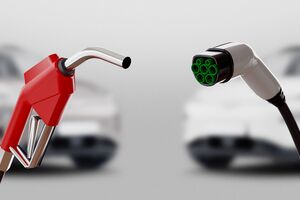
One of the main results of the 2026 Global EV Driver Survey, released by the Global EV Alliance (GEVA) this week, show that South African battery electric vehicle (EV) drivers are among the most satisfied in the world.
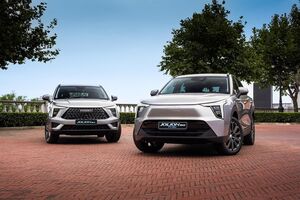
GWM South Africa has broadened its popular Jolion range with the introduction of the all-new Haval Jolion Max. Designed with modern families in mind, the newcomer combines increased interior space, new technology and a wider choice of powertrains, including petrol, hybrid and plug-in hybrid options.
 Advertisement
 Advertisement
I have bad reflexes. I was once run over by a car being pushed by two guys
Woody Allen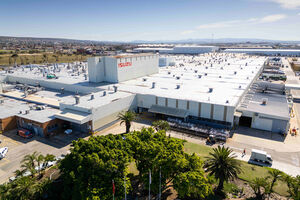
Isuzu Motors South Africa (IMSAf) has achieved a 38% reduction in Scope 1 and Scope 2 CO₂ emissions compared with its 2013 baseline while increasing vehicle production by 21% during the 2025/26 financial year at its Gqeberha manufacturing facility.

Diversifying oil supplies, investing in pipelines and rail infrastructure, improving port operations and expanding inland storage facilities are among the measures needed to reduce South Africa's vulnerability to international fuel supply disruptions.
Combined Motor Holdings (CMH) has appointed Charles Webber as the new Group CEO.