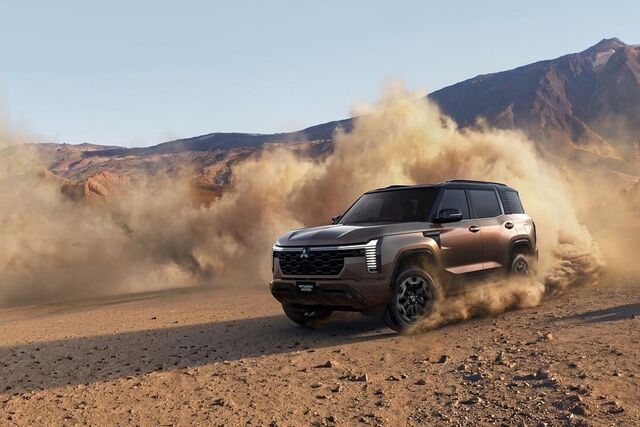
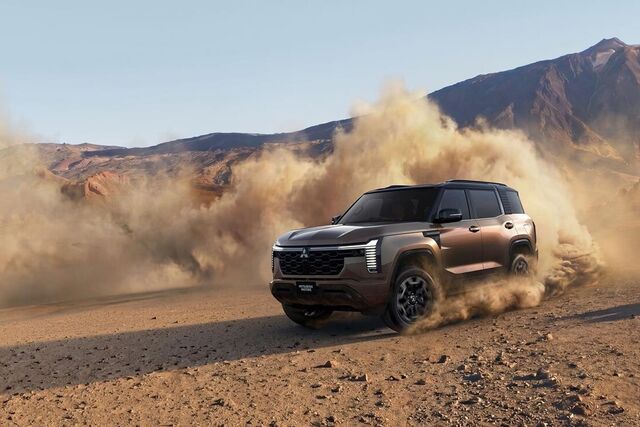
Mitsubishi Motors has revived the Pajero name with the launch of the fifth generation Pajero Cross Country. The new model does not simply replace the previous Pajero that disappeared from the market in 2021. Its relationship with the Pajero Sport is equally important, particularly for markets such as South Africa.
Share with friends
The previous fourth generation Pajero was a monocoque SUV, while the new model uses a ladder frame derived from the Triton bakkie and the Pajero Sport. Structurally and mechanically, this gives the new Pajero much more in common with the Pajero Sport and Triton family than with its direct predecessor. The Pajero Sport itself is essentially the SUV counterpart to the Triton.
However, Mitsubishi has not simply given the Pajero Sport a new name. The new Pajero has been substantially developed as a separate flagship model and is positioned above the Pajero Sport in Mitsubishi's SUV hierarchy. Whether this will eventually result in a line-up similar to Toyota's Fortuner and Land Cruiser Prado, with the Pajero Sport competing with the Fortuner and the Pajero positioned above it, remains uncertain.
For now, the important point is that the new Pajero revives the name and flagship status of the discontinued model, while its ladder frame, Triton related architecture and positioning also make it the likely successor to the Pajero Sport in markets such as South Africa. Mitsubishi says the new vehicle will be produced in Thailand and sold in more than 100 countries, including South Africa.
The original Pajero was introduced in 1982 as a four-wheel drive cross country vehicle combining off road ability with passenger car comfort. It went on to become one of Mitsubishi's best-known models, with production of the previous four generations exceeding 3.29 million units. Its reputation was also built through its participation in the Dakar Rally, where it achieved 12 victories, including seven consecutive wins.
A new design direction:
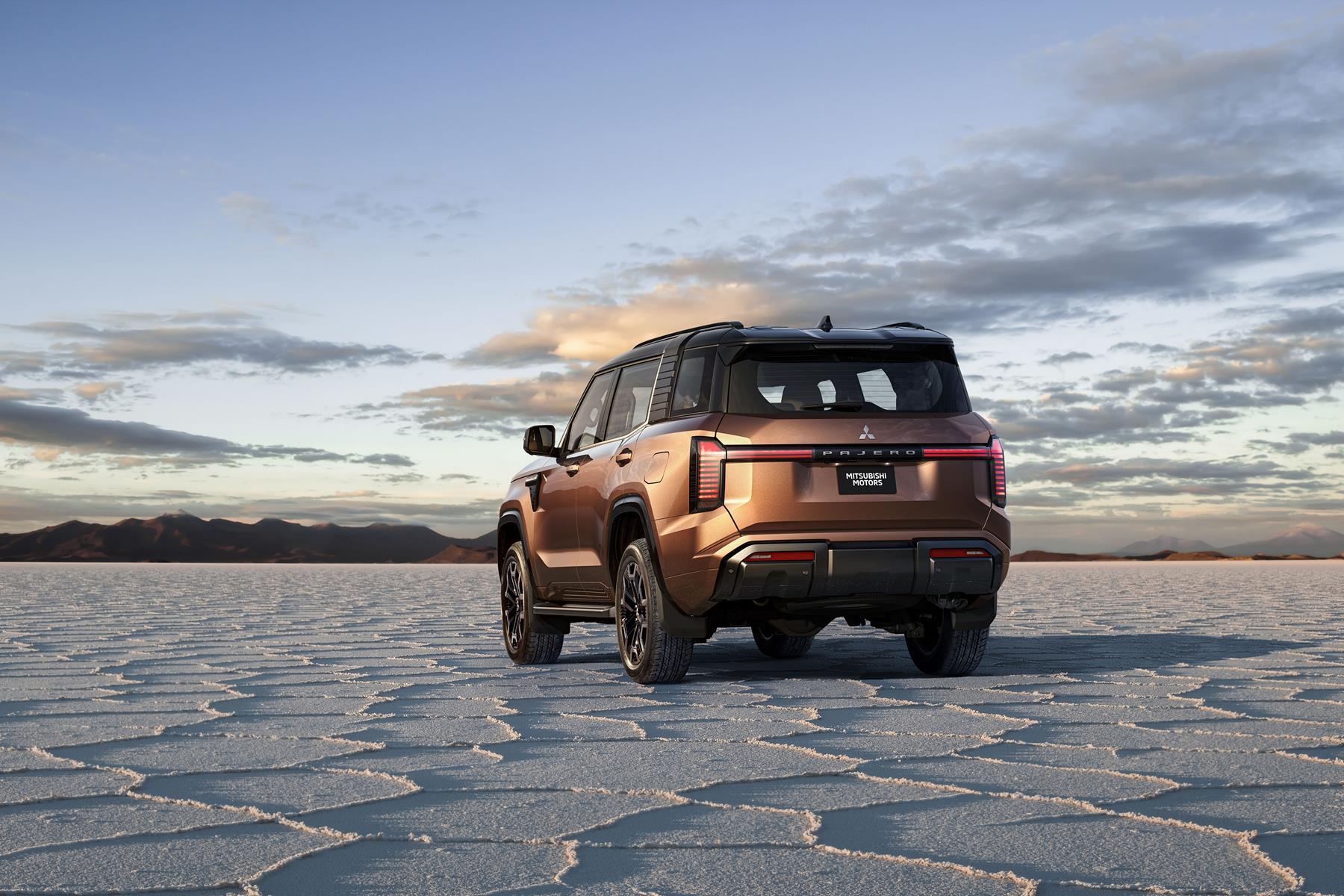
The new Pajero retains several visual references to its predecessors while adopting a more upright and substantial appearance. Mitsubishi uses the term Grand Charisma for the design concept, with strong horizontal lines, pronounced fenders and sculpted body surfaces.
There are two grille designs, while the headlights use a T shaped arrangement. The C pillar takes inspiration from the roll bar of the first generation Pajero and the rear incorporates a hexagonal design intended to recall the spare wheel arrangement used by earlier models.
Interior:
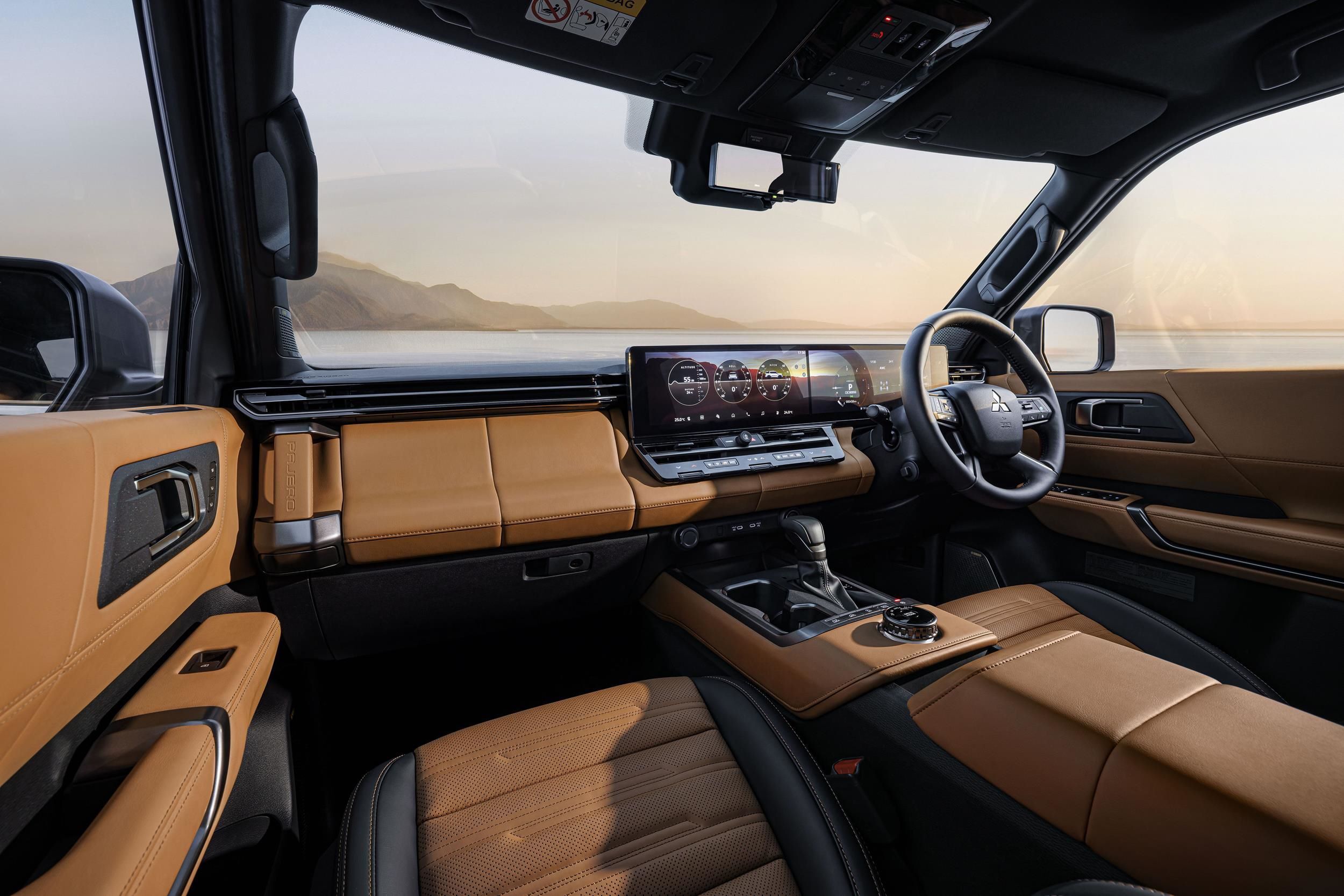
The cabin uses a horizontal dashboard layout inspired by the first generation Pajero, but with considerably more technology. Two 14.3-inch screens form a combined display area, while the Multi Meter display provides information including altitude, compass direction, temperature and vehicle pitch and roll.
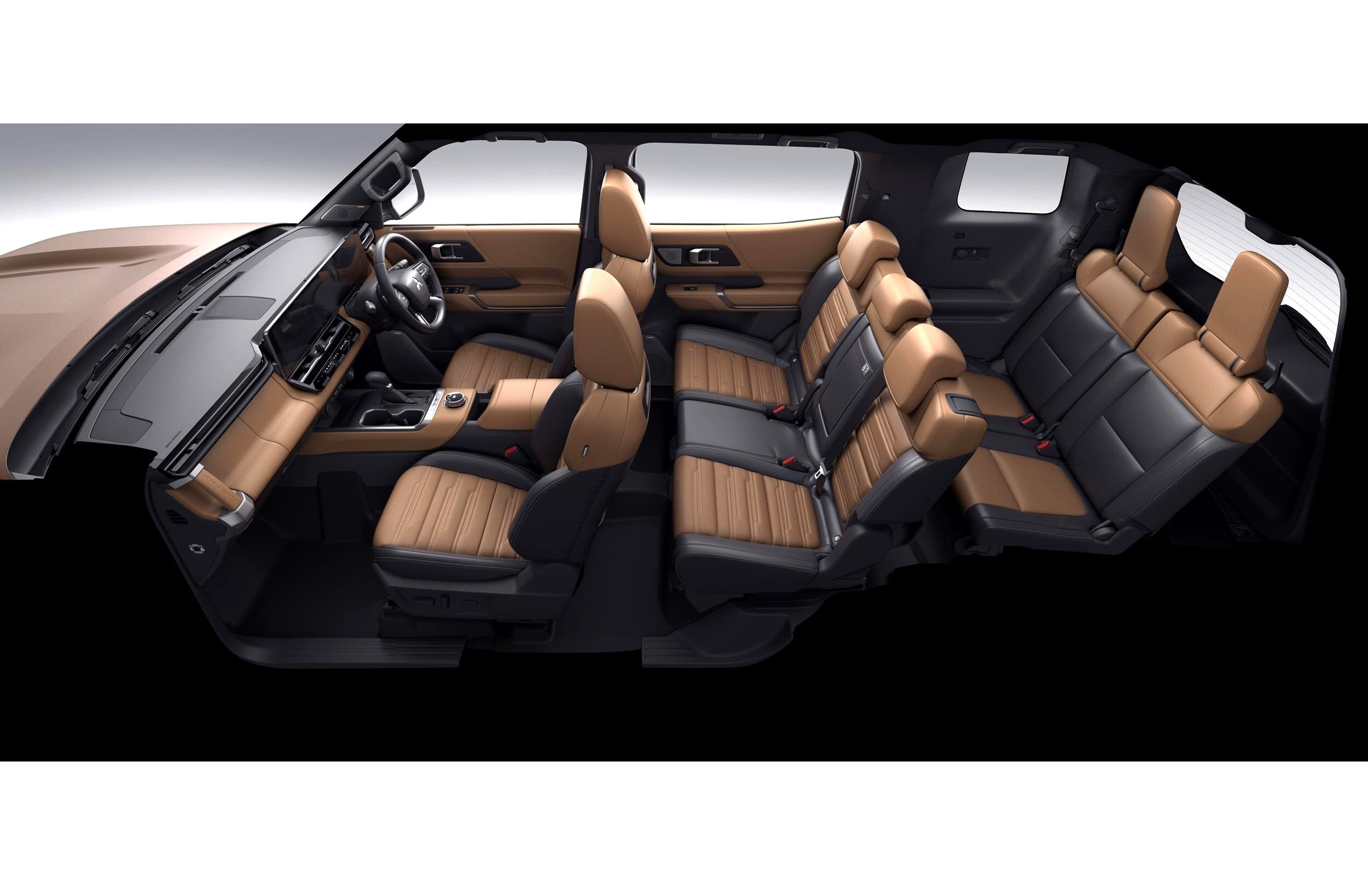
Wireless smartphone connectivity is included, while the vehicle can also be specified with a 12-speaker Dynamic Sound Yamaha Ultimate audio system. Mitsubishi has also concentrated on sound insulation and interior packaging, with seating arrangements designed to provide space across all three rows.
Ladder frame and suspension:
The move to a ladder frame represents one of the most significant changes from the previous Pajero. Mitsubishi says high tensile steel has been used extensively to reduce weight while increasing torsional and bending rigidity.
The suspension consists of independent double wishbones at the front and a newly developed five link rigid rear axle. The combination is intended to provide off road capability without sacrificing ride comfort on paved roads and during long journeys.
Diesel power and four wheel drive:
The new Pajero is powered by a 2.4 litre diesel engine using a variable geometry turbocharger. It produces 480 Nm and is paired with a newly developed eight speed automatic transmission with a Sport mode.
Four wheel drive comes through Mitsubishi's Super Select 4WD II system, offering 2H rear wheel drive, 4H full time four wheel drive, 4HLc with a locked centre differential and 4LLc with the centre differential locked and low range engaged.
Mitsubishi's Super All Wheel Control system adds control of torque distribution, stability and braking. Seven selectable driving modes are available: Normal, Eco, Gravel, Snow, Mud, Sand and Rock.
The off road figures include 230 mm of ground clearance, a 30.4 degree approach angle, 22.6 degree ramp breakover angle and a 25.8 degree departure angle.
Safety and driver assistance:
The Pajero has a broad range of driver assistance systems, including Forward Collision Mitigation with pedestrian, cyclist and motorcyclist detection, junction assist and Predictive Forward Collision Warning.
Emergency Lane Assist is also introduced, using cameras and radar to identify lane markings and surrounding vehicles. Front Cross Traffic Alert is designed to warn drivers of vehicles approaching from either side at intersections.
Highway assistance comes through Mitsubishi's MI PILOT system, which combines adaptive cruise control and lane keeping assistance. The vehicle also has eight airbags, including a centre airbag, while a 3D Multi Around Monitor uses four cameras to provide a view around the vehicle for parking and off road manoeuvring.
The current oil and fuel crisis is easier to understand when the global energy supply chain is viewed as a network rather than simply a question of how much oil the world produces.
Building a new dealership, modernising an ageing workshop or preparing for the latest OEM facility audit often means coordinating multiple suppliers, contractors and installation teams. Bright Focus offers a simpler approach, providing everything from workshop equipment and parts storage to service reception solutions and EV-ready facilities through a single point of contact.
Lexus has introduced the all-new ES to South Africa, bringing a larger footprint, more advanced technology and a choice of hybrid or fully electric power. The eighth-generation model also arrives with a redesigned cabin, fresh styling and expanded levels of comfort and safety.
Lexus has introduced the all-new ES to South Africa, bringing a larger footprint, more advanced technology and a choice of hybrid or fully electric power. The eighth-generation model also arrives with a redesigned cabin, fresh styling and expanded levels of comfort and safety.
Honda has expanded its local SUV line-up with the introduction of the CR-V RS e:HEV AWD. The newcomer brings hybrid power to the CR-V range while adding updated styling, additional technology and a revised cabin layout.
Peugeot has expanded its Landtrek line-up with the addition of a new turbodiesel-powered model aimed at buyers looking for increased performance, greater towing capability and updated technology. The latest derivatives join the range from October 2026 and introduce a significant powertrain upgrade for the bakkie.