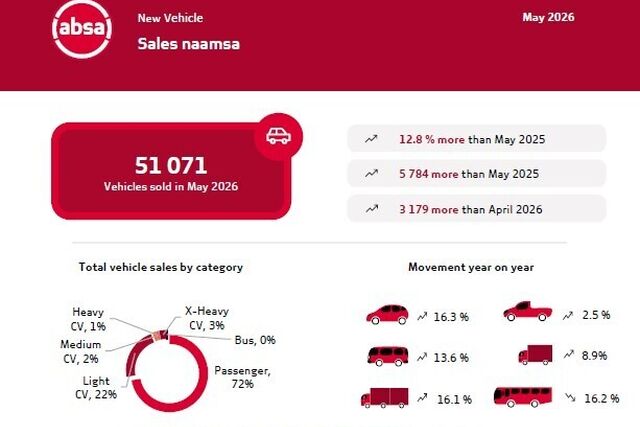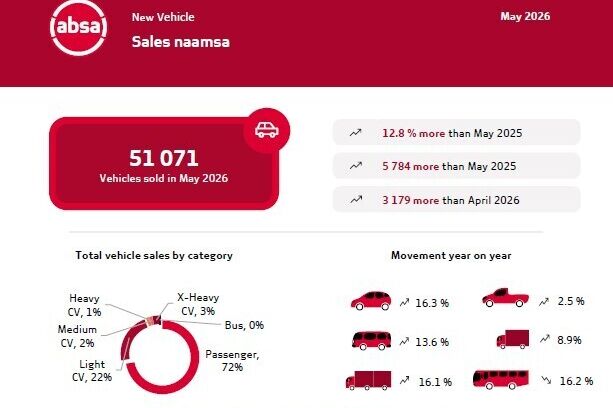
Aggregate domestic new vehicle sales reached 51 071 units in May 2026, a notable increase of 12,8% compared to the 45 287 vehicles sold in May 2025. This marks the strongest May result since 2013. Dealer sales dominated the market, accounting for 90,1% of total transactions, while rental industry purchases contributed 5,3%, corporate fleets 2,5%, and government 2,1%.
Passenger cars led the surge, with 36 871 units sold, up 16,3% year-on-year. Car rental activity represented 6,0% of this segment. Light commercial vehicles (bakkies and minibuses) recorded modest growth, rising 2,5% to 11 251 units. Medium commercial vehicles also performed strongly, climbing 13,6% to 718 units, while heavy trucks and buses advanced 12,9% to 2 231 units.
Exports, however, painted a different picture. Vehicle shipments fell 4,8% to 29 392 units, down from 30 859 in May 2025. The decline was largely attributed to the phased rollout of new-model production by a key exporter, which weighed on light commercial vehicle exports.
The overall sales momentum reflects a market still buoyed by mobility demand, replacement cycles, and fleet renewal activity. Consumers remain focused on affordability, fuel efficiency, and long-term ownership value, ensuring that purchasing decisions are guided by practicality rather than discretionary spending.
With May’s figures confirming sustained recovery, the industry continues to demonstrate its central role in supporting economic participation and growth, even as external pressures begin to reshape the operating environment.
More results: