South Africa has not had a genuine half-tonne bakkie on its new vehicle price list since the Nissan NP200 ended production in March 2024.
Share with friends
Now, with Volkswagen finally pulling the covers off its new Tukan in Brazil, there is renewed hope that the segment which once gave local buyers so much choice could be revived, and this time with a Volkswagen badge on the tailgate.
What the Tukan Is?
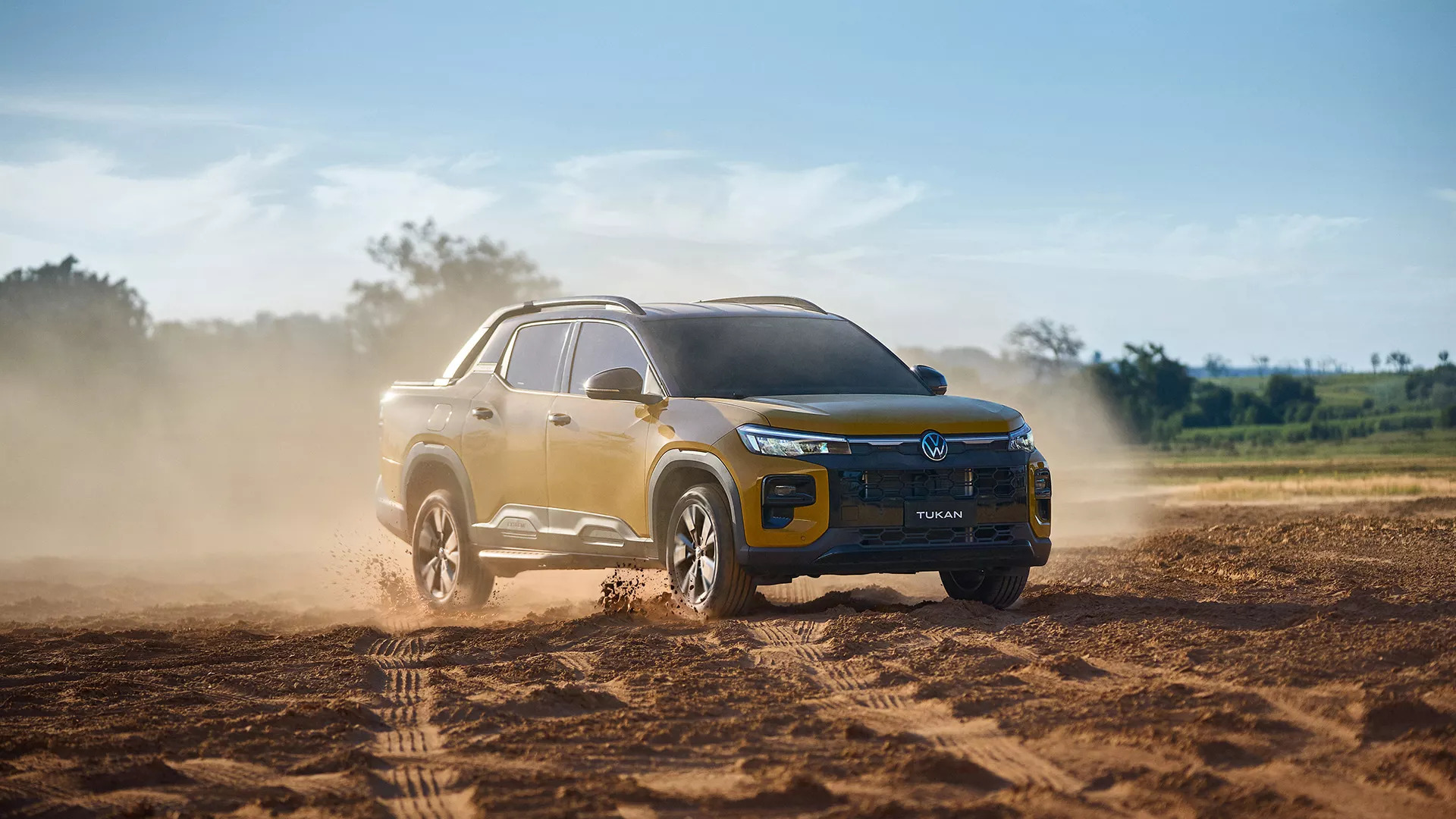
Volkswagen's Brazilian division has fully revealed the new Tukan, a small bakkie set to enter production at the São José dos Pinhais factory from 2027. It replaces the long running Saveiro, a model South African buyers have wished for in right hand drive for years but never received.
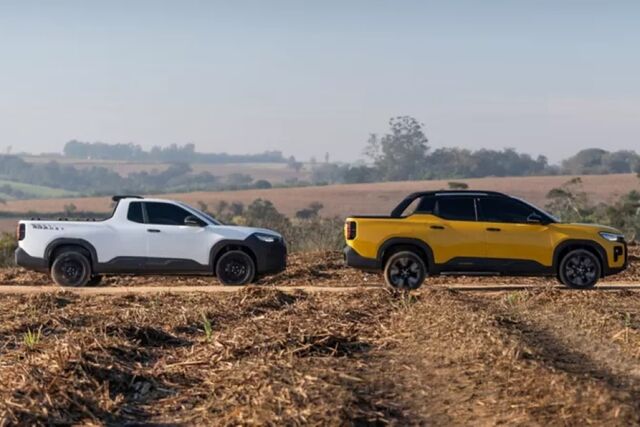
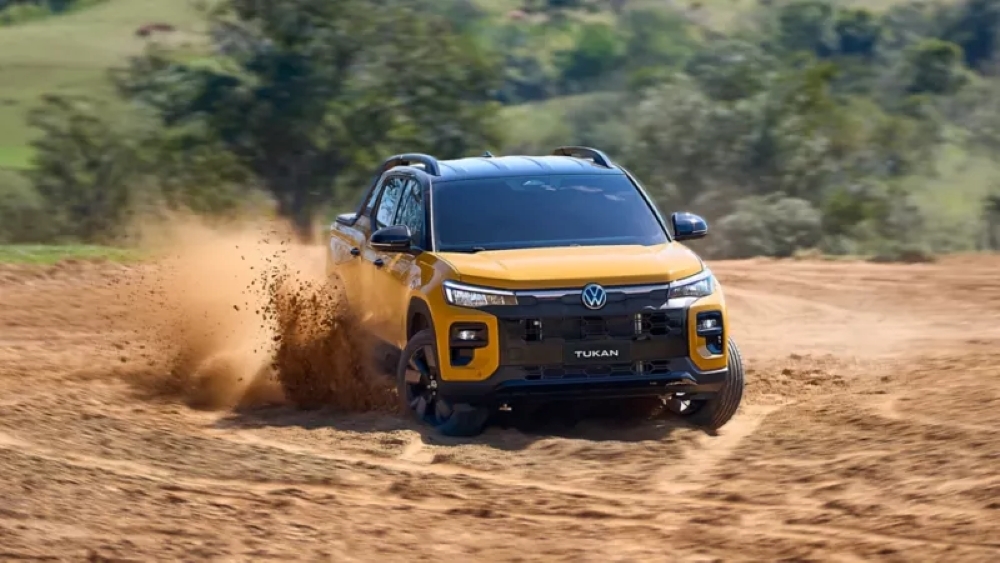
The Tukan will be offered in both single and double cab form, a first for Volkswagen's small bakkie line since the Saveiro never came in a double cab. The single cab was shown in entry level "Robust" trim, with white paint, steel wheels and black plastic cladding, aimed squarely at fleet and workhorse buyers. The double cab arrived in flagship "Extreme" guise, finished in a yellow launch colour and fitted with alloy wheels and a styling bar, positioned more as a lifestyle vehicle.
Technical detail remains scarce. Volkswagen has confirmed the rear suspension uses a rigid axle with leaf springs for load capacity, but has not released dimensions, payload figures or confirmed powertrains. The bakkie carries the internal codename "Udara" and rides on the brand's MQB platform, the same underpinnings used by the Polo, Polo Vivo and the upcoming Tengo crossover which will be built amongst other place at Volkswagen’s Kariega plant in the Eastern Cape.
Could the Tukan be built in South Africa?
The possibility of local production has been raised more than once. Speaking to Cars.co.za in October 2024, Martina Biene, Chairperson and Managing Director of Volkswagen Group Africa, said the plan to build a small bakkie spun off the Tengo had hit a roadblock, though she did not rule out eventually building some form of a bakkie at the Kariega plant, and called on South Africans to make their interest known.
Earlier in 2026, Biene told Bloomberg in a separate interview that Volkswagen's Wolfsburg head office had already approved a plan to build a small bakkie in South Africa, but that the final investment decision would depend on policy action from the South African government.
That comment was subsequently reported on by Cars.co.za and other local outlets. Reports suggest a localised version could roll off the Kariega line from around 2029, positioning it alongside the Polo, Polo Vivo and the incoming Tengo.
Car Magazine has reported that three engine options are being considered for the Tukan globally, a naturally aspirated 1.6 litre four cylinder, a 1.0 litre turbocharged three cylinder producing around 85 kW, and a 1.5 litre mild hybrid unit. At this stage, it remains far too early to say which of these, if any, would be offered locally, along with pricing or a final specification, should the bakkie be approved for South Africa.
SA's long history with small bakkies:
South Africa has a rich history with half tonne bakkies, and they proved popular with both private buyers and small businesses alike. The Datsun 1200, later the Nissan 1400, sold more than 275 000 units over 37 years before ending production in 2008. Its successor, the Nissan NP200, regularly sold over 1 000 units a month and placed fourth on the country's bakkie sales charts in both 2022 and 2023, before production ceased in March 2024 after a 16 year run.
The Ford Bantam and twin badged Mazda Rustler, ran from 1983 to 2011, with monthly sales reaching 650 to 700 units in the early 2000s. The Opel Corsa Utility, later the Chevrolet Utility, was axed when General Motors withdrew from South Africa entirely in 2017 but also sell in large numbers.
The Fiat Strada was sold locally until 2012, the Proton Arena departed alongside the rest of the Proton range in 2012, and Volkswagen's own Golf based Caddy bakkie ended its run in 2007 without a direct successor.
Should the Tukan arrive in South Africa, its double cab body style would set it apart from every one of its predecessors. None of the half tonne bakkies that came before it, not the 1400, the Bantam, the Corsa Utility, the Strada, the Arena or the Caddy, were ever offered in double cab form locally.
For a market that has long shown an appetite for double cab versions of its one tonne bakkies, that alone could make the Tukan a genuine game changer if it does eventually reach South African showrooms.
Sources: Cars.co.za; Nissan South Africa; Ford South Africa; General Motors; Volkswagen Newsroom; VW Brazil and Naamsa.
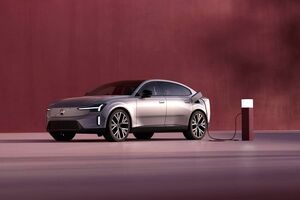
Charging time remains a worry for many South Africans considering an electric vehicle, who still see it as a disruption rather than a quick stop at a filling station. That view is starting to shift.
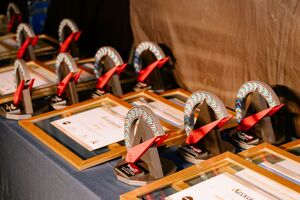
The winners of the 2026 Automotive Business Council | naamsa Accelerator Awards were announced at the recently held Auto Week 2026, which took place in eThekwini, KZN.
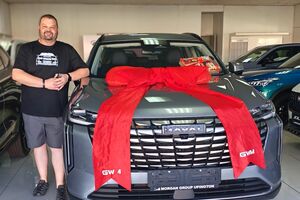
When Cobus Coetzee (photo) accepted the opportunity to join the Morgan Group in Upington, he had to weigh up more than a new position. The move meant exchanging the West Coast’s cooler climate and seaside lifestyle for the Northern Cape’s desert heat, while taking responsibility for a multi-franchise operation spread across several premises.
The winners of the 2026 Automotive Business Council | naamsa Accelerator Awards were announced at the recently held Auto Week 2026, which took place in eThekwini, KZN.
With the steep rise in fuel prices since March this year leading to historic record highs following massive increases in October, the government intervention annouched this week, is widely welcomed.
Omoda has confirmed that the new C4 will become the first model from the Chery Group to be built in South Africa, with production set to take place at the company's Rosslyn manufacturing facility in Gauteng.