Lightstone Auto’s July 2026 report shows that South Africans under the age of 35 are buying fewer cars than they did a decade ago. Stagnant incomes, high youth unemployment and rising living costs have squeezed disposable income, making it harder for younger buyers to enter the market.
Share with friends
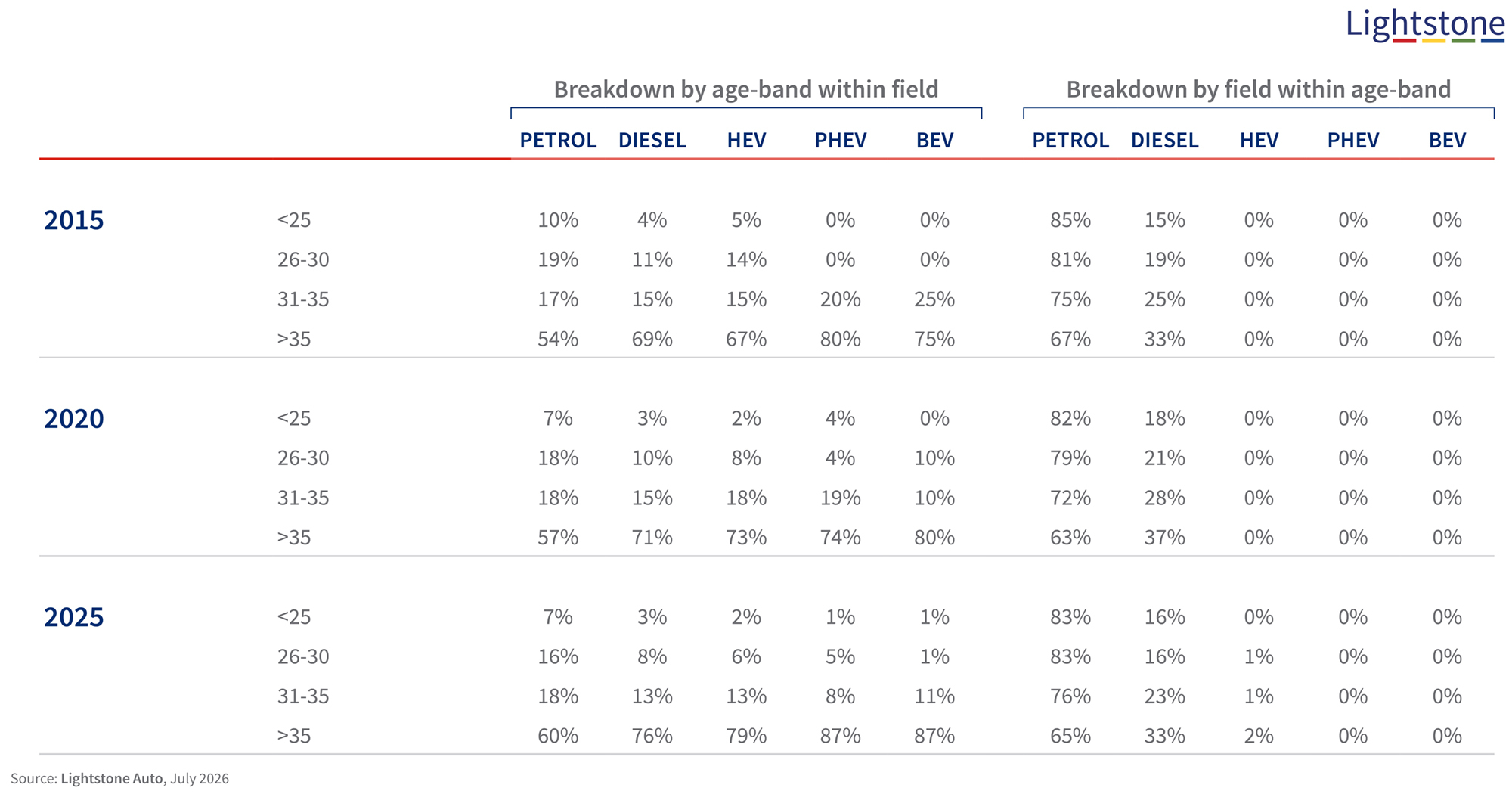
In 2015, under‑35s accounted for 37% of new vehicle purchases, but by 2025 this had fallen to 31%. Their share of used vehicle purchases also dropped, from 45% to 37% over the same period. The under‑25 group had the highest proportion of used‑to‑new purchases, reflecting limited disposable income and a preference for budget‑friendly options.
Petrol‑powered vehicles remain dominant among younger buyers, making up around 80% of their purchases in 2025. Diesel vehicles accounted for just under 20%, while hybrids and electric vehicles combined represented only 1%. Younger buyers made 40% of all petrol vehicle purchases, but their share of diesel, hybrid and electric sales was much smaller.
The rise of Chinese brands:
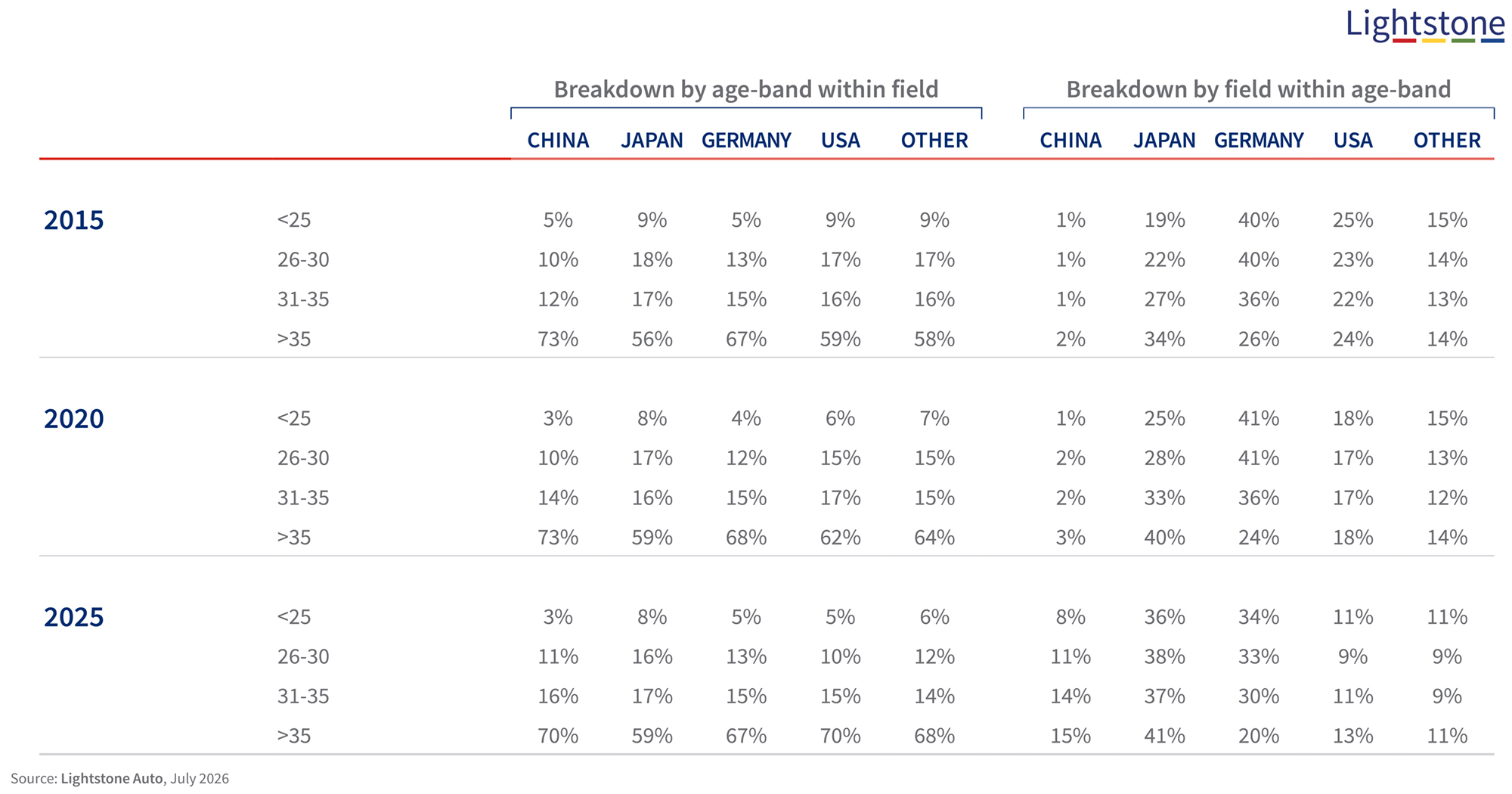
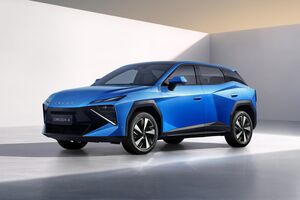
Chinese brands such as Haval, Chery and BYD have gained traction. In 2015, under‑35s made up 27% of Chinese brand purchases, which represented only 1% of their total car buying. By 2025, this had risen to 30%, with Chinese brands accounting for more than 10% of all purchases by younger buyers.
Lightstone Auto concluded that while new vehicle sales recovered strongly in 2025, the generational shift is clear: younger South Africans are buying fewer cars, and when they do, they are more open to affordable Chinese brands.
Preferences of different age groups when buying a car.
Used vehicles dominate across generations:
Lightstone Auto’s April 2026 study highlighted that between 2019 and 2025, older generations also shifted towards used vehicles, joining younger buyers who were already used‑dominant. This helped grow the used vehicle market and defined much of consumer behaviour during this period.
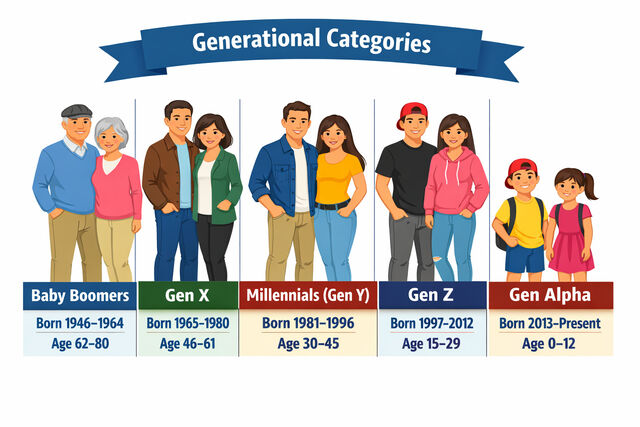
The data revealed rising vehicle costs, changing brand preferences, stronger used‑car reliance, steady Millennial income growth, and a slow but steady shift toward more gender‑balanced purchasing. Crossovers and compact SUVs gained traction, while affordability remained the defining force shaping generational buying behaviour.
Income and affordability:
Baby Boomers and Generation X consistently fell within the R30k–R60k income bracket per month across all years, suggesting relatively stable earning power. Millennials showed a notable shift from R10k–R20k in 2019 to R30k–R60k from 2021 onward, indicating career progression and upward mobility. Generation Z remained in lower income brackets overall, though there was a modest rise to R20k–R30k by 2025, which aligned with their life‑stage progression into early careers.
Rising vehicle prices reinforced the affordability narrative. New vehicle price ranges increased significantly between 2019 and 2023 across all generations, reflecting inflation and rising vehicle costs.
For example, Baby Boomers’ new vehicle price bands rose from R375k–R400k in 2019 to R550k–R600k by 2025. Generation X matched this upward movement. Used vehicle price bands also climbed steadily, particularly among Millennials and Gen Z, indicating upward market pressure even in the used segment.
Origan of vehicles bought by different age groups.
Gender diversification:
A consistent trend across every generation was the gradual narrowing of the gender gap. While male buyers still dominated overall, their share steadily declined, while female participation rose correspondingly.
Among Millennials, female buyers grew from 37.7% to 38.5%, and among Generation X from 35.2% to 36.8%. Even among Baby Boomers, female buyers grew from 31.7% to 33.8%. This suggested a slow but clear diversification of the car‑buying market, with women playing an increasingly influential role in purchasing decisions.
Generational comparison:
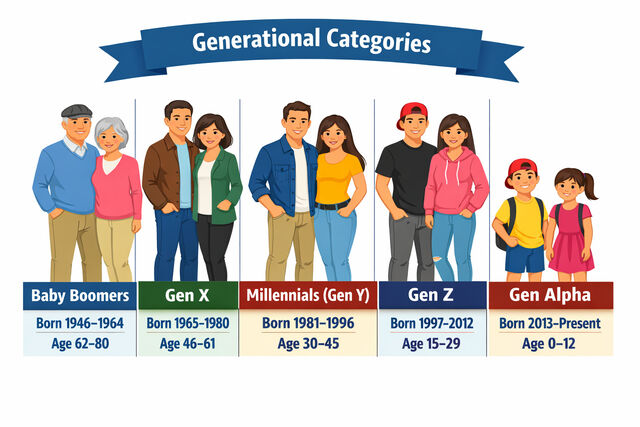
Generation
Typical Age in 2026
Buying Habits
Fuel/Vehicle Preference
Market Share Trends
Baby Boomers
62–80
Stable incomes, prefer reliability and established brands
Petrol and diesel ICE, limited EV adoption
Shifted towards used vehicles after 2020, balanced split by 2025
Generation X
45–61
Consistent buyers, cautious with affordability
Petrol ICE dominant, some diesel
Around 58–60% used vehicle purchases post‑2021, steady demand
Millennials
30–45
Income growth since 2019, more upward mobility
Compact SUVs, crossovers, petrol ICE
Strong preference for used cars (up to 70% in 2021), but new vehicle purchases grew 32% in 2026
Generation Z
14–29
Lower disposable income, budget‑conscious
Small cars, entry‑level models
Up to 77% used car reliance in 2021, but new vehicle demand rising with better finance access
Looking ahead:
Lightstone Auto’s research suggests that the rise of more affordable Chinese and Indian‑built new‑vehicle brands could shift South African buyer behaviour again, encouraging new vehicle purchases rather than used ones in the years ahead.
The vehicle market remains in almost permanent transition, driven by ever‑changing consumer demands. The trend toward new Chinese and Indian‑built vehicles gaining a bigger share of sales relative to used cars will likely be a gradual shift over several years rather than a sudden flip.
Source: Lightstone Auto reports — “Younger South Africans buy fewer cars than before” (July 2026) and “From Baby Boomers to Gen Z, used vehicles lead” (01 April 2026).
Charging time remains a worry for many South Africans considering an electric vehicle, who still see it as a disruption rather than a quick stop at a filling station. That view is starting to shift.
The winners of the 2026 Automotive Business Council | naamsa Accelerator Awards were announced at the recently held Auto Week 2026, which took place in eThekwini, KZN.
When Cobus Coetzee (photo) accepted the opportunity to join the Morgan Group in Upington, he had to weigh up more than a new position. The move meant exchanging the West Coast’s cooler climate and seaside lifestyle for the Northern Cape’s desert heat, while taking responsibility for a multi-franchise operation spread across several premises.
Cars are the ultimate symbol of freedom, independence and individualism. They offer the freedom to ‘go anywhere,’ whenever it suits and with whom one chooses.
The winners of the 2026 Automotive Business Council | naamsa Accelerator Awards were announced at the recently held Auto Week 2026, which took place in eThekwini, KZN.
With the steep rise in fuel prices since March this year leading to historic record highs following massive increases in October, the government intervention annouched this week, is widely welcomed.
Omoda has confirmed that the new C4 will become the first model from the Chery Group to be built in South Africa, with production set to take place at the company's Rosslyn manufacturing facility in Gauteng.