

TVS powers South Africa’s growing delivery economy
South Africa’s rapidly expanding delivery sector is driving strong demand for affordable, dependable motorcycles that can withstand the demands of daily commercial use.
- Product News
- 20 November 2026
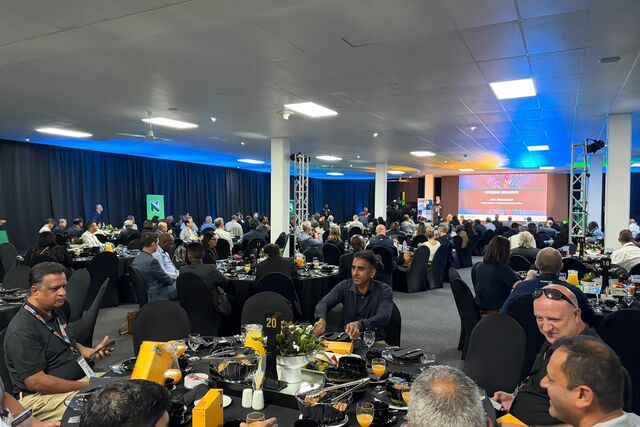
Dealerships and dealer groups will recognise several of the themes raised at the Automechanika Johannesburg CEO Breakfast, from an ageing vehicle fleet and growing Chinese brands to affordability and finance.
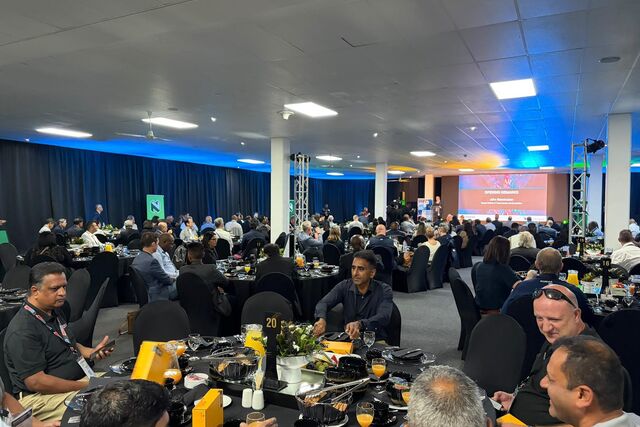
The breakfast took place on the opening day of the international trade fair. Industry leaders, government representatives and development partners called for coordinated action on localisation, skills, investment and African trade.
Fleet age, brands and affordability:
Siyabonga Mthembu, Partner at BDO, presented research on shifting global production, growing Chinese brands and South Africa’s ageing vehicle fleet. He identified infrastructure constraints and priorities including sourcing, inventory, affordability, productivity and skills. “We produce more but we’re seeing less and less profitability,” he said.
Programme Director Victor Radebe referred to the size of the national fleet. “It’s about the 13 million cars that are on the road. And it’s also about small businesses,” he said. Michael Johannes of Messe Frankfurt Exhibition GmbH spoke about a growing, ageing global fleet and stressed education, cooperation and affordable mobility.
Standards and accountability:
Bobby Ramagwede, CEO of the Automobile Association South Africa, raised concerns about recall transparency, vehicle safety, transport affordability and industrial policy, and called for stronger accountability. “Let’s take ownership of this industry,” he urged.
Duncan Mutengwe, General Manager Automotive at the NRCS, explained vehicle approvals, replacement component authorisations and market surveillance, emphasising consistent standards for imported and locally manufactured products.
Deputy Minister of Trade, Industry and Competition, John Steenhuisen, cited R107.5 billion in replacement parts imports during 2025 and spoke of opportunities to retain value domestically. “Localisation must extend beyond the factory gate,” he said.
Closing proceedings, Michael Dehn, Managing Director of Messe Frankfurt South Africa, announced plans for an Automotive Incubator Highway connecting African markets and supply chains. “We are going to intensify our connective initiatives,” he declared, inviting governments, associations and companies to participate.
South Africa’s rapidly expanding delivery sector is driving strong demand for affordable, dependable motorcycles that can withstand the demands of daily commercial use.
One of the main results of the 2026 Global EV Driver Survey, released by the Global EV Alliance (GEVA) this week, show that South African battery electric vehicle (EV) drivers are among the most satisfied in the world.
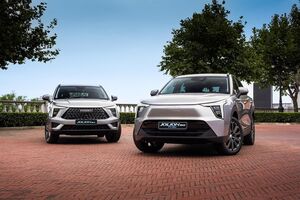
GWM South Africa has broadened its popular Jolion range with the introduction of the all-new Haval Jolion Max. Designed with modern families in mind, the newcomer combines increased interior space, new technology and a wider choice of powertrains, including petrol, hybrid and plug-in hybrid options.
 Advertisement
 Advertisement
You can't buy happiness but you can buy cars and that's kind of the same thing.
Unknown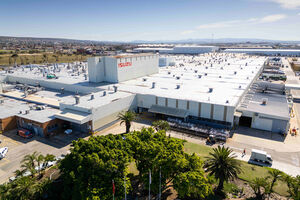
Isuzu Motors South Africa (IMSAf) has achieved a 38% reduction in Scope 1 and Scope 2 CO₂ emissions compared with its 2013 baseline while increasing vehicle production by 21% during the 2025/26 financial year at its Gqeberha manufacturing facility.

Diversifying oil supplies, investing in pipelines and rail infrastructure, improving port operations and expanding inland storage facilities are among the measures needed to reduce South Africa's vulnerability to international fuel supply disruptions.

Combined Motor Holdings (CMH) has appointed Charles Webber as the new Group CEO.