
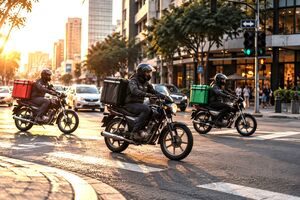
TVS powers South Africa’s growing delivery economy
South Africa’s rapidly expanding delivery sector is driving strong demand for affordable, dependable motorcycles that can withstand the demands of daily commercial use.
- Product News
- 20 November 2026
Motorists across South Africa are bracing for another painful trip to the pumps this week, as fuel prices are expected to surge sharply in the wake of escalating tensions in the Middle East.

While the official adjustment is only due in the coming days, early indicators point to a hefty increase in both petrol and diesel, driven largely by a spike in global oil prices. The ongoing conflict has rattled supply expectations, pushing crude higher and, inevitably, filtering down to local forecourts.
Early projections already show massive hikes coming: Predictions range from potentially R3 – R5+ per litre petrol and potentially R7 – R8+ per litre diesel.
For many South Africans, the news has landed with a mix of frustration and dark humour.


Social media here and abroad has been flooded with memes and AI-generated images poking fun at the looming increase. From jokes about needing a bank loan to fill up, to exaggerated images of people “selling kidneys for petrol”, the online reaction reflects a public trying to laugh through the pain.
But behind the humour lies a serious concern.
Fuel prices remain a key driver of inflation in South Africa, affecting everything from food costs to public transport fares. A sharp increase at the pumps is likely to ripple through the broader economy, placing further strain on already stretched households.
The latest surge is largely linked to instability in the Middle East, a region critical to global oil supply. Any disruption or perceived risk to supply chains tends to send markets into a spin, with countries like South Africa, which import the bulk of their fuel, particularly vulnerable.
The rand’s performance against the US dollar has also played a role. A weaker currency makes fuel imports more expensive, compounding the impact of higher international oil prices.
For motorists, the practical advice remains unchanged: fill up sooner rather than later, and prepare for tighter budgets in the weeks ahead.
Because if there is one thing South Africans have mastered, it is finding humour in tough times — even if the joke, this time, is a costly one.
Here is a few most of you have probably seen, telling a serious story in a funny way.


South Africa’s rapidly expanding delivery sector is driving strong demand for affordable, dependable motorcycles that can withstand the demands of daily commercial use.
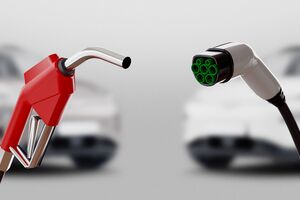
One of the main results of the 2026 Global EV Driver Survey, released by the Global EV Alliance (GEVA) this week, show that South African battery electric vehicle (EV) drivers are among the most satisfied in the world.
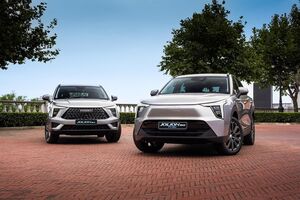
GWM South Africa has broadened its popular Jolion range with the introduction of the all-new Haval Jolion Max. Designed with modern families in mind, the newcomer combines increased interior space, new technology and a wider choice of powertrains, including petrol, hybrid and plug-in hybrid options.
 Advertisement
 Advertisement
Have you ever noticed that anybody driving slower than you is an idiot, and anyone going faster than you is a maniac?
George Carlin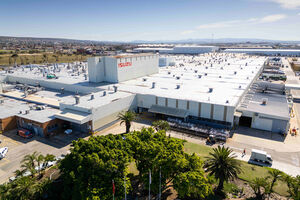
Isuzu Motors South Africa (IMSAf) has achieved a 38% reduction in Scope 1 and Scope 2 CO₂ emissions compared with its 2013 baseline while increasing vehicle production by 21% during the 2025/26 financial year at its Gqeberha manufacturing facility.
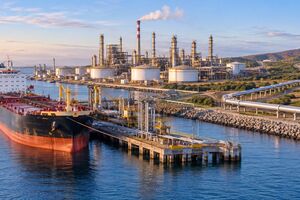
Diversifying oil supplies, investing in pipelines and rail infrastructure, improving port operations and expanding inland storage facilities are among the measures needed to reduce South Africa's vulnerability to international fuel supply disruptions.
Combined Motor Holdings (CMH) has appointed Charles Webber as the new Group CEO.