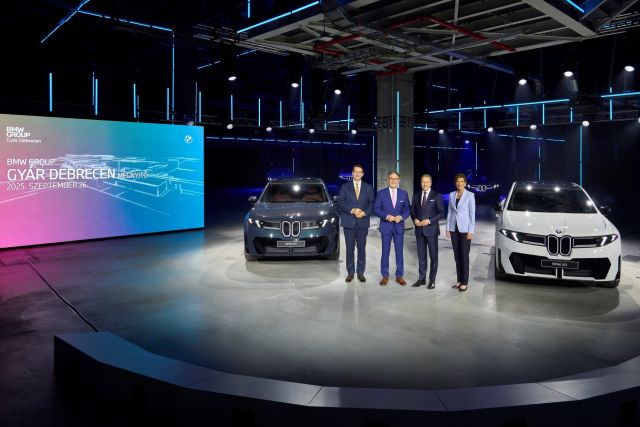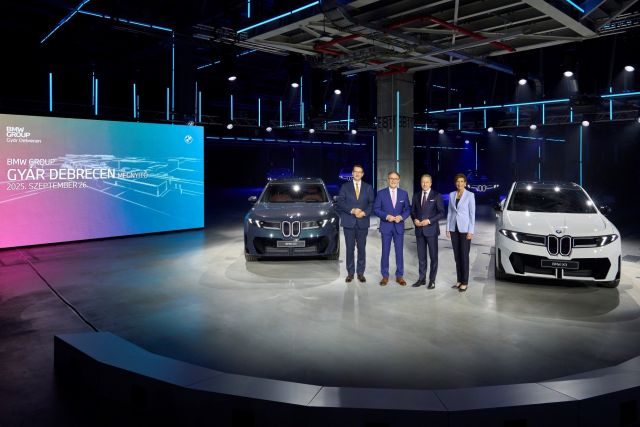
The opening ceremony, attended by BMW Group Chairman Oliver Zipse alongside Hungarian Prime Minister Viktor Orbán and Debrecen Mayor László Papp, celebrated what the automaker described as the beginning of a new era for the company.
"This opening sends a strong signal: we are expanding our footprint on our home continent and reaffirming our commitment to Europe as a strong and competitive location for industry," Oliver told attendees. The chairman emphasised that Debrecen would be crucial to BMW's future success as its first production site operating entirely without fossil fuels.
Since the 2018 decision to build the plant, the project has become one of Hungary's largest greenfield investments. More than 2 000 direct jobs have been created, with significant additional employment generated through regional suppliers and service providers drawn to the area.
Plant Debrecen president, Hans-Peter Kemser, highlighted the facility's broader impact: "This is not only a new BMW Group plant; it is a cornerstone of progress. We are a partner to culture, to education and to the University of Debrecen where, together, we foster the talents that will shape the future."
The facility's environmental credentials are impressive. Operating entirely on renewable electricity, it will reduce vehicle manufacturing emissions by approximately 90% compared to other BMW facilities. Total CO₂ emissions for producing the new iX3, including in-house parts from other BMW sites, will be around 80kg, a two-thirds reduction compared to existing models.
A 50-hectare photovoltaic array, among Hungary's largest, provides roughly a quarter of the plant's energy needs. Excess solar generation is captured in a thermal storage system capable of holding 130MWh.
Debrecen breaks from tradition by functioning as a network plant rather than being tied to a single primary facility. This approach allows it to incorporate best practices from BMW's global operations. The press shop adapts technologies from Spartanburg and Swindon facilities, whilst nearly 1 000 robots in the body shop have been positioned using detailed digital simulation.
Assembly processes leverage complete digitalisation, with artificial intelligence analysing data from sensors and cameras to provide real-time quality feedback to workers. The building's optimised layout enables 80% of components to reach assembly points directly, supported by fully electric internal logistics.
The site will also be the first of five global facilities producing BMW's sixth-generation high-voltage batteries, assembled on-site to minimise transport distances and environmental impact.