Automotive exports show resilience amid global uncertainty
South Africa’s automotive industry continued to strengthen its position as a global export hub in 2025, with vehicle and component exports reaching record levels despite rising trade uncertainty, geopolitical tensions and shifting global demand patterns.
Share with friends
According to the latest Product Market Matrix 2021 to 2025 by naamsa (The Automotive Business Council), the country exported vehicles and automotive components worth R291 billion in 2025, representing 15,6% of South Africa’s total exports.
Vehicle exports remained the primary driver, increasing by 5,9% year on year to a record 414 271 units in 2025. Passenger cars accounted for 258 655 units, while light commercial vehicles contributed 153 858 units.
South Africa exported vehicles to 109 countries, with Europe remaining the dominant destination through trade agreements with the European Union and the United Kingdom.
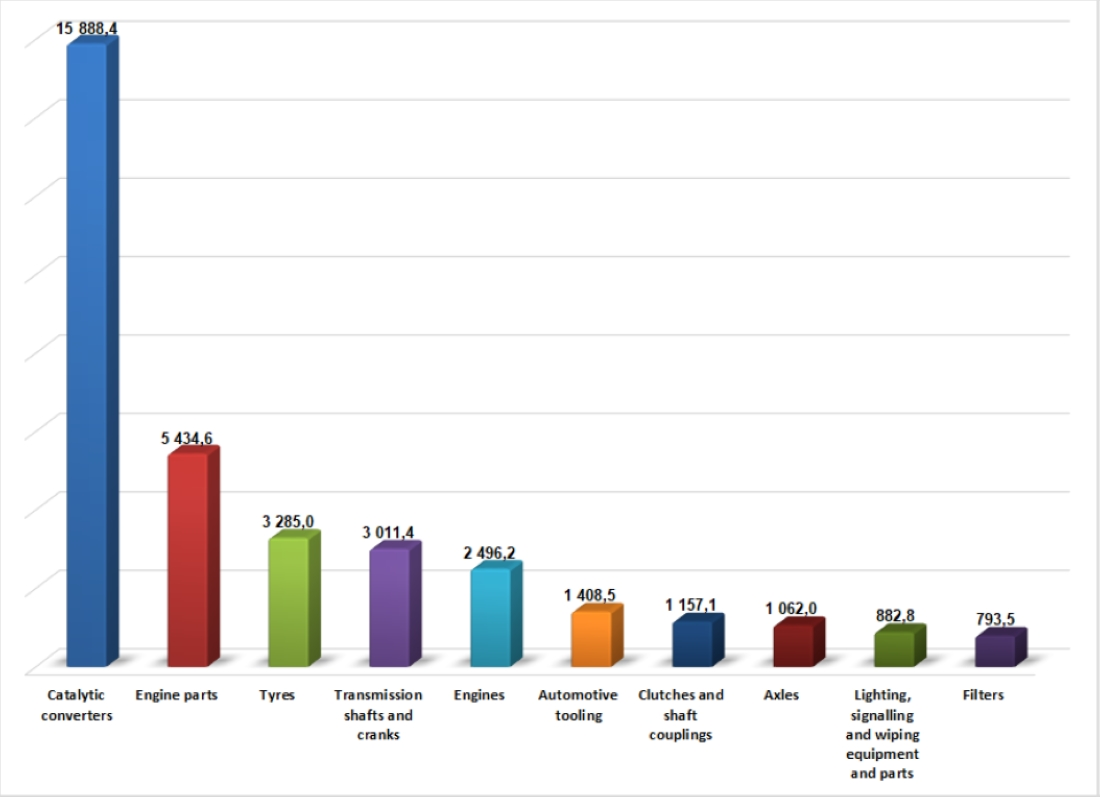
Top automotive component exports by value – 2025 (R million).
The most exported passenger vehicle destinations in 2025 were Germany, the United Kingdom (UK), France, Belgium and Italy. Germany retained its position as the leading export market with 77 890 units, followed by the UK with 70 798 units and France with 36 082 units. Belgium and Italy absorbed 27 643 and 23 041 units respectively.
Volkswagen remained South Africa’s leading vehicle exporter in 2025, followed by BMW, Ford, Toyota and Mercedes Benz South Africa. The Volkswagen Polo continued its dominance as the country’s top exported vehicle model for the sixth consecutive year.
South Africa’s locally produced passenger vehicle portfolio included the BMW X3, Mercedes-Benz C Class, Toyota Corolla Cross and Fortuner, as well as the Volkswagen Polo and Polo Vivo. In the light commercial sector, exports were supported by models such as the Ford Ranger, Isuzu D Max, Nissan Navara, Toyota Hilux, Toyota HiAce, Toyota Quantum and Volkswagen Amarok.
The report highlighted that more than 70% of South Africa’s light vehicle production was exported in 2025, underlining the country’s growing dependence on international demand. Four of the country’s seven OEMs (BMW, Ford, Toyota and Volkswagen) exported more than half of their total production volumes.
Commercial vehicle exports also continued to play an important regional role, particularly within Southern Africa. Zambia emerged as the largest destination for trucks and buses in 2025, taking 1 026 units, followed by Zimbabwe and Mozambique. The report noted that truck exports are increasingly linked to regional infrastructure growth and the expansion of trade under the African Continental Free Trade Area.
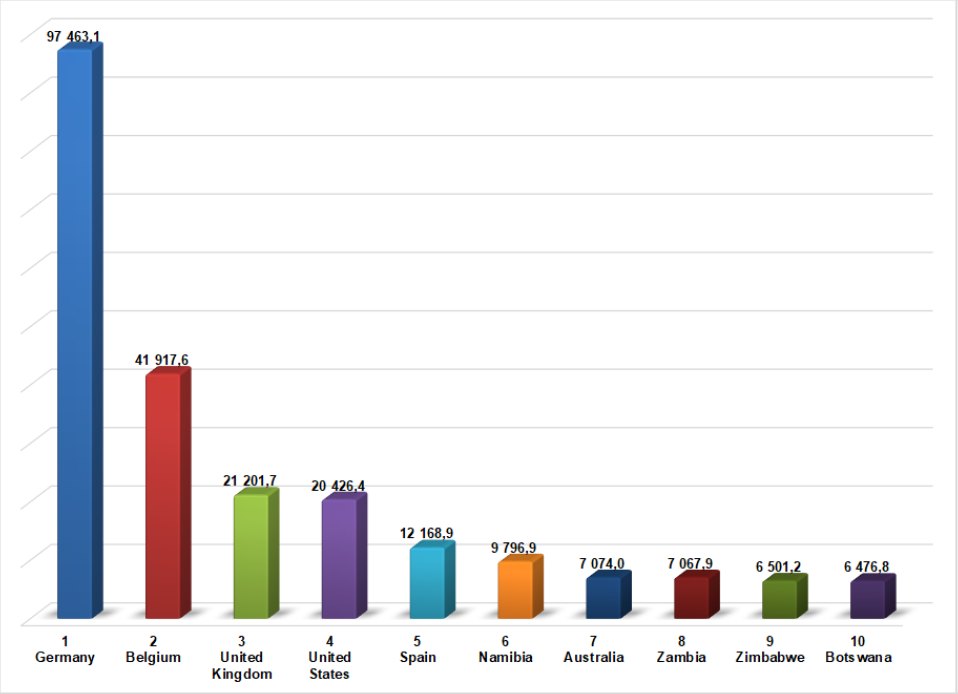
Top automotive export destinations by value – 2025 (R million)
Automotive component exports, although showing a marginal decline compared to 2024, remained a major contributor to South Africa’s industrial economy. Component exports reached R61,2 billion in 2025, with catalytic converters remaining the single largest export category despite continued declines linked to changing global emissions technologies and the transition to new energy vehicles.
The top five automotive component export categories in 2025 were catalytic converters, engine parts, tyres, transmission shafts and cranks, and engines. Catalytic converters generated export earnings of R15,9 billion and accounted for 26% of all component exports. Germany was by far the biggest destination, taking 55% of catalytic converter exports, followed by the Czech Republic and Thailand.
Engine parts ranked as the second largest component export category at R5,4 billion, with Germany and the United States remaining the largest export destinations. Tyres generated R3,3 billion in exports, with the Netherlands, the United States and Namibia emerging as the leading markets.
Transmission shafts and cranks produced export earnings of just more than R3 billion in 2025. Zambia was the largest market, followed by Zimbabwe and the Democratic Republic of Congo, highlighting the growing importance of African markets for South African component suppliers.
Engine exports, worth nearly R2,5 billion, were mainly destined for Zambia, Mozambique, Botswana and Namibia. The report noted that South Africa’s component industry remains highly diversified, supported by 198 first tier suppliers and hundreds of second and third tier companies.
While Europe remains South Africa’s dominant automotive export destination, the report stressed the importance of diversification in light of global trade tensions and protectionist measures in some major economies.
It also pointed to future opportunities linked to electric vehicles and new energy vehicle technologies, particularly in battery minerals, thermal management systems and e‑axle production.
SA’s main automotive regional export destinations – 2025
Charging time remains a worry for many South Africans considering an electric vehicle, who still see it as a disruption rather than a quick stop at a filling station. That view is starting to shift.
The winners of the 2026 Automotive Business Council | naamsa Accelerator Awards were announced at the recently held Auto Week 2026, which took place in eThekwini, KZN.
When Cobus Coetzee (photo) accepted the opportunity to join the Morgan Group in Upington, he had to weigh up more than a new position. The move meant exchanging the West Coast’s cooler climate and seaside lifestyle for the Northern Cape’s desert heat, while taking responsibility for a multi-franchise operation spread across several premises.
The winners of the 2026 Automotive Business Council | naamsa Accelerator Awards were announced at the recently held Auto Week 2026, which took place in eThekwini, KZN.
With the steep rise in fuel prices since March this year leading to historic record highs following massive increases in October, the government intervention annouched this week, is widely welcomed.
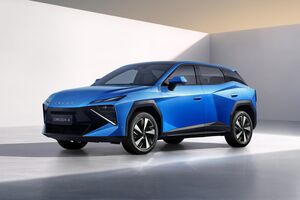
Omoda has confirmed that the new C4 will become the first model from the Chery Group to be built in South Africa, with production set to take place at the company's Rosslyn manufacturing facility in Gauteng.