Payload is the amount of weight a vehicle can carry, including occupants, luggage and other cargo. It is calculated using the vehicle’s Gross Vehicle Mass (GVM) and the vehicle mass used for the particular calculation.
AA questions revised payload rating:
The issue centres on Jetour’s decision to revise the payload rating of the T1 and T2 from the original 300kg to 475kg, inclusive of the driver.
The AA questioned the validity of the revised figure, particularly because the increase was made without mechanical upgrades. It also raised questions about the application of the revised rating to vehicles already on South African roads and the use of global laboratory reports in the approval process rather than local independent testing.
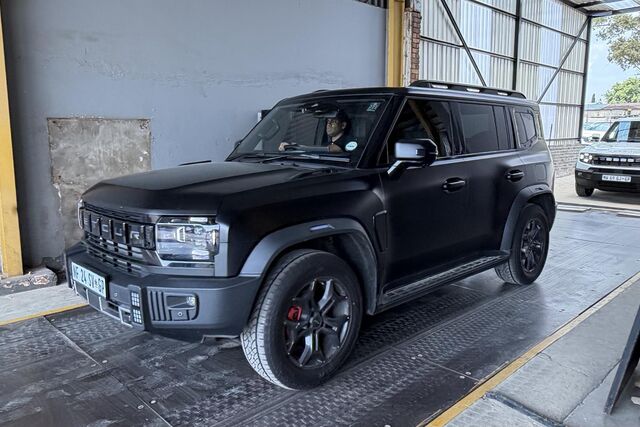
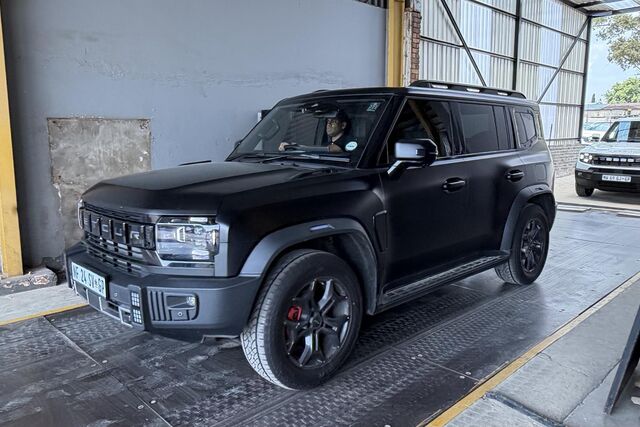
Following consultation between the AA and the National Regulator for Compulsory Specifications (NRCS), weighbridge testing was conducted at the Clayville Testing Centre in Gauteng, with both organisations present.
According to the AA, the testing produced payload figures of 538kg for the T1 Odyssey 2.0TD, 508kg for the T1 PHEV 1.5T, 500kg for the T2 Odyssey 2.0T, 478kg for the T2 PHEV 1.5T and 455kg for the T2 Xplora 2.0T.
Four of the five vehicles therefore recorded figures above the 475kg rating in the AA's results. The T2 Xplora was the exception, with the AA recording 455kg, or 20kg below the revised rating. The AA has asked Jetour for clarity on the finding.
Jetour explains its calculation:
Jetour’s response focuses partly on the way the original payload was calculated. According to Jetour, when the T-Series was launched locally in October 2025, its international calculation used GVM less MIRO, or Mass in Running Order. Jetour says MIRO typically includes standard equipment, operating fluids, fuel and a driver.
Jetour subsequently identified that this was not the calculation commonly used by South African OEMs. It therefore changed to GVM less TARE to provide what it describes as a like-for-like comparison.
TARE is the vehicle’s unladen mass, including standard equipment and 10 litres of fuel, but excluding the driver, passengers, luggage and cargo.
Jetour says TÜV NORD, an independent German testing, inspection and certification organisation, also conducted braking performance and brake efficiency assessments relating to the T2’s payload capacity.
Different figures for the Xplora:
Jetour also conducted its own formal weighing exercises in the presence of the AA and NRCS.
Its response gives payload figures of 500kg for the T2 Odyssey, 479kg for the T2 Xplora and 478kg for the T2 PHEV. Jetour compares these figures with its 475kg claimed payload and records each as exceeding the claimed figure.
This produces a difference in the reported Xplora results. The AA's statement records 455kg for the T2 Xplora, while Jetour's response records 479kg for the same model.
T1 approval remains an issue:
The status of the T1 payload rating is another point raised by the AA.
The AA says the NRCS has confirmed that Jetour’s application for the revised T1 payload rating is still in the approval process. It therefore says both new and existing T1 customers remain subject to the original homologated payload rating of 300kg.
This differs from Jetour's previous statement that “based on the approval obtained from the NRCS, Jetour South Africa confirms that the approved payload capacity applicable to the relevant Jetour T1 and T2 model range is 475 kg, inclusive of the driver”.
Licensing of existing vehicles:
The AA has also raised the issue of licensing for vehicles already on the road. It says a solution had not been reached with road traffic authorities to update the licensing information of existing T1 and T2 vehicles to reflect the revised GVM figures.
According to the AA, owners could therefore still be subject to the lower weight shown on their licence discs during a roadblock or weighbridge inspection.
Jetour says a licensing solution for its T2 customers is being prioritised in consultation with the NRCS, with further details to be communicated directly to customers.
The AA has additionally called for greater use of local homologation testing for new vehicle entries into South Africa, including testing involving organisations such as the CSIR.