
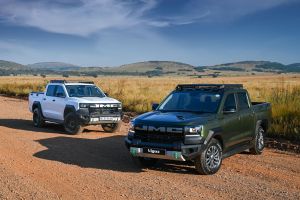
New JMC Vigus will make an impression
Following the official brand re-launch by the Salvador Caetano Group, JMC South Africa announce the arrival of the All-New JMC Vigus.
- Product News
- 17 April 2026
Volkswagen Group is accelerating its technological reset in China as it prepares to base the majority of its locally built vehicles on its new China Electronic Architecture (CEA) by 2030.
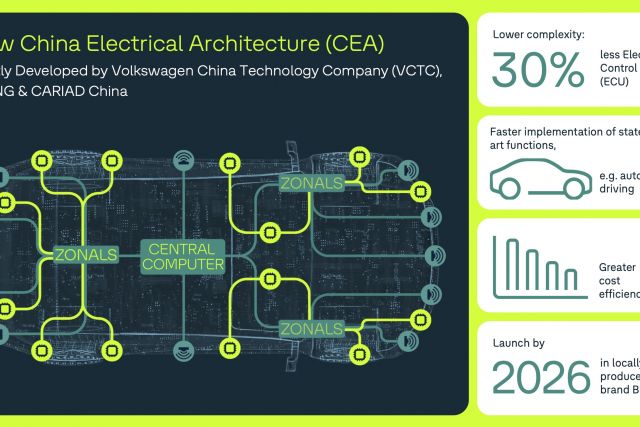
Initially developed with Chinese EV manufacturer XPeng, the platform is engineered to streamline vehicle electronics, allowing VW to cut development time by up to 30 per cent and sharply lower production costs through centralised computing and a reduced number of control units.
The first model built on the CEA, the ID. UNYX 07, entered production at Volkswagen’s Anhui plant at the end of 2025, marking VW’s transition into full software‑defined vehicle manufacturing within China. The architecture reduces electronic control units by around 30 per cent and supports over‑the‑air updates, China‑specific driver assistance technologies, and AI‑enhanced cockpit systems.
The shift comes as Volkswagen seeks to regain momentum in a market dominated by fast‑moving domestic champions such as BYD and Geely. The company’s sales slump in 2024, including a 17 per cent drop in the final quarter, pushed VW down to third place in China’s fiercely competitive landscape.
Though CEA originated as a joint development with XPeng, the partnership concluded in 2025. Volkswagen now oversees all software and hardware integration independently. Staff at the firm's Hefei technology hub describe having greater autonomy and an ability to deliver at “China speed” while still upholding Volkswagen’s reputation for safety and reliability.
Volkswagen plans to launch four more CEA‑based vehicles this year, before expanding the architecture to roughly ten additional models in 2027, including hybrids and combustion‑engine cars. This scalability, spanning electric, hybrid and ICE powertrains, is central to VW’s strategy of deploying a unified digital backbone and restoring its competitive edge.
As China becomes Volkswagen’s principal hub for software‑defined vehicle innovation, the CEA serves as a pivotal foundation for the brand’s long‑term transformation. It reflects a decisive shift towards faster development cycles, deeper localisation, and the adoption of China’s rapid‑iteration engineering culture, all critical factors shaping success in the world’s largest automotive market.
Following the official brand re-launch by the Salvador Caetano Group, JMC South Africa announce the arrival of the All-New JMC Vigus.
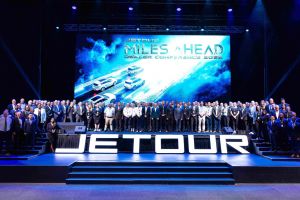
Jetour South Africa hosted its inaugural Dealer of the Year Awards on Tuesday night, bringing together its national dealer network of nearly 60 dealerships.

South Africa’s motorists and automotive sector are facing a fresh layer of uncertainty as the Middle East conflict continues to disrupt global oil markets, but for now the country’s fuel supply remains stable even as costs rise.
 Advertisement
 Advertisement
You can't buy happiness but you can buy cars and that's kind of the same thing.
Unknown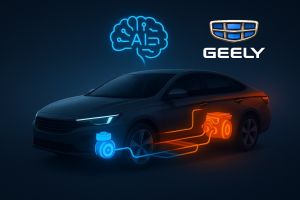
Geely Auto has lifted the curtain on a new hybrid technology that it believes can redraw the balance of power in a segment dominated for decades by Japanese brands.
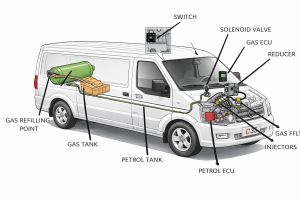
As fuel prices continue to place pressure on South African consumers and businesses, DFSK South Africa has introduced an LPG Autogas conversion solution aimed at reducing operating costs and improving vehicle efficiency across its petrol range.
Toyota Motor Corporation and Isuzu Motors are stepping up plans to bring hydrogen power into Japan’s light‑duty truck market, confirming a jointly developed fuel cell model scheduled for production in the 2027 financial year.