
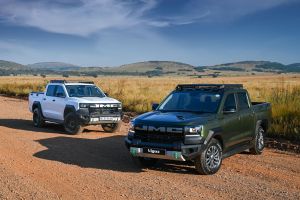
New JMC Vigus will make an impression
Following the official brand re-launch by the Salvador Caetano Group, JMC South Africa announce the arrival of the All-New JMC Vigus.
- Product News
- 17 April 2026
Geely Auto has lifted the curtain on a new hybrid technology that it believes can redraw the balance of power in a segment dominated for decades by Japanese brands.
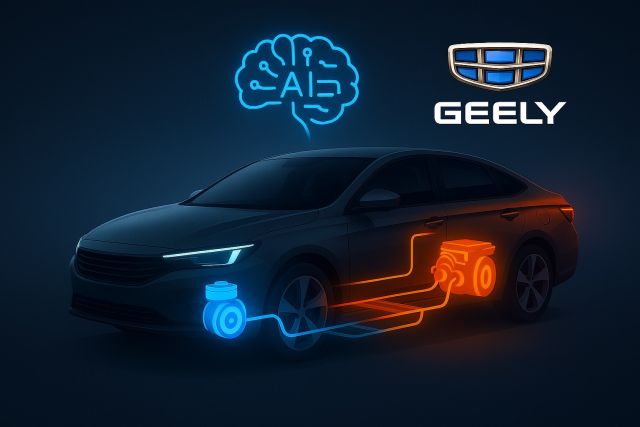
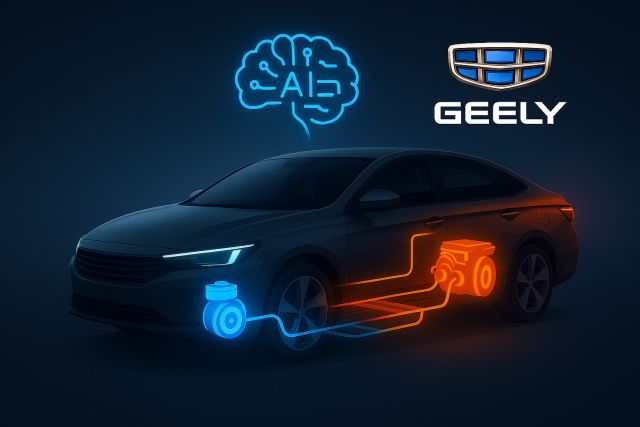
Its i‑HEV Intelligent Hybrid system blends petrol and electric propulsion with artificial intelligence, targeting both fuel efficiency and in‑car intelligence rather than focusing on electrification alone.
In official testing, a Geely Emgrand fitted with the system returned fuel consumption of 2.22 litres per 100 kilometres, a result independently verified by Guinness World Records. That equates to around 45 kilometres per litre, a number that pushes conventional hybrid efficiency into territory once considered unrealistic for mass‑production cars.
Key to that performance is an AI‑based energy management platform. The software continuously evaluates real‑world factors such as driving style, terrain, temperature and altitude, adjusting the balance between engine and motor to minimise fuel use. Geely claims this approach delivers efficiency gains of more than 10 per cent over traditional hybrid control systems.
The hardware has also been designed specifically for hybrid use. The petrol engine achieves thermal efficiency above 48 per cent, among the highest figures claimed for a production engine, and is paired with a compact battery and a high‑output electric motor. Unlike plug‑in hybrids, i‑HEV models do not require charging from the grid, keeping weight, cost and complexity in check while still offering strong electric assistance in urban driving.
Beyond efficiency, Geely is positioning i‑HEV as a software‑led platform. Built on the company’s own vehicle architecture, the system supports advanced driver assistance and smart driving features that rely on higher onboard computing power. This reflects a broader industry shift, where software capability is becoming as important as mechanical engineering in defining vehicle value.
The technology will be introduced through 2026 across several core models, including the Preface saloon, Monjaro and Starray SUVs, and the Emgrand. Industry analysts view the move as a direct challenge to Japanese manufacturers such as Toyota, whose hybrid dominance dates back to the launch of the first Prius in 1997.
As enthusiasm for pure electric vehicles cools in some regions due to cost and infrastructure constraints, Geely’s strategy highlights a renewed belief in full hybrids as a pragmatic bridge away from petrol power. The competition for hybrid leadership, long considered settled, may be opening up once again.
Following the official brand re-launch by the Salvador Caetano Group, JMC South Africa announce the arrival of the All-New JMC Vigus.
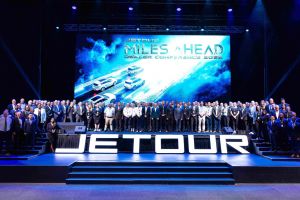
Jetour South Africa hosted its inaugural Dealer of the Year Awards on Tuesday night, bringing together its national dealer network of nearly 60 dealerships.
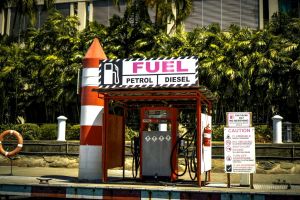
South Africa’s motorists and automotive sector are facing a fresh layer of uncertainty as the Middle East conflict continues to disrupt global oil markets, but for now the country’s fuel supply remains stable even as costs rise.
 Advertisement
 Advertisement
Have you ever noticed that anybody driving slower than you is an idiot, and anyone going faster than you is a maniac?
George Carlin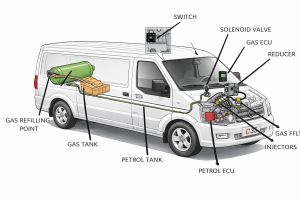
As fuel prices continue to place pressure on South African consumers and businesses, DFSK South Africa has introduced an LPG Autogas conversion solution aimed at reducing operating costs and improving vehicle efficiency across its petrol range.
Toyota Motor Corporation and Isuzu Motors are stepping up plans to bring hydrogen power into Japan’s light‑duty truck market, confirming a jointly developed fuel cell model scheduled for production in the 2027 financial year.
BYD and Tesla, two giants of the electric vehicle industry, are navigating diverging challenges. BYD faces mounting competition in China and questions over its pricing strategy, while Tesla grapples with fading incentives and unsold inventory in the United States.