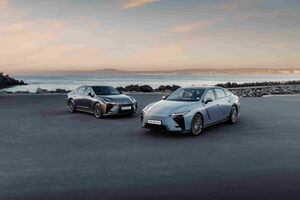
The move is the latest from the Japanese auto giant to show a sharper pivot to electric vehicles. It recently detailed an ambitious new EV strategy that includes an overhaul of its supply chain and the development of long-range batteries.
China was once regarded by foreign automakers as an opportunity for almost boundless growth. Now they worry about a diminishing market share owing to the fast rise of local competitors and cut-throat prices.
Toyota is to accelerate powertrain development with suppliers Denso and Aisin as well as the local design and development of "smart cockpits" that meet the needs of the Chinese market, it says in a statement.
It says it will strengthen development of its full suite of electrified cars, not just battery-powered ones. Unlike some other automakers, Toyota is betting that hybrids and plug-in hybrids will continue to see robust demand. It is also investing in the development of hydrogen fuel-cell cars.
It sees this "multi-pathway" approach of different kinds of electrified cars as a better fit for markets that are not ready for only battery electrics.
The automaker will also have engineers from three joint ventures – with FAW Group, Guangzhou Automobile Group (GAC) and BYD – to work together on a project basis at its biggest research and development facility in China.
It did not say how many engineers that would involve, although a spokesperson said their focus would be on electrification and intelligence.
Toyota, which has seen its China sales, including of its luxury Lexus brand, slip 2.8% to about 879 000 units in the first half of the year, says it will aim to significantly reduce manufacturing costs, including through developing a local supplier base, to become more competitive.
Toyota has also slowed production at a joint-venture plant that makes its bZ4X EV and laid off 1 000 contract workers earlier this month.
The move to step up electric technology development comes after some of the leading global automakers recently tweaked the way they are developing cars in China.
German luxury brand BMW earlier this month boosted investment in product development in China with a new R&D hub in Shanghai that will develop EVs to be sold globally.
Volkswagen unveiled a partnership with China's Xpeng Inc to make two new models from 2026 featuring Xpeng's software, and it plans to jointly develop Audi models and a new platform with its Chinese partner, SAIC .