

New Mitsubishi Pajero is ready to reclaim its flagship status
The Mitsubishi Pajero is preparing for a new chapter, with an all-new generation set to return as the brand's flagship SUV.
- Product News
- 22 November 2026
No battery, no power. It is a simple truth about that important component, which ensures our vehicles can move from A to B.

It is true for vehicles with internal combustion engines (ICE) and even far more so for new-energy vehicles, consisting of pure battery-powered electric vehicles (EVs) or a combination of the two better known as hybrids – normal or plug in.
As South Africa’s EV and hybrid market slowly expands, battery technology plays a central role in determining vehicle performance, cost and reliability. Different types of batteries are used across EVs and hybrids, each with distinct materials and characteristics.
Lithium-Ion (Li-ion) batteries:
Li-ion batteries are currently the dominant battery type used in EVs and hybrids. They offer a strong balance between energy density (how much power they store), size and lifespan. Inside, the key ingredients are a lithium-based cathode, a graphite or silicon anode and a liquid electrolyte.


Some of better known and talked about chemicals used, include:
In general, the Li-ion batteries, notwithstanding the type, are known for higher energy and power density, it is relatively lightweight, boasts good energy efficiency and a good life cycle.
The life cycle is the number of times it can be charged from 0% to 100% and back down before dropping below around 80% of its original capacity. A higher life cycle means a longer battery lifespan.

Nickel-Metal hydride (NiMH) batteries:
NiMH batteries were once the go-to for hybrids before lithium-ion became more mainstream. They are still used in many self-charging hybrids because of their proven reliability, safety and robustness.
Vehicles in South Africa using NiMH batteries include, among others, the Toyota Corolla Cross Hybrid and the Toyota RAV4 Hybrid.
It is durable with an excellent safety record and tolerates frequent partial charging and discharging. It is, however, heavier and less energy-dense than lithium-ion batteries.
Solid-state batteries (SSBs):
Solid-state batteries use next-generation technology. It replaces the flammable liquid electrolyte in Li-ion batteries with solid material.
This allows for higher energy storage, better safety, faster charging and longer-range ability. While not yet available in production vehicles, global carmakers are investing heavily in developing them.
Toyota plans to introduce solid-state batteries in production EVs from around 2027, while BMW and Volkswagen are also testing solid-state prototypes.
This type of battery could be a game changer for EVs. It is not yet commercially available in South Africa or elsewhere, but likely to appear in premium EVs in future. The complexity of the manufacturing process and high cost of materials, make it expensive.
Lithium-titanate (LTO) batteries:
These batteries charge extremely quickly and are very long-lasting but sacrifice range owing to lower energy density. They are not commonly used in passenger vehicles but are suitable for fleet and commercial vehicles.
Electric buses and mining equipment in South Africa have trialled LTO batteries owing to fast charge capability.
It can charge in as little as 10 minutes. It is good for high-frequency urban use owing to its extremely long life cycles (up to 10 000+ cycles compared to the other type of batteries 2 000+ cycles). On the negative side is its limited range.
Lead-acid batteries:
Although unsuitable for driving propulsion in modern EVs, lead-acid batteries are still widely used as auxiliary 12V batteries for powering lights, infotainment and accessories on vehicles.
Almost all EVs and hybrids on South African roads, including the BMW i3, Jaguar I-PACE and the GWM Ora 03, use 12V lead-acid batteries alongside the main lithium-ion pack.
It is cheap to replace, have a low energy density and a poor cycle life (they wear out quickly if discharged too much). It is mostly for support functions, not propulsion.

To conclude…
Battery technology is at the core of South Africa’s EV and hybrid market. From dependable nickel-metal hydride cells in Toyota’s hybrids to advanced lithium-ion and LFP systems in new models like the MG4 and BYD Atto 3, each battery type serves a purpose.
As technology matures and global investment continues, South African consumers can expect more efficient, longer-lasting and more affordable electric vehicles in the near future.

The Mitsubishi Pajero is preparing for a new chapter, with an all-new generation set to return as the brand's flagship SUV.

Behind every vehicle that rolls off a production line is a workforce whose skill, commitment and determination make it possible.

For many South Africans, the idea of owning an electric vehicle (EV) is appealing, but questions about charging, electricity costs, range and the practicalities of everyday use can make the decision difficult.
 Advertisement
 Advertisement
You can't buy happiness but you can buy cars and that's kind of the same thing.
Unknown
South Africa’s petrol price remains a concern for motorists, with inland 95-octane petrol staying above R30 a litre after the Department of Mineral and Petroleum Resources’ November adjustment.
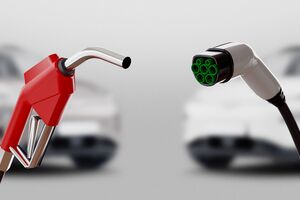
One of the main results of the 2026 Global EV Driver Survey, released by the Global EV Alliance (GEVA) this week, show that South African battery electric vehicle (EV) drivers are among the most satisfied in the world.
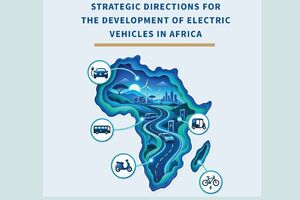
Energy security, electrification, grid infrastructure and sustainable transport take centre stage at COP31 in Antalya, Türkiye, as the climate conference devotes a full day to energy and transport. Africa enters that conversation with a plan of its own: the African Union’s (AU) Continental Framework on Electric Mobility (eMobility).