
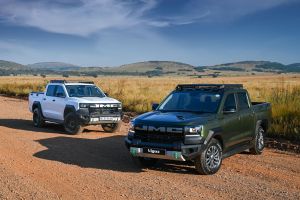
New JMC Vigus will make an impression
Following the official brand re-launch by the Salvador Caetano Group, JMC South Africa announce the arrival of the All-New JMC Vigus.
- Product News
- 17 April 2026
Zero Carbon Charge (CHARGE) called on the Minister of Finance, Enoch Godongwana, to announce measures in his Medium-Term Budget Policy Statement (MTBPS) to ensure that a transition to Electric Vehicles (EVs) will result in the reduction of carbon emissions in the country.
This follows President Cyril Ramaphosa’s recent announcement that government is considering the introduction of incentives to encourage South Africans to switch to EVs.
“We hope that Minister Godongwana provides more details on these incentives in his MTBPS and that these include tax rebates or a tax holiday on EVs so that these vehicles become more affordable. This is the only way we will be able to achieve an exponential growth in EV sales in the country,” says Joubert Roux, Executive Chairperson of CHARGE.
“In addition, it is critical that government prioritises the development of an off-grid, renewably charged EV network and introduces incentives that encourage consumers to charge their EVs with green power from these charging stations,” he adds.
CHARGE’s own research has revealed that an EV charged from Eskom’s predominantly coal-powered grid indirectly emits 5.8 tonnes of CO2 a year. This is more than a petrol car, which emits 4.4 tonnes a year.
The EV White Paper released by the Department of Trade, Industry and Competition in November 2023 noted: “The use of renewable energy systems to power charging stations is important for allaying prospective consumers’ concerns related to grid power supply and availing a truly low carbon transition.”
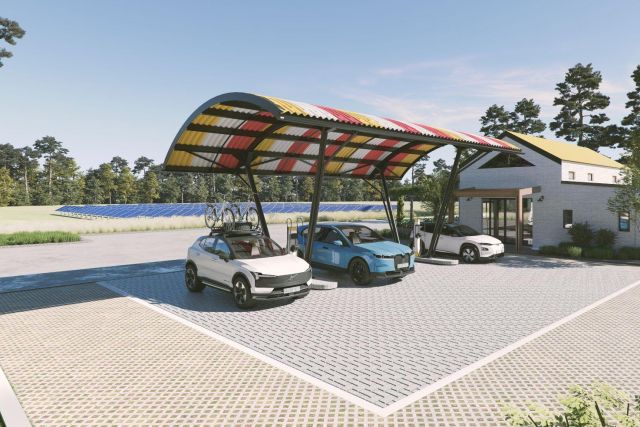
Zero Carbon Charge is building a network of 120 ultra-fast electric vehicle charging stations that are powered entirely through PV solar energy and batteries. It has also started the land use and environmental application process for the first off-grid electric truck charging stations that will be located on the N3 highway.
The further roll-out of renewable energy powered electric truck charging stations will happen on a route-by-route basis. This large-scale, national carbon emission reduction project aligns closely with national government’s goal of promoting renewable energy in order to reduce reliance on the coal-powered national grid for EV charging.
The CHARGE network will offer major economic opportunities for rural areas. These include creating just over 7 000 job opportunities during the process of developing these charging stations. Additionally, CHARGE will provide landowners with additional revenue through a lease agreement by providing them with 5% of the annual sales from electricity generated by the EV-charging stations built on their land.
“However, if government is serious about achieving the roll-out of carbon-free charging infrastructure, Minister Godongwana should also announce in Parliament tomorrow that government has decided to scrap the 10% import duty on imported solar panels introduced earlier this year.
This import duty is currently undermining the mass development of renewable power projects, including EV-charging facilities, owing to insufficient local capacity currently to manufacture these products,” says Joubert.
Following the official brand re-launch by the Salvador Caetano Group, JMC South Africa announce the arrival of the All-New JMC Vigus.
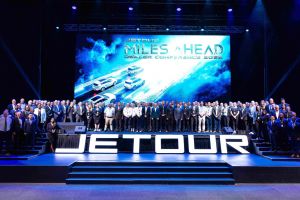
Jetour South Africa hosted its inaugural Dealer of the Year Awards on Tuesday night, bringing together its national dealer network of nearly 60 dealerships.
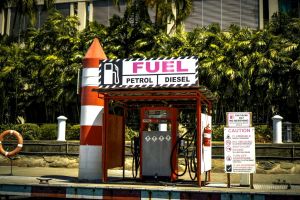
South Africa’s motorists and automotive sector are facing a fresh layer of uncertainty as the Middle East conflict continues to disrupt global oil markets, but for now the country’s fuel supply remains stable even as costs rise.
 Advertisement
 Advertisement
Have you ever noticed that anybody driving slower than you is an idiot, and anyone going faster than you is a maniac?
George Carlin
Geely Auto has lifted the curtain on a new hybrid technology that it believes can redraw the balance of power in a segment dominated for decades by Japanese brands.
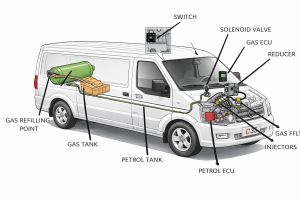
As fuel prices continue to place pressure on South African consumers and businesses, DFSK South Africa has introduced an LPG Autogas conversion solution aimed at reducing operating costs and improving vehicle efficiency across its petrol range.
Toyota Motor Corporation and Isuzu Motors are stepping up plans to bring hydrogen power into Japan’s light‑duty truck market, confirming a jointly developed fuel cell model scheduled for production in the 2027 financial year.