
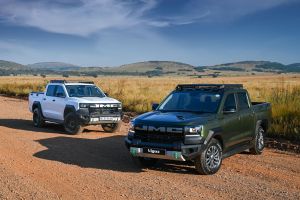
New JMC Vigus will make an impression
Following the official brand re-launch by the Salvador Caetano Group, JMC South Africa announce the arrival of the All-New JMC Vigus.
- Product News
- 17 April 2026
This past Tuesday (15 November), Ford Motor Company CEO, Jim Farley, made a thrilling claim, saying the manufacturing of electric vehicles would need 40% less labour than internal combustion engine (ICE) vehicles.
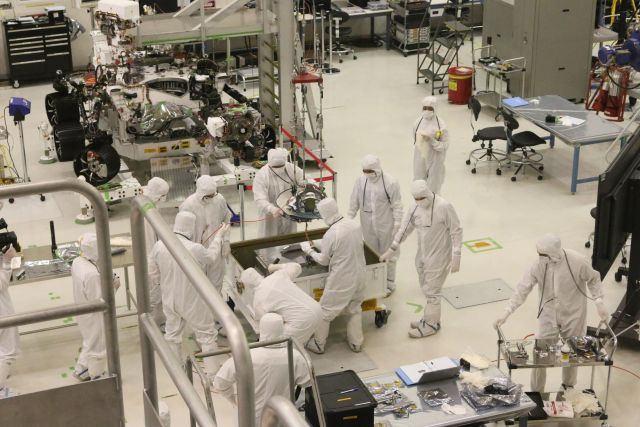
By now it has become part of EV lore that the maintenance of these vehicles will be much cheaper owing to the simplicity of EVs compared to their fossil-fuel counterparts. But Farley’s claim, which follows that simplicity also means simplicity in production, has not often been discussed.
Farley, speaking at a conference in Detroit, said this meant the company has to pursue more vertical integration by retraining workers instead of laying them off in order for Ford to manufacture more parts in-house. This will hark back to the heydays of Ford when Henry Ford owned forests, iron mines, limestone quarries and even a rubber plantation in Brazil in an attempt to wholly control the company’s supply chain.
Farley said: “If Henry Ford came back to life, he would have thought the last 60 years weren’t that exciting, but he would love it right now because we’re totally reinventing the company.”
In the light of Ford’s target of reaching 50% EV sales by 2030, Farley acknowledged that the transition would be challenging and that there would be “storm clouds”.
Farley pointed out that the battery production process was one area where jobs could be added and workers could be retrained.
Following the official brand re-launch by the Salvador Caetano Group, JMC South Africa announce the arrival of the All-New JMC Vigus.
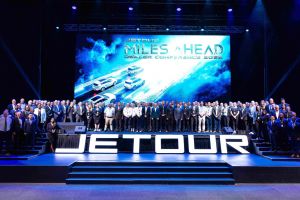
Jetour South Africa hosted its inaugural Dealer of the Year Awards on Tuesday night, bringing together its national dealer network of nearly 60 dealerships.
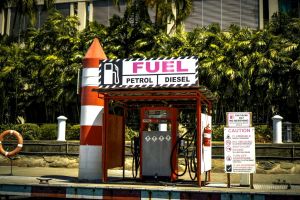
South Africa’s motorists and automotive sector are facing a fresh layer of uncertainty as the Middle East conflict continues to disrupt global oil markets, but for now the country’s fuel supply remains stable even as costs rise.
 Advertisement
 Advertisement
You can't buy happiness but you can buy cars and that's kind of the same thing.
Unknown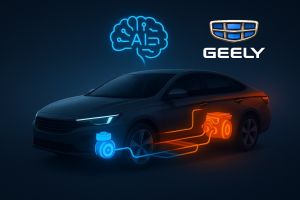
Geely Auto has lifted the curtain on a new hybrid technology that it believes can redraw the balance of power in a segment dominated for decades by Japanese brands.
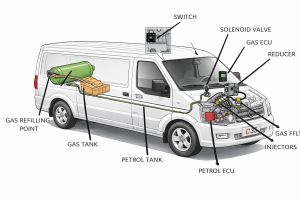
As fuel prices continue to place pressure on South African consumers and businesses, DFSK South Africa has introduced an LPG Autogas conversion solution aimed at reducing operating costs and improving vehicle efficiency across its petrol range.
Toyota Motor Corporation and Isuzu Motors are stepping up plans to bring hydrogen power into Japan’s light‑duty truck market, confirming a jointly developed fuel cell model scheduled for production in the 2027 financial year.