
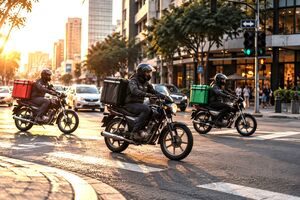
TVS powers South Africa’s growing delivery economy
South Africa’s rapidly expanding delivery sector is driving strong demand for affordable, dependable motorcycles that can withstand the demands of daily commercial use.
- Product News
- 20 November 2026
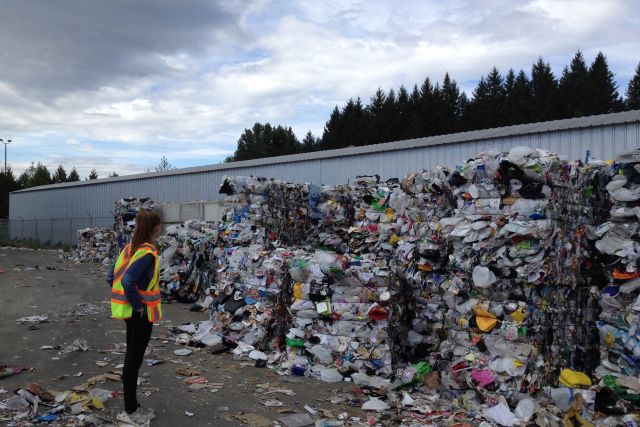
Reduce, reuse and recycle. This is the message Volkswagen Group South Africa (VWSA) continues to reiterate in an effort to beat plastic pollution.

Plastic pollution in the Nelson Mandela Bay Metro, where the Volkswagen Kariega manufacturing plant is based, has become a major concern.
“I have noticed the increase in land pollution in most parts of the Metro every day when I travel from home to our plant in Kariega. This is extremely worrying as we know land pollution often ends up in the ocean, causing harm to sea life,” says Ulrich Schwabe, Production Director at VWSA.
Ulrich says VWSA is on a mission to change attitudes and influence employees, suppliers and customers to rethink plastic usage and disposal.
“We are striving to reduce plastic waste, and we are working with our employees and suppliers on finding solutions to reduce the plastic packaging, in which our parts are shipped, by at least 5% by the end of 2023.”
Since January this year, VWSA has already reduced plastic packaging by more than nine tons. “We continue to work with suppliers to find alternative packaging and to further reduce one-off plastic usage without compromising the protection of our parts,” he says.
Waste separation bins have been placed inside the Kariega plant’s production areas to allow for separation at source to take place and prevent contamination of waste streams.
Similar waste separation bins are placed in the employee car park to encourage employees to bring recyclable waste from home. Common waste streams include plastic, glass, tin and paper.
Over a ten-year period, the company has reduced its energy consumption and carbon dioxide (CO₂) emissions by almost half. The water usage and waste reduction declined by 65% and 66% respectively, while solvent emissions reduced by 31%. “In total, our environmental impact has reduced by over 50% since 2010,” Ulrich explains.
South Africa’s rapidly expanding delivery sector is driving strong demand for affordable, dependable motorcycles that can withstand the demands of daily commercial use.
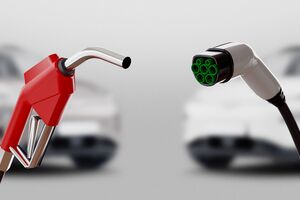
One of the main results of the 2026 Global EV Driver Survey, released by the Global EV Alliance (GEVA) this week, show that South African battery electric vehicle (EV) drivers are among the most satisfied in the world.
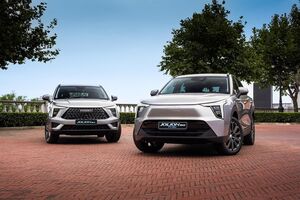
GWM South Africa has broadened its popular Jolion range with the introduction of the all-new Haval Jolion Max. Designed with modern families in mind, the newcomer combines increased interior space, new technology and a wider choice of powertrains, including petrol, hybrid and plug-in hybrid options.
 Advertisement
 Advertisement
You can't buy happiness but you can buy cars and that's kind of the same thing.
Unknown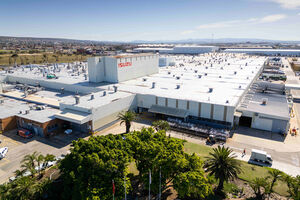
Isuzu Motors South Africa (IMSAf) has achieved a 38% reduction in Scope 1 and Scope 2 CO₂ emissions compared with its 2013 baseline while increasing vehicle production by 21% during the 2025/26 financial year at its Gqeberha manufacturing facility.
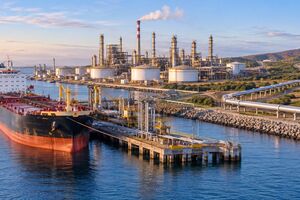
Diversifying oil supplies, investing in pipelines and rail infrastructure, improving port operations and expanding inland storage facilities are among the measures needed to reduce South Africa's vulnerability to international fuel supply disruptions.
Combined Motor Holdings (CMH) has appointed Charles Webber as the new Group CEO.