
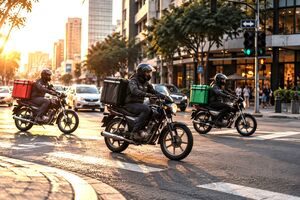
TVS powers South Africa’s growing delivery economy
South Africa’s rapidly expanding delivery sector is driving strong demand for affordable, dependable motorcycles that can withstand the demands of daily commercial use.
- Product News
- 20 November 2026
For more than 70 years Volkswagen vehicles have traversed the roads of South Africa and have become one of the most loved vehicle brands in the country.

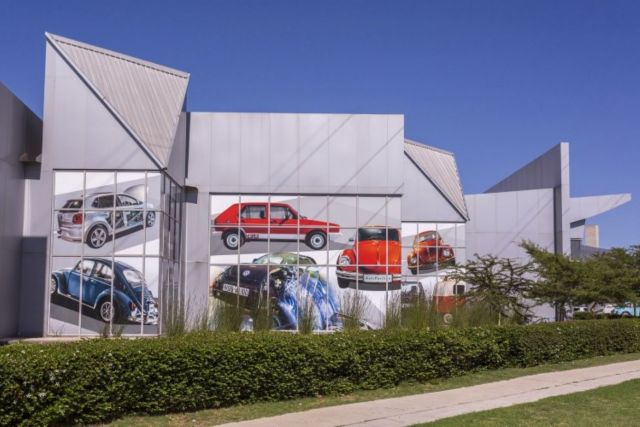
Its heritage remains proudly preserved at the Volkswagen AutoPavilion in Kariega. This quaint town, formerly known as Uitenhage, is the second oldest town in the Eastern Cape and is home to Volkswagen Group South Africa’s (VWSA) manufacturing plant where the first Volkswagen Beetle rolled off the production line at the end of August 1951.
More than 40 classics are displayed inside the AutoPavilion museum, with the oldest being a 1938 DKW F5 Reichklasse.
The Volkswagen AutoPavilion is open to the public and offers plant tours where visitors have the opportunity to experience the production of two of South Africa’s most popular vehicles, the Polo and the Polo Vivo.

Open five days a week, the Volkswagen AutoPavilion has welcomed more than 14 000 visitors this year (as at the end of August).
Andile Dlamini, Head of VWSA Communications, said visitors come from across the country to view the museum and to experience the motoring entertainment on offer at the AutoPavilion.
“The museum is dedicated to preserving and showcasing an impressive array of our classic and iconic cars, which were assembled at our Kariega plant over the past seven decades. Many young children and school groups visit our facility to learn about the evolution of the automotive industry,” said Dlamini.
He added that visitors to the AutoPavilion also gain insight into the craftsmanship and engineering behind these remarkable vehicles and learn about the contribution of Volkswagen to the local automotive industry.
South Africa’s rapidly expanding delivery sector is driving strong demand for affordable, dependable motorcycles that can withstand the demands of daily commercial use.
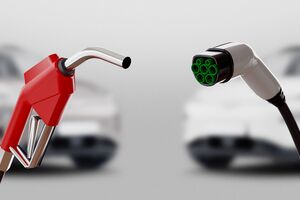
One of the main results of the 2026 Global EV Driver Survey, released by the Global EV Alliance (GEVA) this week, show that South African battery electric vehicle (EV) drivers are among the most satisfied in the world.
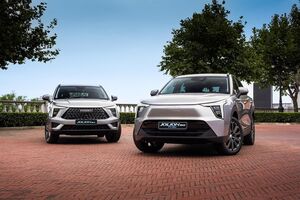
GWM South Africa has broadened its popular Jolion range with the introduction of the all-new Haval Jolion Max. Designed with modern families in mind, the newcomer combines increased interior space, new technology and a wider choice of powertrains, including petrol, hybrid and plug-in hybrid options.
 Advertisement
 Advertisement
You can't buy happiness but you can buy cars and that's kind of the same thing.
Unknown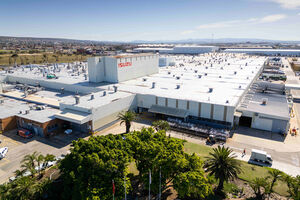
Isuzu Motors South Africa (IMSAf) has achieved a 38% reduction in Scope 1 and Scope 2 CO₂ emissions compared with its 2013 baseline while increasing vehicle production by 21% during the 2025/26 financial year at its Gqeberha manufacturing facility.

Diversifying oil supplies, investing in pipelines and rail infrastructure, improving port operations and expanding inland storage facilities are among the measures needed to reduce South Africa's vulnerability to international fuel supply disruptions.
Combined Motor Holdings (CMH) has appointed Charles Webber as the new Group CEO.