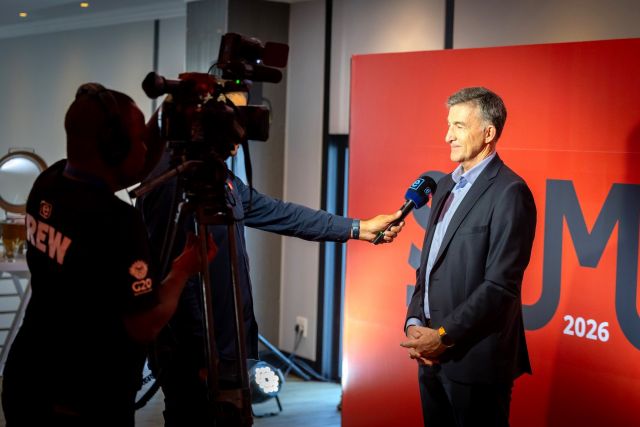
Held under the theme Driving Through Disruption, the event focused on navigating global volatility, strengthening industrial competitiveness and accelerating South Africa’s transition to new energy vehicles.
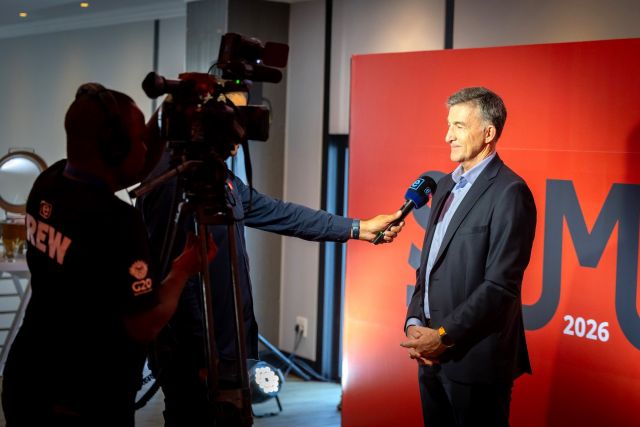
Toyota South Africa Motors President and Chief Executive Officer Andrew Kirby opened the event by welcoming partners from across the industry.
“Our strength as an organisation is built on our suppliers, our dealer network and our interdependent ecosystem. We walk this journey together and we are deeply grateful for the support that continues to move our industry forward,” said Kirby.
Andrew acknowledged that both global and domestic conditions remain unpredictable, requiring faster and more agile responses from the industry.
“We live in uncertain times, globally and here in South Africa. The question is not whether disruption will come but how we respond to it,” he says. “Driving through disruption requires resilience, curiosity and continuous innovation.”
A central theme of his address was the need for sustainable volume growth. While overall industry volumes have improved, Andrew cautioned that growth must be meaningful and accompanied by growth in completely knocked down production, which has declined despite broader gains.
“It is not sufficient to only see volume growth stem from an increase in the entry affordable models as this does not have significant gross domestic product (GDP) impact. We also can’t rely on exports to fill the gap, global regulation and forces will impact where we can export to,” he added.
He reiterated that Toyota South Africa Motors remains focused on treating each customer uniquely and shaping products and services around real world needs and usage conditions. At the same time, the company is committed to advancing industrial competitiveness through policy stability, investment in local operations and deeper supply chain localisation.
He highlighted broader structural challenges, including energy costs, logistics constraints, labour expenses and rising input costs. South Africa, he noted, is showing early signs of premature deindustrialisation, with manufacturing value add per capita declining over the past two decades.
“We cannot become a purely import-driven market. With the right small policy adjustments, we can strengthen competitiveness, attract new investment and grow the economy,” he says.
On global regulation, Andrew welcomed the European Union’s decision to revise its 2035 target from a 100 percent to a 90 percent emissions reduction for new cars and vans. The shift allows internal combustion engine and hybrid vehicles to remain part of the mix beyond 2035 if supported by low carbon fuels or other decarbonisation measures.
“This pragmatic shift recognises multiple viable pathways to net-zero. However, we cannot rely on one export destination and assume conditions will stay the same. With incoming United Kingdom and European Union emissions regulations, our future export volumes are at real risk,” he says.
By contrast, South Africa currently has no formal new energy vehicle target or regulatory framework, although additional investment support for battery electric and fuel cell electric vehicles will come into effect in April.
“South Africa must set clear goals and supportive policies aligned to global trends to accelerate NEV adoption in support of our 2050 net-zero commitments,” he urged. “The fastest way to reduce near-term emissions is with hybrid electric vehicles (HEVs), complemented by plug-in hybrid electric vehicles (PHEVs), which offer practical benefits in our usage conditions, and a growing role for battery electric vehicles (BEVs) as charging infrastructure and total cost of ownership improve. Our drivetrain mix will be determined by customer value, infrastructure readiness and use cases.”
During a panel discussion, Professor Justin Barnes unpacked the evolving policy environment and emphasised the urgency of infrastructure investment, industry government collaboration and workforce readiness. Economist Goolam Ballim provided insight into global macroeconomic forces shaping South Africa’s outlook.
Looking ahead, Andrew expressed confidence that, with the right policy framework, South Africa could grow annual vehicle sales beyond 700 000 units and production beyond 720 000 units. This could unlock an estimated R21 billion in additional manufacturing value add and up to 14 500 new direct jobs.
“We must not simply defend what we have, we must grow. This industry has built deep capabilities over 100 years. With decisive leadership, collaboration and smart interventions, we can secure the next era of automotive manufacturing in South Africa.”
He concluded by calling for urgent alignment between government and industry as investment decisions for the 2029 to 2030 cycle approach.
To view the full presentations made during SOMI, please visit: https://www.youtube.com/live/GXnyY5PA8N8