The bloc's members are Brazil, China, Egypt, Ethiopia, India, Indonesia, Iran, Russia, South Africa and the United Arab Emirates.
The summit added real world momentum to a case first set out by the B20's Industrial Transformation and Innovation Task Force during South Africa's Presidency of the G20. The Task Force, chaired by Toyota South Africa CEO Andrew Kirby, pointed to India's EV transformation as proof.
Sales there surpassed 1.5 million units by the 2023/24 financial year, showing that predictable, long term policy frameworks, rather than subsidies alone, can drive manufacturing growth, new employment and reduced import dependence across the developing world.
"Each country must develop their strategy on the transition towards zero emission vehicles," says Hiten Parmar, Executive Director of The Electric Mission, when the Task Force's findings were first presented.
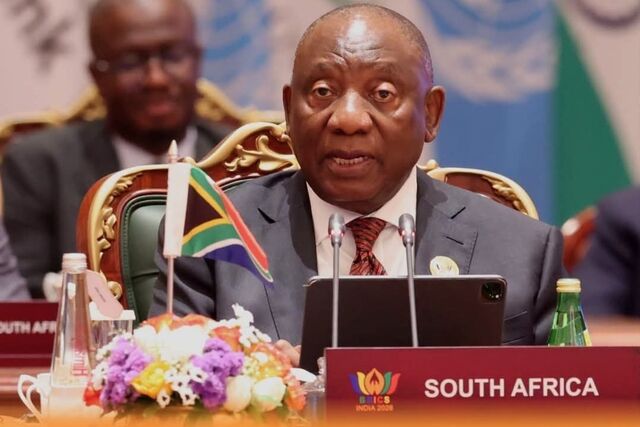
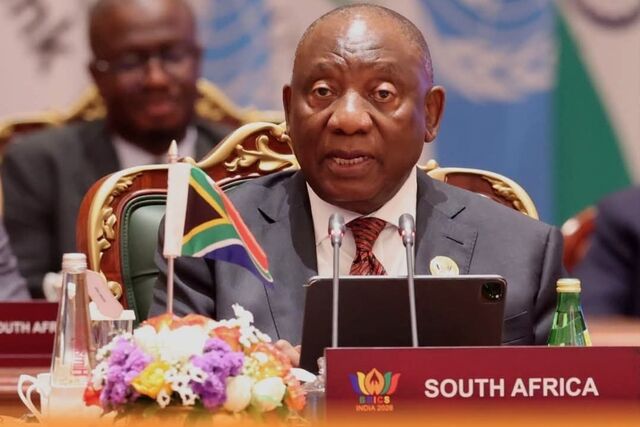
That argument has now played out on a wider stage. South Africa carried similar priorities into the BRICS gathering, and President Cyril Ramaphosa (photo) used the summit to press the country's economic agenda directly, confirming it would use the platform to advance intra BRICS trade and investment, industrialisation and value addition, and infrastructure funding aligned with the African Continental Free Trade Area (AfCFTA).
Speaking at the BRICS Business Forum, the President addressed trade and supply chains, the digital economy, agriculture, and women led development, before turning to the India South Africa Business Leadership Roundtable to court further Indian investment in infrastructure, critical minerals and the EV battery value chain, extending the Task Force's original thesis.
The summit closed with the adoption of the New Delhi Declaration, reaffirming members' commitment to a multilateral system free of any single country's dominance.
Briefing media afterwards, the President said the grouping's central achievement was its shared resolve on global governance, with member states aligned behind a vision of a multipolar world in which every economy's sovereignty and interests are respected. He added that BRICS nations remained focused on lifting living standards and expanding economic opportunity amid mounting geopolitical strain.
Ethiopia offered the clearest validation of the Business Council's argument. Its chapter chair told the council that Ethiopia became the first country worldwide to impose an Electric Vehicle Import Mandate in 2024, ending imports of new internal combustion passenger vehicles.
EV registrations now exceed 110 000 units, accounting for more than 60 percent of new registrations. The chair also flagged EV manufacturing, alongside energy and agriculture, as a priority for BRICS investment, pointing to Chinese backed industrial parks shifting towards high tech assembly and solar cell production.
South African officials framed the summit outcomes as complementary to the AfCFTA agenda, arguing that industrial capability built through BRICS linked investment in vehicle manufacturing and battery production can be channelled into African infrastructure, this also includes regional supply networks, rather than remaining confined to bilateral trade.
"The BRICS highlights on regional experiences such as India's automotive manufacturing transition to EVs and Ethiopia's progressive mandate show how countries can make this transition work for industrial development and economic growth," Hiten says.
That principle now sits at the centre of South Africa's pitch to BRICS partners, as the country looks to translate summit commitments into concrete EV and manufacturing partnerships ahead of China's BRICS chairmanship in 2027.