Safety Issues: Hyundai Grand i10 earns zero stars for adult protection in crash tests
The Hyundai Grand i10 has been thrust into the spotlight for all the wrong reasons after receiving a dismal zero-star rating for adult occupant protection in the latest Global NCAP crash tests under the #SaferCarsForAfrica campaign.
Share with friends
The Automobile Association (AA) has condemned the results, calling them “unacceptable” and warning that African motorists are being short-changed on safety.
Although the hatchback managed three stars for child occupant protection, the adult safety score paints a worrying picture. Built in India, the Grand i10 is equipped with only basic features such as front airbags, while omitting vital systems like side-impact protection and Electronic Stability Control (ESC), both considered essential in modern vehicles.
The Hyundai Grand i10 in the crash test.
Global NCAP’s findings revealed critical flaws:
Dangerously weak chest protection for drivers in frontal impact tests.
Severe injury risk in side-impact collisions, with zero points awarded for adult safety.
Unstable bodyshell and compromised footwell, unable to withstand further crash forces.
No side or head protection, and only a driver seatbelt reminder, leaving other passengers exposed.
Absence of ESC, a proven crash-prevention technology that should be standard.
Earlier test of vehicles available on the SA market.
Richard Woods, Global NCAP’s Chief Executive, criticised the disparity: “It is unacceptable to see the continued double standard on safety in low- and middle-income countries. African consumers deserve safer vehicles regardless of where they live.”
AA Chief Executive Bobby Ramagwede added: “South African motorists deserve better. The Hyundai Grand i10’s zero-star rating highlights the urgent need for manufacturers to commit to equal safety standards across all markets. Safety should never be optional.”
The AA is urging stronger regulatory frameworks and greater accountability from carmakers, insisting that no vehicle should be sold in Africa without side-impact protection and ESC as standard. The organisation has vowed to continue campaigning for tougher safety laws and full transparency.
Charging time remains a worry for many South Africans considering an electric vehicle, who still see it as a disruption rather than a quick stop at a filling station. That view is starting to shift.
The winners of the 2026 Automotive Business Council | naamsa Accelerator Awards were announced at the recently held Auto Week 2026, which took place in eThekwini, KZN.
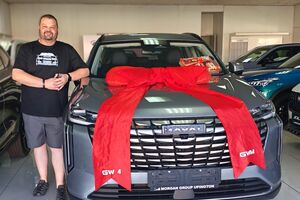
When Cobus Coetzee (photo) accepted the opportunity to join the Morgan Group in Upington, he had to weigh up more than a new position. The move meant exchanging the West Coast’s cooler climate and seaside lifestyle for the Northern Cape’s desert heat, while taking responsibility for a multi-franchise operation spread across several premises.
Cars are the ultimate symbol of freedom, independence and individualism. They offer the freedom to ‘go anywhere,’ whenever it suits and with whom one chooses.
The winners of the 2026 Automotive Business Council | naamsa Accelerator Awards were announced at the recently held Auto Week 2026, which took place in eThekwini, KZN.
With the steep rise in fuel prices since March this year leading to historic record highs following massive increases in October, the government intervention annouched this week, is widely welcomed.
Omoda has confirmed that the new C4 will become the first model from the Chery Group to be built in South Africa, with production set to take place at the company's Rosslyn manufacturing facility in Gauteng.