Positive reaction to President Ramaphosa’s SONA, but…
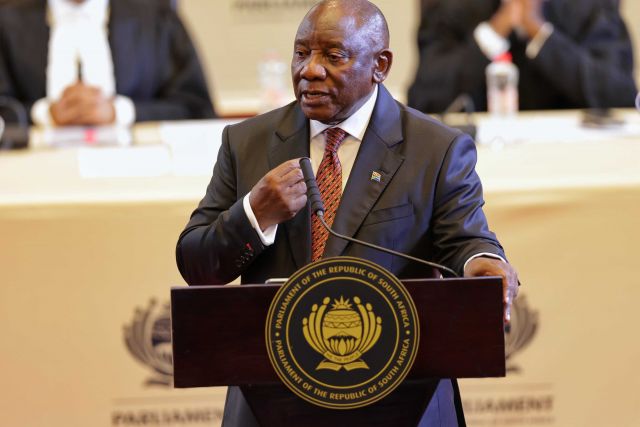
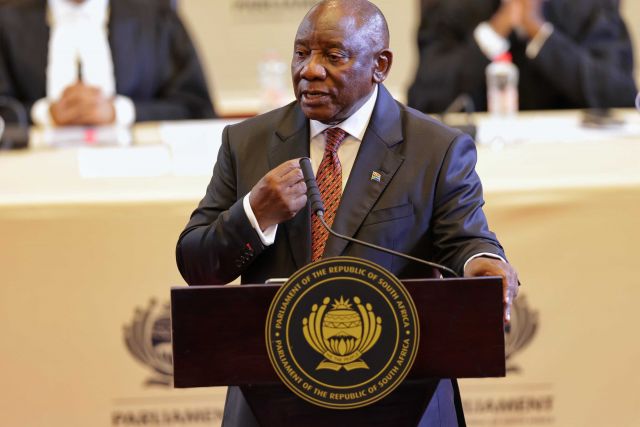
President Cyril Ramaphosa's State of the Nation Address (SONA) provided a clear focus on critical reforms needed to bolster South Africa's economy.
Share with friends
His emphasis on improving local government operations and addressing water system challenges is encouraging, as effective service delivery is essential for economic growth. The ring-fencing of revenue for essential services such as water and electricity is a welcome step.
So says Brandon Cohen, Chairperson of the National Automobile Dealers Association (NADA), in his reaction to SONA.
“Nada also supports the President’s call for increased infrastructure investment and greater private sector involvement in rail and port operations. These initiatives will be vital for long-term economic stability. However, we remain mindful of the importance of balancing these ambitions with responsible fiscal management to avoid placing additional strain on an already pressured economy and its citizens.
Brandon Cohen (NADA).
“We are encouraged by progress on professionalising the public sector and reducing visa backlogs, which will help businesses access much-needed skills. Swift and effective implementation of these reforms is crucial to delivering meaningful outcomes for the automotive sector and the wider economy,” Brandon notes.
According to Joubert Roux, Managing Director of CHARGE, they welcome the President’s recognition of the potential of the EV sector to create jobs as an industry of the future.
“We are, however, disappointed by the lack of urgency and detail provided on how government plans to drive South Africa’s EV transition. The speech failed to address the critical need for expanded EV-charging infrastructure, particularly off-grid, renewable-powered stations.
“Without a national EV-charging network, which is powered by renewable energy, EVs remain impractical for most South Africans, and their environmental benefits are undermined by a reliance on a coal-powered grid.
Joubert Roux (CHARGE).
“Despite the Electric Vehicle White Paper’s release in December 2023, which acknowledged these challenges, conflicting regulations and administrative inefficiencies continue to obstruct infrastructure roll-out. While we commend initiatives like the 150% tax incentive for EV manufacturers, stronger action is needed.
“It does not make sense to tax a carbon-free, climate-mitigating vehicle like an EV at 25%, while internal combustion engine (ICE) vehicles are taxed at only 18%. Meanwhile, the DFFE, DOT and the Presidency emphasise the need to reduce carbon emissions and pursue sustainability. These taxes must be lowered to stimulate demand and drive market growth. We hope the government will fulfil its fiscal support commitments in the upcoming 2025 Budget Speech,” Joubert says.
CHARGE also states that while the President highlighted progress in infrastructure development, SANRAL continues to obstruct the roll-out of EV-charging infrastructure – particularly the green charging solution.
“We urge the Ministers of Infrastructure and Transport to acknowledge our requests for intervention and act as a facilitator in unlocking our investment in off-grid, solar-powered EV charging. This initiative will serve as a catalytic green infrastructure development, supporting the transition to net-zero transport, as outlined in the Department of Transport’s Green Transport Plan.
South Africa’s EV transition depends on a forward-thinking policy framework that prioritises green infrastructure and supports our ambitious climate targets.”
The South African economic environment became more challenging during September 2026, with renewed energy-driven inflationary pressures affecting household purchasing power and operating costs.
Algoa Nissan is Nissan South Africa’s dealer of the year. It is the third time that the dealership won the overall title and now for the sixth time also the top spot in die small category.
Chery has named its first bakkie for South Africa Grootman, a name chosen by South Africans. The model is planned to make its local debut in the first quarter of 2027.
Cars are the ultimate symbol of freedom, independence and individualism. They offer the freedom to ‘go anywhere,’ whenever it suits and with whom one chooses.
The South African economic environment became more challenging during September 2026, with renewed energy-driven inflationary pressures affecting household purchasing power and operating costs.
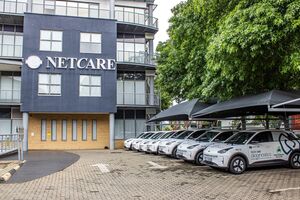
Netcare Diagnostics (a Netcare Group business) is introducing its first fully electric vehicles to its transport fleet, starting with shorter urban routes for collecting patient pathology specimens.
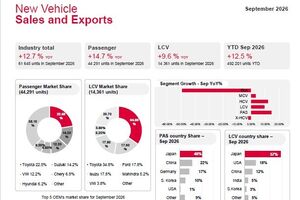
South Africa’s new vehicle market recorded aggregate domestic sales of 61 645 units in September 2026, an increase of 12.7% compared with the 54 706 units sold during September 2025.