Nissan partners with Wayve for AI-powered driver assistance
Nissan Motor Co, Ltd and Wayve have announced definitive agreements to collaborate on integrating next-generation ProPILOT technology with Wayve's artificial intelligence software across a broad range of Nissan vehicles.
Share with friends
The partnership represents a significant milestone in bringing advanced autonomous driving solutions to everyday cars on a global scale.
The collaboration will combine Wayve's embodied AI software with Nissan's established driver assistance systems to support both ADAS and point-to-point advanced driving capabilities. Nissan first introduced ProPILOT in 2016 for single-lane motorway assistance before launching ProPILOT 2.0 in 2019, which added multi-lane support and hands-off functionality. These features are now available across multiple models to meet diverse customer needs.
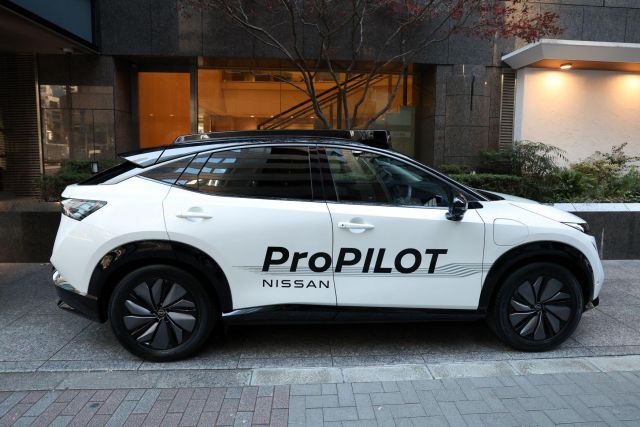
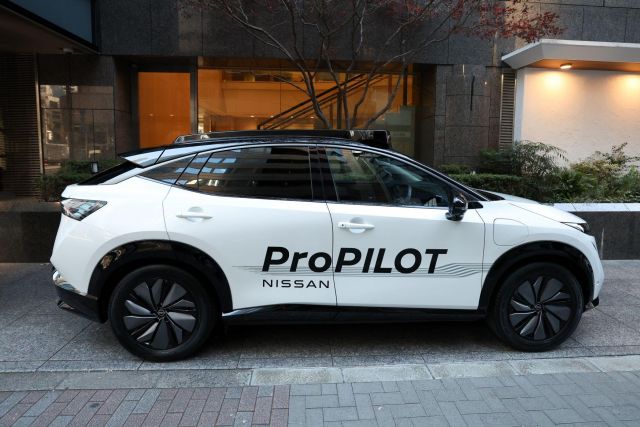
Building on this foundation, Nissan is developing its next-generation ProPILOT integrated with Wayve AI technology. In September 2025, the Japanese manufacturer unveiled a prototype featuring Wayve's embodied AI software. Known as Wayve AI Driver, it integrated with Nissan's Ground Truth Perception technology, which leverages next-generation LiDAR. The prototype demonstrated smooth and safe driving assistance on motorways and in complex urban environments.
Nissan Motor President and CEO Ivan Espinosa and Wayve Technologies CEO Alex Kendall.
Under the new agreement announced from Yokohama, Nissan and Wayve will integrate Wayve AI Driver into the next-generation ProPILOT series, enabling deployment in mass-produced vehicles. By leveraging Wayve's AI technology, Nissan aims to further enhance ProPILOT's functionality and convenience whilst delivering advanced systems to global markets, including Japan and North America. Nissan plans to introduce the first model equipped with this new generation of ProPILOT in Japan during fiscal year 2027.
The agreement represents an important advancement for both companies. Nissan becomes the first carmaker to commit to deploying Wayve AI systems at scale across a broad range of vehicle segments. Wayve's end-to-end embodied AI, designed with safety at its core, can adapt efficiently to new cities and vehicle platforms with minimal additional development. When combined with ProPILOT's various sensor configurations, including cameras, radar and LiDAR, it can deliver intelligent driving across many vehicle segments.
Deploying the system into mass-produced vehicles will allow both companies to learn from diverse real-world driving conditions, enabling continuous improvement and strengthening the long-term competitiveness of Nissan's intelligent driving technologies.
Ivan Espinosa, President and CEO of Nissan Motor Co, Ltd said the partnership would "deliver safer, more intuitive and more comfortable driving experiences to customers worldwide", whilst accelerating the transition towards an intelligent mobility future.
Alex Kendall, Co-founder and CEO of Wayve, praised Nissan for leading the way among global carmakers by bringing embodied AI towards mass production, adding that the partnership would make next-generation intelligent driving technology accessible to customers worldwide.
Charging time remains a worry for many South Africans considering an electric vehicle, who still see it as a disruption rather than a quick stop at a filling station. That view is starting to shift.
The winners of the 2026 Automotive Business Council | naamsa Accelerator Awards were announced at the recently held Auto Week 2026, which took place in eThekwini, KZN.
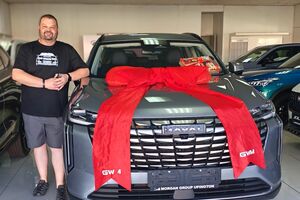
When Cobus Coetzee (photo) accepted the opportunity to join the Morgan Group in Upington, he had to weigh up more than a new position. The move meant exchanging the West Coast’s cooler climate and seaside lifestyle for the Northern Cape’s desert heat, while taking responsibility for a multi-franchise operation spread across several premises.
The winners of the 2026 Automotive Business Council | naamsa Accelerator Awards were announced at the recently held Auto Week 2026, which took place in eThekwini, KZN.
With the steep rise in fuel prices since March this year leading to historic record highs following massive increases in October, the government intervention annouched this week, is widely welcomed.
Omoda has confirmed that the new C4 will become the first model from the Chery Group to be built in South Africa, with production set to take place at the company's Rosslyn manufacturing facility in Gauteng.