
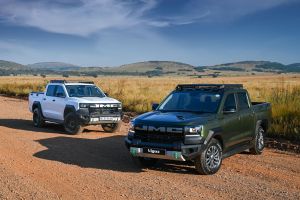
New JMC Vigus will make an impression
Following the official brand re-launch by the Salvador Caetano Group, JMC South Africa announce the arrival of the All-New JMC Vigus.
- Product News
- 17 April 2026
The National Automobile Dealers’ Association (NADA) has welcomed the three-year wage agreement reached by the Retail Motor Industry Organisation (RMI) at the Motor Industry Bargaining Council (MIBCO).
Nada director, Gary McCraw, said the fact that it is a three-year agreement provides certainty and labour stability over the next three years and gives dealers the opportunity to plan for the next three years from a wage bill perspective, which is very good.
Jacques Viljoen, chief negotiator for the RMI, said the agreement provides for a 7.5% wage increase for the component manufacturing industry in the first year of the agreement, with a 6% increase in each of the following two years.
A 6.5% wage increase was agreed for the rest of the industry in the first year of the agreement, with a 5% increase in each of the following two years.
A separate deal was also concluded for the fuel retail sector.
The RMI is the largest party to the MIBCO, comprising more than 20 000 employers and 300 000 employees across many divergent sub-sectors.
NADA is one of eight constituent associations of the RMI, which has been engaged in wage and substantive negotiations with the other parties to MIBCO since March 2022.
Viljoen said despite the negotiations taking longer than anticipated, the RMI was satisfied with the outcome of the process.
“From the onset, the RMI emphasised the importance of labour stability, business viability and industry peace.
“Those factors, together with an inflation-informed wage increase, are critically important to not only prevent job losses but to promote employment within the industry,” he said.
Commenting on the direct impact of the agreement on vehicle dealerships, McCraw said many dealers have already implemented their increases and will therefore only have to do an adjustment if their current employees are on wages that are less than the minimum.
McCraw said most dealerships pay wages substantially higher than the minimum and there should therefore not be a need for many wage adjustments because the agreement is based on minimum wages.
He added that the agreement makes provision for increases that have already been implemented to be offset against the wage increases agreed in terms of the agreement.
McCraw said the wage increase is inflation related, and he does not believe it will impact on the viability of dealerships.
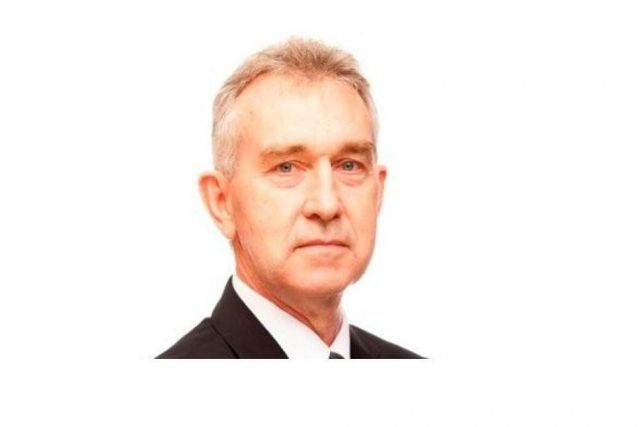
Following the official brand re-launch by the Salvador Caetano Group, JMC South Africa announce the arrival of the All-New JMC Vigus.
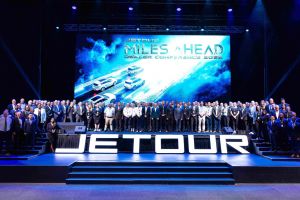
Jetour South Africa hosted its inaugural Dealer of the Year Awards on Tuesday night, bringing together its national dealer network of nearly 60 dealerships.
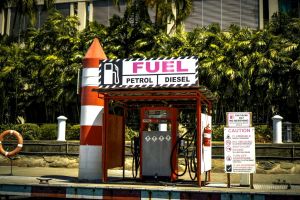
South Africa’s motorists and automotive sector are facing a fresh layer of uncertainty as the Middle East conflict continues to disrupt global oil markets, but for now the country’s fuel supply remains stable even as costs rise.
 Advertisement
 Advertisement
You can't buy happiness but you can buy cars and that's kind of the same thing.
Unknown
South Africa’s motorists and automotive sector are facing a fresh layer of uncertainty as the Middle East conflict continues to disrupt global oil markets, but for now the country’s fuel supply remains stable even as costs rise.

Stellantis has struck a five year strategic partnership with Microsoft as it accelerates its shift towards software defined vehicles and digital services.

Auto China 2026 marks another milestone in the evolution of an event that has tracked China’s rise from emerging market to global automotive powerhouse.