The new-vehicle market continued to show resilience on its gradual recovery path during November 2021, despite several challenges during the month, says Mikel Mabasa, the CEO of automotive business council naamsa.
Share with friends
Mabasa said these challenges included the first interest rate hike in three years, sustained load shedding and the new Omicron COVID-19 variant that has sparked global alarm.
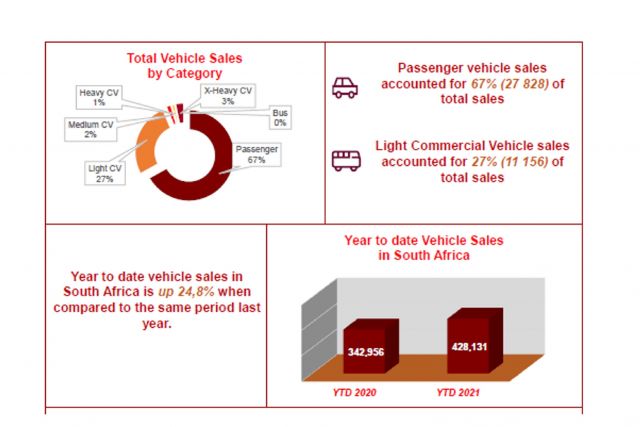
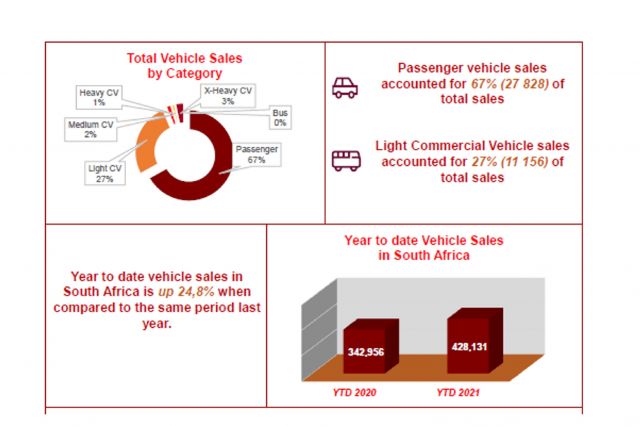
Aggregate domestic new vehicle sales increased by 6.6% to 41 588 units last month from the 39 015 units sold in November 2020.
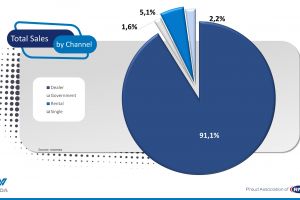
Of the overall total reported industry sales of 41 588 vehicles, an estimated 84.2% or 35 014 units represented dealer sales, with sales to the vehicle rental industry accounting for an estimated 11.5% of total sales, sales to government 2.4% and sales to industry corporate fleets 1.9%.
Mabasa said vehicle rental companies have supported passenger car sales over recent months but the travel bans imposed on South Africa owing to the Omicron variant could unfortunately once again negate the support received by the market from this channel.
“With the added inflationary pressures of the record-high fuel prices and prospects of further interest rate increases, businesses and consumers will undoubtedly remain under financial pressure.
“The November ABSA Purchasing Managers’ Index (PMI) reflected a more than 5-point decline for the index measuring expected business conditions, highlighting that the economy remains fragile as the pace of economic recovery is expected to slow down substantially in 2022,” he said.
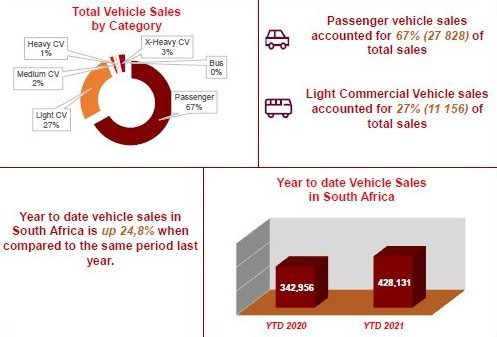
Sales of new passenger cars increased by 9.4% to 27 828 units last month from the 25 442 units sold in November 2020, with the car rental industry accounting for 15.6% of car sales in the month.
Sales of new light commercial vehicles, bakkies and mini-buses declined year-on-year by 0.8% to 11 156 units in November 2021 while sales of medium commercial vehicles increased by 22.1% to 779 units and heavy trucks and buses by 8.1% to 1 825 units.
Export sales of locally produced vehicles recorded a further decline, slumping last month by 42.2% to 19 548 units from the 33 825 vehicles exported in November 2020.
Mabasa said vehicle exports continued their five-month downward trajectory in line with the ongoing COVID-19-related supply chain disruptions, impacting on vehicle production and exports, while the severe COVID-19 fourth wave in parts of Europe, a key export market for domestic vehicle manufacturers, is also negatively affecting exports.
However, Mabasa said prospects over the short to medium term remain positive because vehicle exports are expected to benefit from various new model introductions by major vehicle exporters in the remainder of this year and 2022, as well as from increased demand linked to the favourable economic conditions abroad.
Nedbank’s Group Economic Unit said although new vehicle sales were still below their pre-crisis levels, there were signs of a recovery being underway.
It said new vehicle sales were 12.1% lower than the three-year pre-COVID average (2017-2019 November) and 6.9% lower than November 2019 levels.
“Compared to the three-year average, passenger vehicles are 12.4% lower, and total commercials are 11.5% weaker, dragged down by light commercials (down 14.1%).
“Relative to the 2019 levels, passenger vehicles are lagging, down by 11.4%, while total commercial vehicles are 3.7% higher, led by light- and medium commercials.
“Still, the year-to-date sales are 24.8% higher than in the same period a year ago but are 13.6% weaker than in the same period in 2019,” it said.
The unit added that overall risks over the medium term were tilted to the downside but some factors were supportive of recovery.
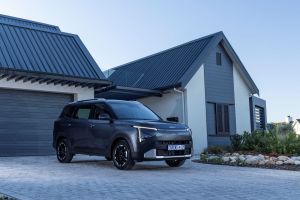
The Kia Carens nameplate makes its return to South Africa, this time as a seven‑seater designed with families in mind. It combines Sport Utility Vehicle (SUV) styling with Multi-Purpose Vehicle (MPV) practicality, offering space, comfort and efficiency, Kia says.
Volvo has confirmed that its vehicles will now integrate Google’s Gemini artificial intelligence system. This development builds on the company’s existing collaboration with Google, which already provides Android Automotive OS and Google services in Volvo models.
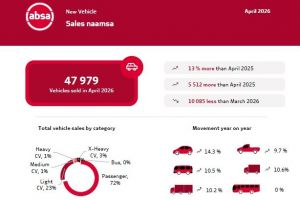
New vehicle sales in 2026 continued their positive trend in April, with the 47 979 units sold marking the best April figure since 2013. This represents a remarkable performance by local automotive retailers despite a host of economic headwinds and a challenging trading environment.
Volvo has confirmed that its vehicles will now integrate Google’s Gemini artificial intelligence system. This development builds on the company’s existing collaboration with Google, which already provides Android Automotive OS and Google services in Volvo models.
New vehicle sales in 2026 continued their positive trend in April, with the 47 979 units sold marking the best April figure since 2013. This represents a remarkable performance by local automotive retailers despite a host of economic headwinds and a challenging trading environment.
April 2026 marked a turning point in South Africa’s economic landscape, as global energy markets were jolted by escalating geopolitical tensions in the Middle East, according to naamsa | The Automotive Business Council.