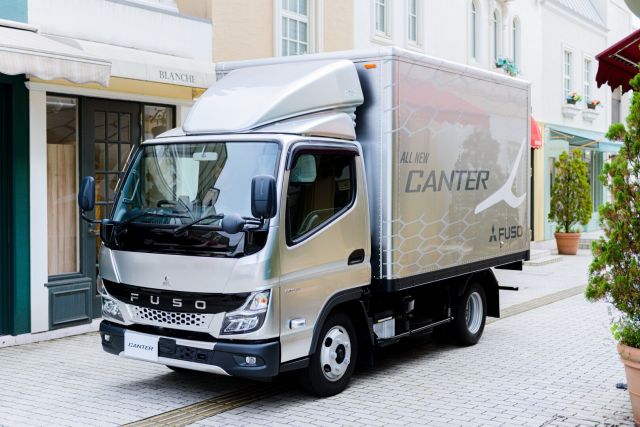
A truck that is also very familiar in the South African vehicle landscape is Mitsubishi’s Canter, which operates in the light-duty truck segment and is celebrating its 60th birthday this year.
Share with friends
The Canter is one of the most popular brands in the Mitsubishi Fuso Truck and Bus Corporation (MFTBC) stable.
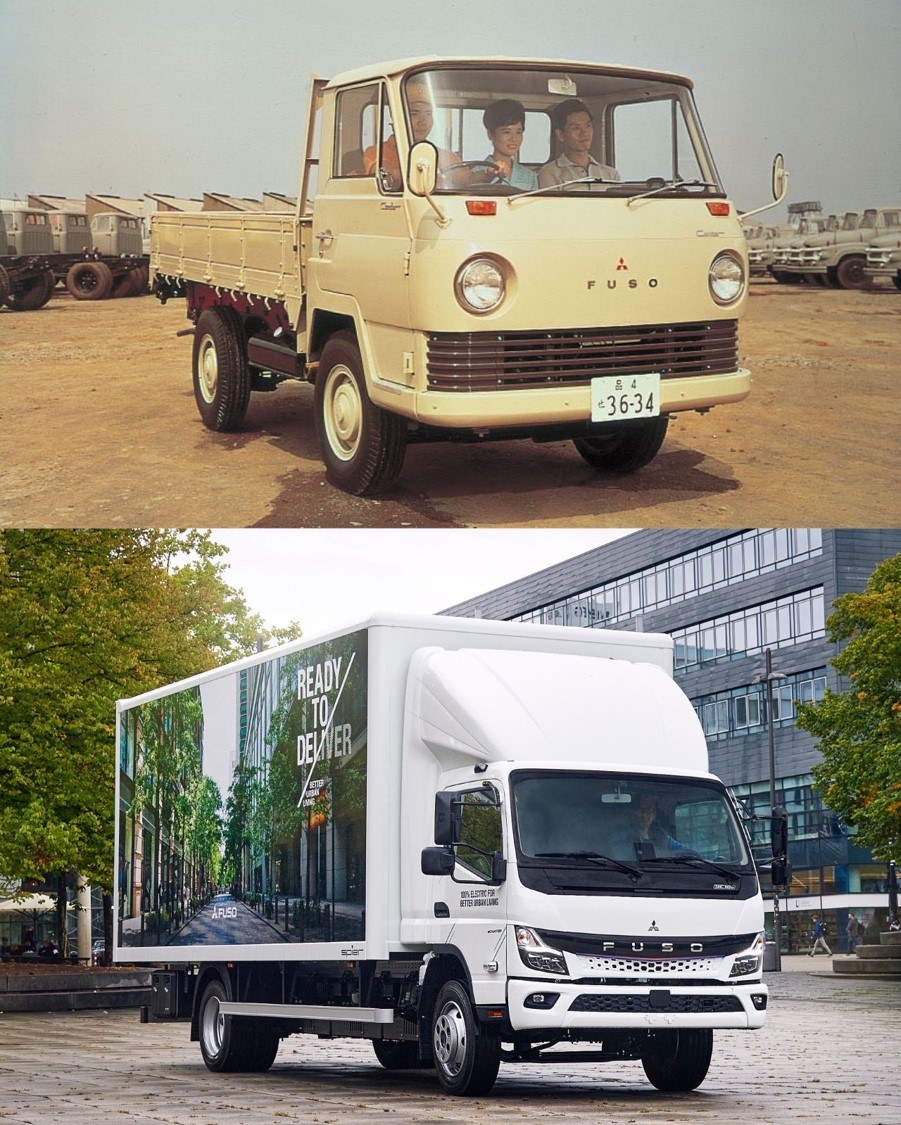
The first-generation Canter entered the light-duty truck segment for the first time in March 1963 as the T720 cab-over type model, boasting a design providing a wide field of view and easy operability. Named the Canter to conjure up the image of a sturdy but nimble horse, it was highly acclaimed as the best in its class for its excellent driving performance and economy.
Since the launch of the first-generation model, the Canter has evolved alongside Japanese society through many eras, from the post war reconstruction period, through the rapid economic growth that brought long-distance and high-speed transport, to the changes of the 21st century that pushed ecological issues and carbon-neutral transport to the forefront.
On top of consistent performance and driver comfort, the Canter has achieved ever higher levels of fuel efficiency and environmental friendliness over the decades with continuous engine improvements and hybrid technology.
From the first Fuso Canter to the latest generation.
Since the 1960s, the Canter has expanded its sales around the world and has led the light-duty truck segment in the global market. Currently, knock-down production is carried out in 12 overseas markets. Furthermore, sales of the Canter have expanded into Africa, Central and South America, and the Middle East, with built-up vehicles being exported to over 60 countries. Combining knock-down production locations and export markets, the Canter is now sold in over 70 countries.
MFTBC launched Japan's first series-produced electric light-duty truck, the eCanter, in the light-duty truck segment in 2017. With the fully remodelled next-generation model of the all-electric truck to be introduced to markets in 2023.
“2023 is indeed an extraordinary year for us as we celebrate a significant trucking milestone, one that is firmly entrenched in our rich global history. Since its first entry into the South African market in the early 1980s, the Canter has played an integral part in our FUSO Truck brand’s local success story.
“We now cast our eyes towards adapting to the rapid shift in the commercial vehicles industry of electrification and connectivity,” concludes Michael Dietz, President & CEO of Daimler Truck Southern Africa.
Charging time remains a worry for many South Africans considering an electric vehicle, who still see it as a disruption rather than a quick stop at a filling station. That view is starting to shift.
The winners of the 2026 Automotive Business Council | naamsa Accelerator Awards were announced at the recently held Auto Week 2026, which took place in eThekwini, KZN.
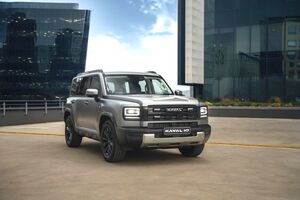
GWM has expanded its local SUV line-up with the introduction of the all-new Haval H7. Replacing the outgoing model, the newcomer blends boxy styling, advanced technology and a choice of petrol, hybrid and plug-in hybrid powertrains, giving buyers a versatile family SUV with genuine all-terrain credentials.
Cars are the ultimate symbol of freedom, independence and individualism. They offer the freedom to ‘go anywhere,’ whenever it suits and with whom one chooses.
The winners of the 2026 Automotive Business Council | naamsa Accelerator Awards were announced at the recently held Auto Week 2026, which took place in eThekwini, KZN.
With the steep rise in fuel prices since March this year leading to historic record highs following massive increases in October, the government intervention annouched this week, is widely welcomed.
Most motorists will go their entire driving lives without deliberately pushing their vehicle to the limits of adhesion. Yet a sudden downpour, a patch of gravel, standing water or simply carrying too much speed into a bend can quickly expose the limits of a vehicle's grip.