According to TransUnion's Q2 2026 Mobility Report, this changing market is also creating a broader environment in which automotive fraud can occur.
The report says increasing digitalisation and more complex customer journeys are opening additional points at which fraudsters can operate. Vehicle finance remains a significant area of exposure, particularly as participation in the used vehicle market broadens. However, the risk extends beyond vehicle finance to rental and leasing, vehicle sales, parts procurement and other commercial transactions.
TransUnion identifies a range of potential fraud risks across the automotive ecosystem. These include identity and application fraud, synthetic identities, document and income manipulation, vehicle and ownership fraud, payment fraud, supplier impersonation and regulatory risk.
The report argues that checking individual pieces of information in isolation is becoming less effective as fraud becomes more sophisticated.
Fraudsters can present apparently valid credentials while leaving risk signals across several parts of a customer's journey. These signals can potentially involve devices, documents, bank accounts, telephone numbers and behavioural patterns.
TransUnion therefore highlights the importance of connecting information across the customer journey rather than assessing an application or transaction as an isolated event.
The report includes a rental case study to illustrate this approach. It says conventional identity and payment verification on their own may not identify all potential risks before a vehicle is released.
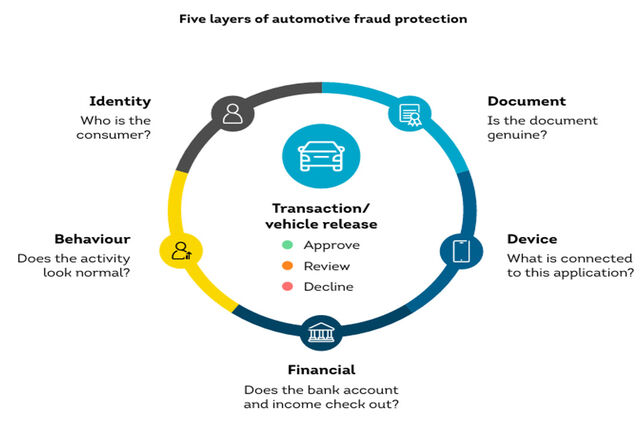
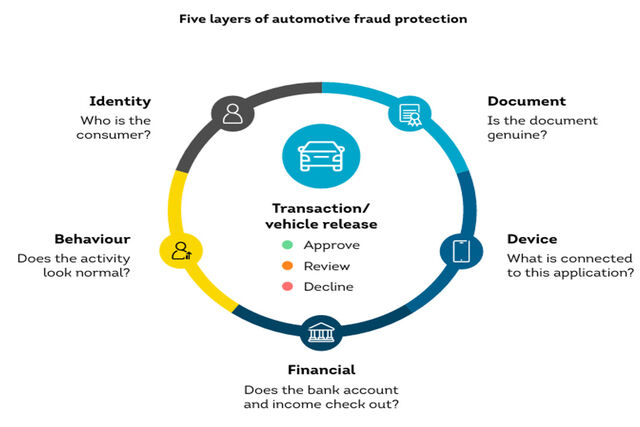
A layered approach can instead combine identity and document verification, facial recognition, bank-account verification, device-risk information and a fraud-prevention model.
According to the report, combining these different sources of information can help identify inconsistencies and connections associated with potential mule activity before a vehicle is released.
TransUnion describes this as a shift from point-in-time verification towards connected risk intelligence. Under this approach, identity, documents, devices, financial information and behavioural signals are considered together.
The report says these controls can be incorporated into digital customer journeys, allowing businesses to strengthen fraud prevention while limiting unnecessary friction for legitimate customers.
The changing automotive market means that businesses have to accommodate a wider range of customers and transactions. TransUnion says this creates a need to balance customer access and growth with stronger fraud and compliance controls.
The report describes the objective as enabling what it calls "safe growth", with layered information helping businesses identify anomalies, relationships and behavioural patterns earlier.
It says this approach can help protect customers, vehicles and profitability while supporting more efficient onboarding.
TransUnion's overall message is that connected intelligence is becoming increasingly important as automotive customer journeys become more digital and fraud becomes more complex.
The report says moving away from isolated checks towards connected, intelligence-led fraud prevention will be important as the automotive ecosystem continues to broaden.
- Source and image: TransUnion Q2 2026 Mobility Report.