

Hatfield Motor Group takes top honours at Audi Dealer Awards
Audi South Africa honoured the outstanding achievements of its national dealer network at the annual Audi Vorsprung Awards.
- Dealer News
- 28 April 2026
Over thirty firms from across the automotive supply chain have joined forces to advance open-source software development, aiming to create next-generation vehicles while driving down costs, Germany’s leading industry association announced recently.

The German Association of the Automotive Industry (VDA) unveiled the expanded collaboration at the CES technology showcase in Las Vegas. The initiative reflects a growing trend among manufacturers and suppliers to harness artificial intelligence and software solutions as a means of revitalising an industry burdened by slow progress and escalating expenses.
New participants include European automotive group Stellantis, commercial vehicle producer Traton, German engineering specialist Schaeffler, and semiconductor giants Infineon and Qualcomm. They join established names such as Volkswagen, BMW and Mercedes-Benz, increasing the number of signatories from 11 last year to 32.
According to the VDA, the project is designed to cut development and maintenance efforts by up to 40 per cent and accelerate time-to-market by as much as 30 per cent.
Mike Milinkovich, Executive Director of the Eclipse Foundation, which co-organises the initiative, commented: “The growing engagement in this effort underscores a global shift towards open innovation within the automotive sector.”

Audi South Africa honoured the outstanding achievements of its national dealer network at the annual Audi Vorsprung Awards.

South Africa is experiencing its fastest shift yet towards electric mobility, driven not by environmental policy but by sheer economics.
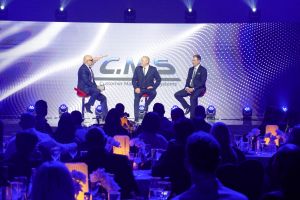
CMS Systems is celebrating 25 years in business, marking a significant milestone for a company that has become a central player in automotive retail technology.
 Advertisement
 Advertisement
Have you ever noticed that anybody driving slower than you is an idiot, and anyone going faster than you is a maniac?
George Carlin
CMS Systems is celebrating 25 years in business, marking a significant milestone for a company that has become a central player in automotive retail technology.
Oil prices jumped on Wednesday after Iran's seizure of container ships in the strait.

Hyundai Motor is preparing an aggressive comeback in China, unveiling plans to launch 20 new vehicles over the next five years as it tries to rebuild its position in the world’s largest car market.